Mechanic Gloves
Mechanics need a glove they can forget they are wearing. It has to pick up a small bolt, hold a greasy wrench and survive scraping against engine parts, all without making the hands hot or clumsy. This guide sets out what to look for, when to move up to a cut resistant glove, and how to size for a close fit, followed by every glove in the range that meets the mechanic selection rule.
What mechanics need from a glove
Fingertip dexterity comes first. Thin, seamless knitted liners in a fine gauge let you feel threads, clips and connectors, and a close fit stops the fingertips bunching. Coated knit gloves are the usual choice for this reason, and PU or foam nitrile coatings keep the fingertips thin.
Oil grip comes next. Engine oil, grease, coolant and brake fluid make parts and tools slippery. Nitrile coatings resist oil and hold grip in it, so look for a glove whose record lists oil grip for engine, gearbox and hydraulic work. PU coated gloves suit cleaner, drier tasks such as electrical work and trim.
Abrasion matters because mechanics scrape their hands against brackets, castings and rough edges all day. The first digit of the EN 388 marking is the abrasion rating, from 1 to 4. A higher figure means the glove should last longer in daily use.
Heat contact around engines and exhausts
Engine blocks, manifolds, turbochargers and exhausts stay hot well after a vehicle is switched off. Thin assembly gloves give little heat protection. Where hot parts are touched, check the product page for an EN 407 marking. The second digit of EN 407 is contact heat, and it shows the temperature the glove was tested at. For sustained heat work, see the welding and heat range. A thin coated glove is not a substitute for letting parts cool.
When to step up to cut resistance
Standard assembly gloves have low or no cut rating. Step up to a cut resistant glove for body work, exhaust cutting, sheet metal repairs, glass replacement and handling sharp brackets or broken parts. These tasks commonly call for EN 388 cut level C or D and above, or an ANSI cut level on lines whose record lists one. Read how to read EN 388 and ANSI cut levels and see the cut resistant range, which includes nitrile coated options that keep oil grip.
Sizing for a close fit
A mechanic glove only works if it fits. Too big and the fingertips fold over, catch in moving parts and lose feel. Too small and the glove tires the hand and splits early. Measure hand circumference around the knuckles, excluding the thumb, and hand length from the wrist crease to the tip of the middle finger, then match both to the glove sizing guide. If you sit between two sizes, have the wearer try both before you order in volume.
Workshop and fleet buying
Most workshops get through gloves quickly, so cost per shift matters more than the price of one pair. A slightly more durable glove that lasts twice as long is usually cheaper overall. Try one or two models with the crew before standardizing, and keep a cut resistant option on hand for the jobs that need it. The assembly range and the nitrile coated range show the full choice.
Gloves for mechanics
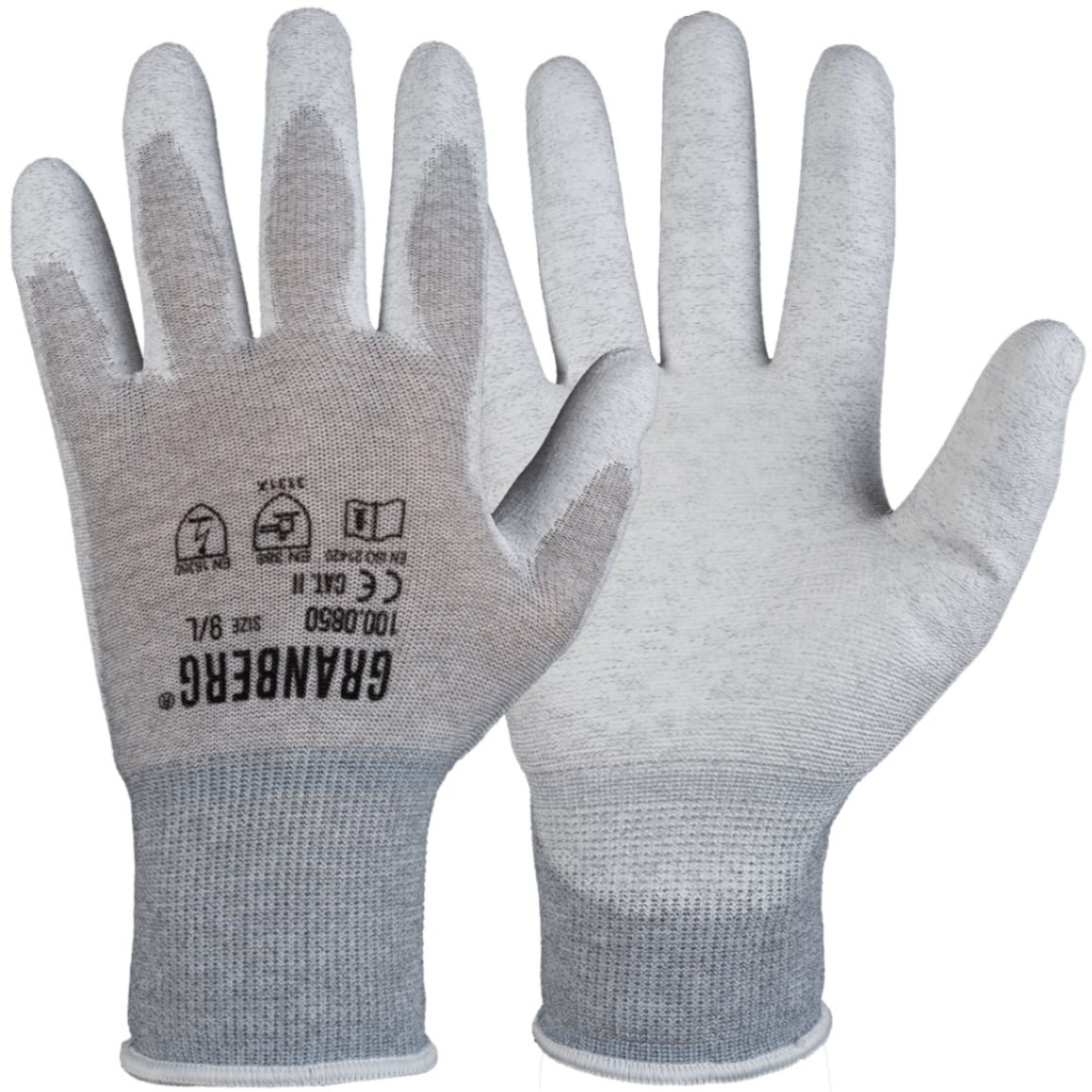
- GRANBERG 0850 ESD Gloves: Anti-Static & Safe Grip
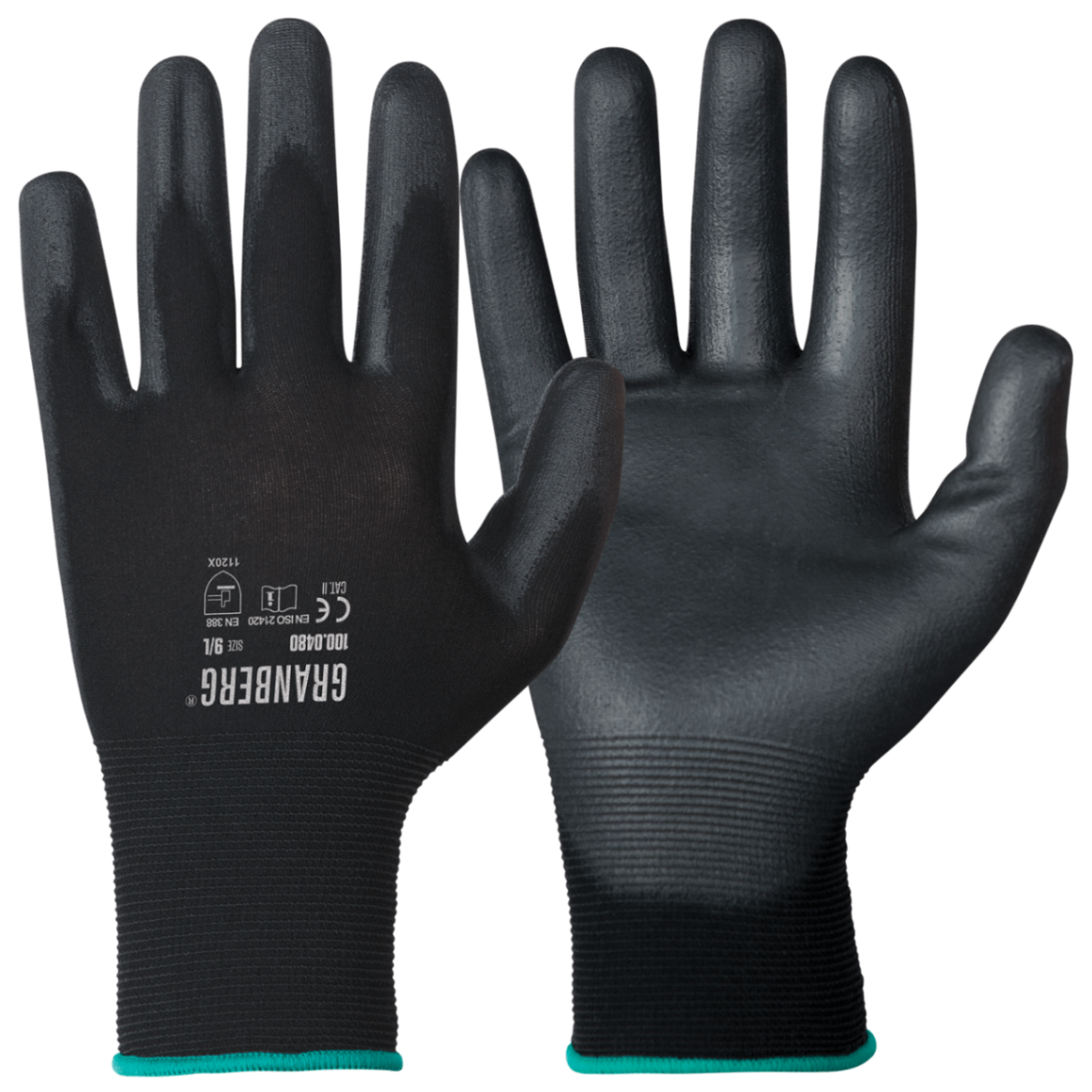
- GRANBERG 0480 Touchscreen PU Work Gloves
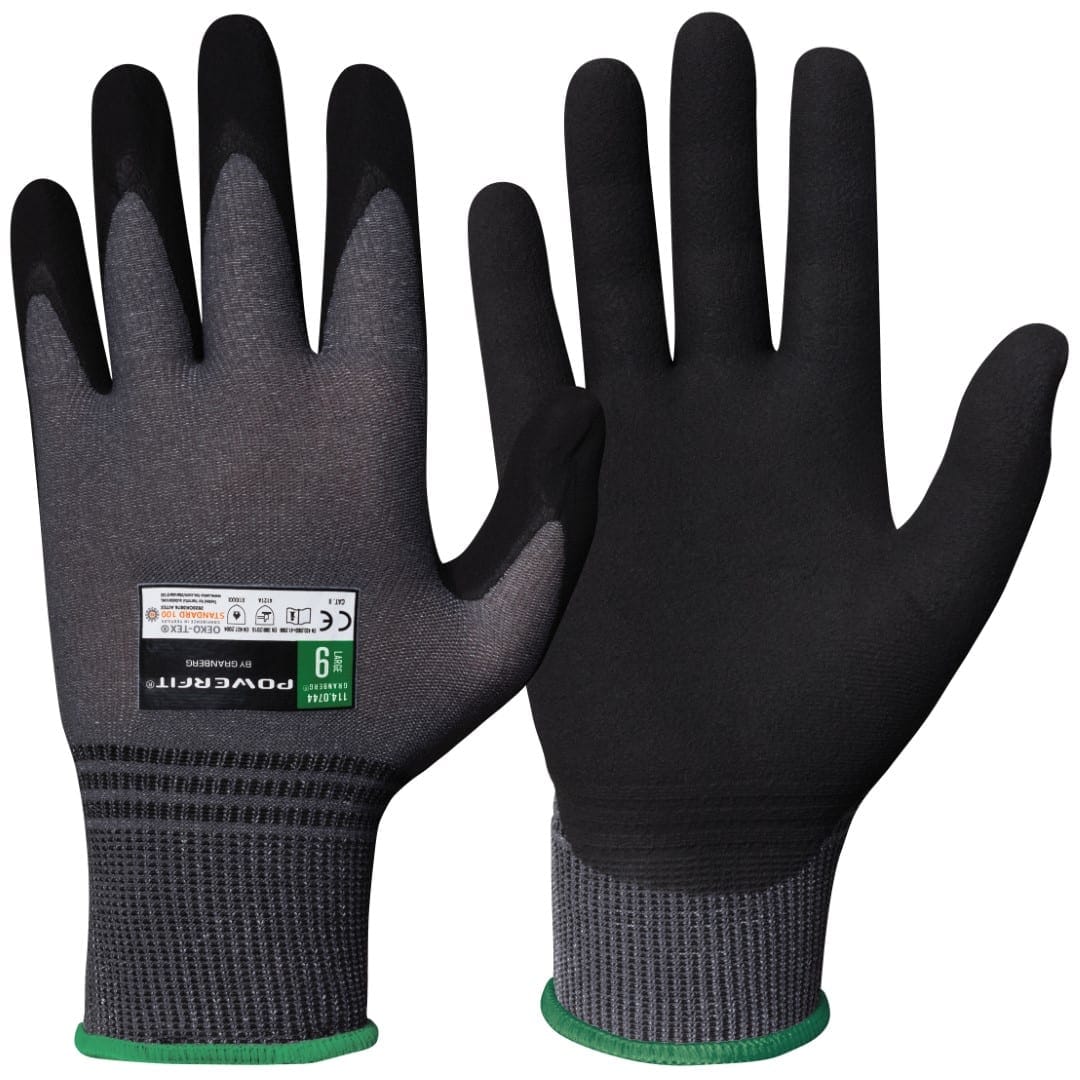
- GRANBERG 0744: Touchscreen Nitrile Foam Assembly Gloves
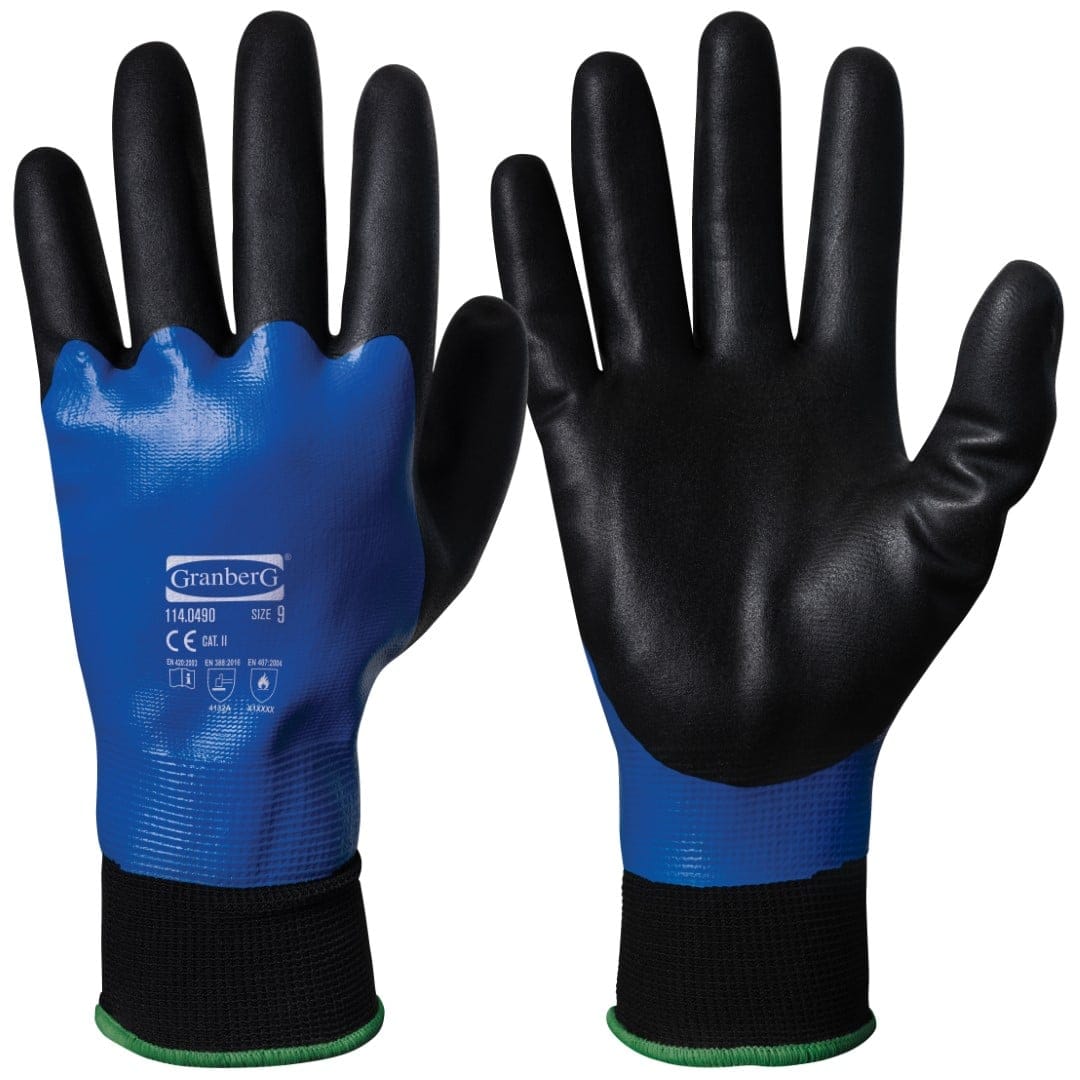
- GRANBERG 0490: Waterproof Nitrile Grip Gloves
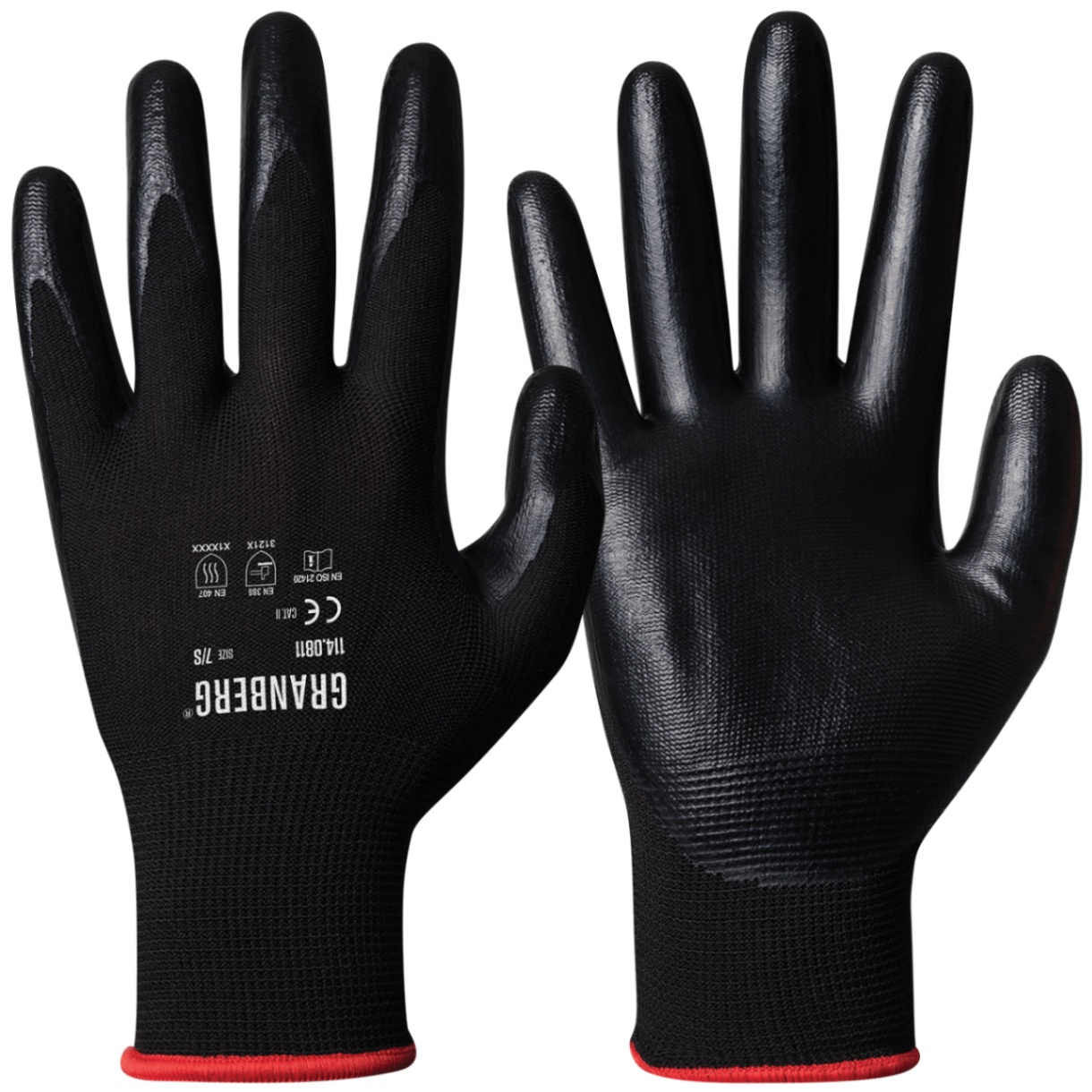
- GRANBERG 0811: Nitrile-Coated Assembly Gloves, Heat Rated
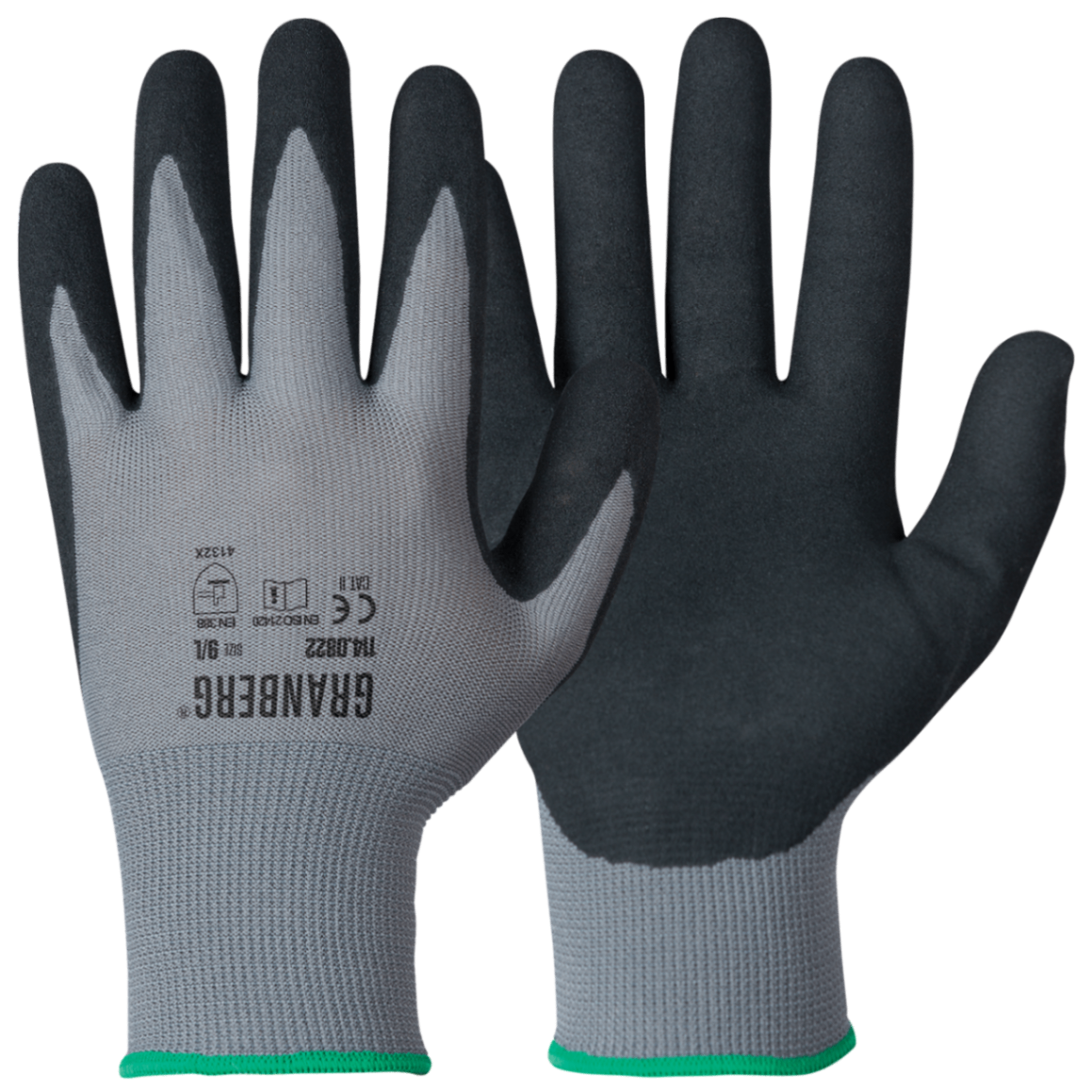
- GRANBERG 0822: Durable, Dexterous Gloves for Assembly
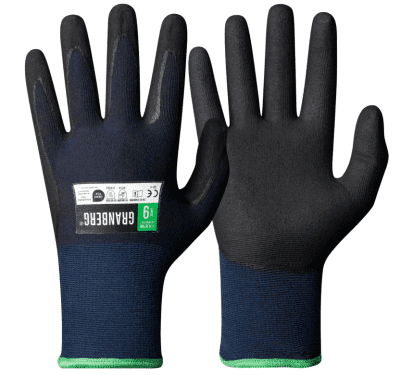
- GRANBERG 0766: Touchscreen Nitrile Work Gloves
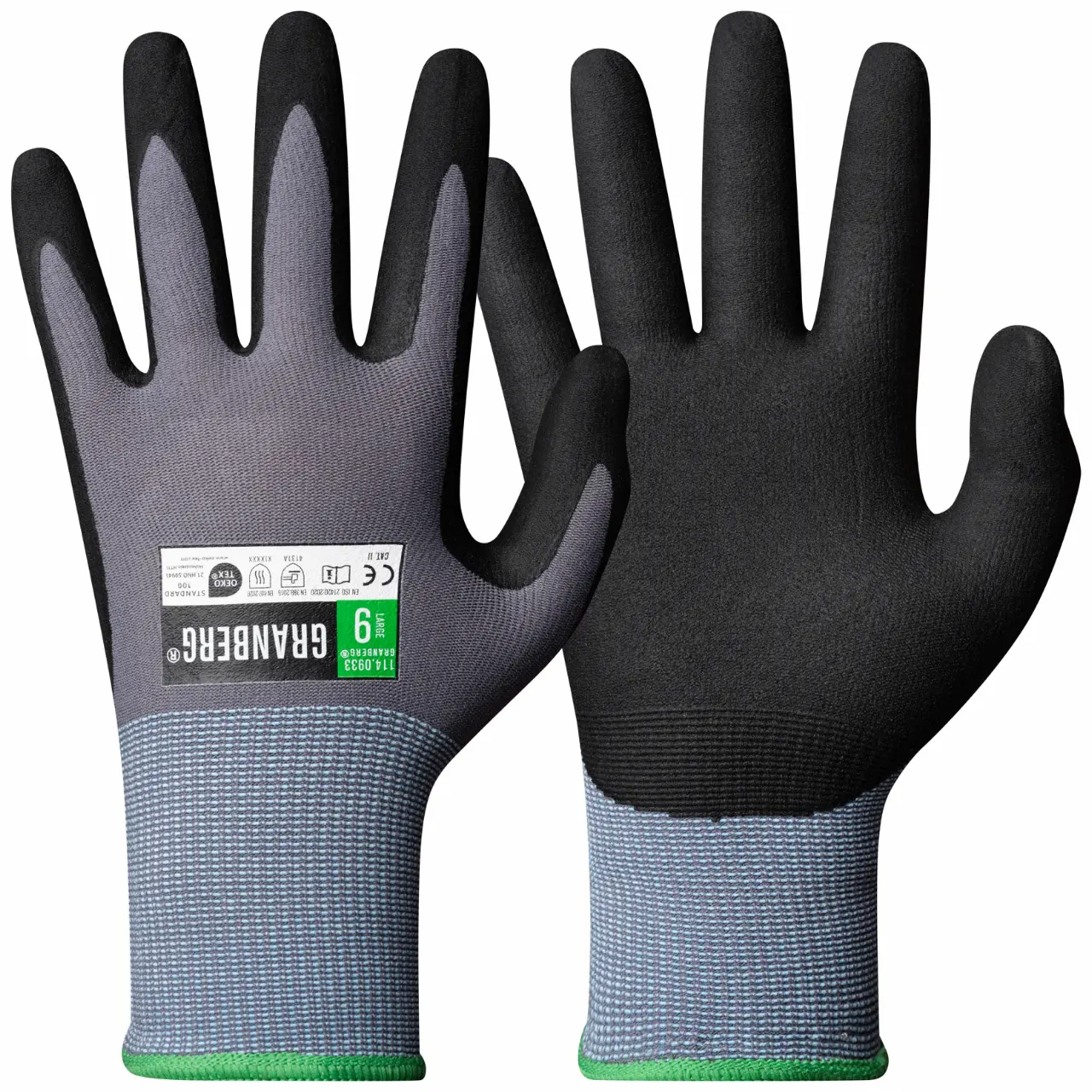
- GRANBERG 0933: High-Abrasion Nitrile Assembly Gloves
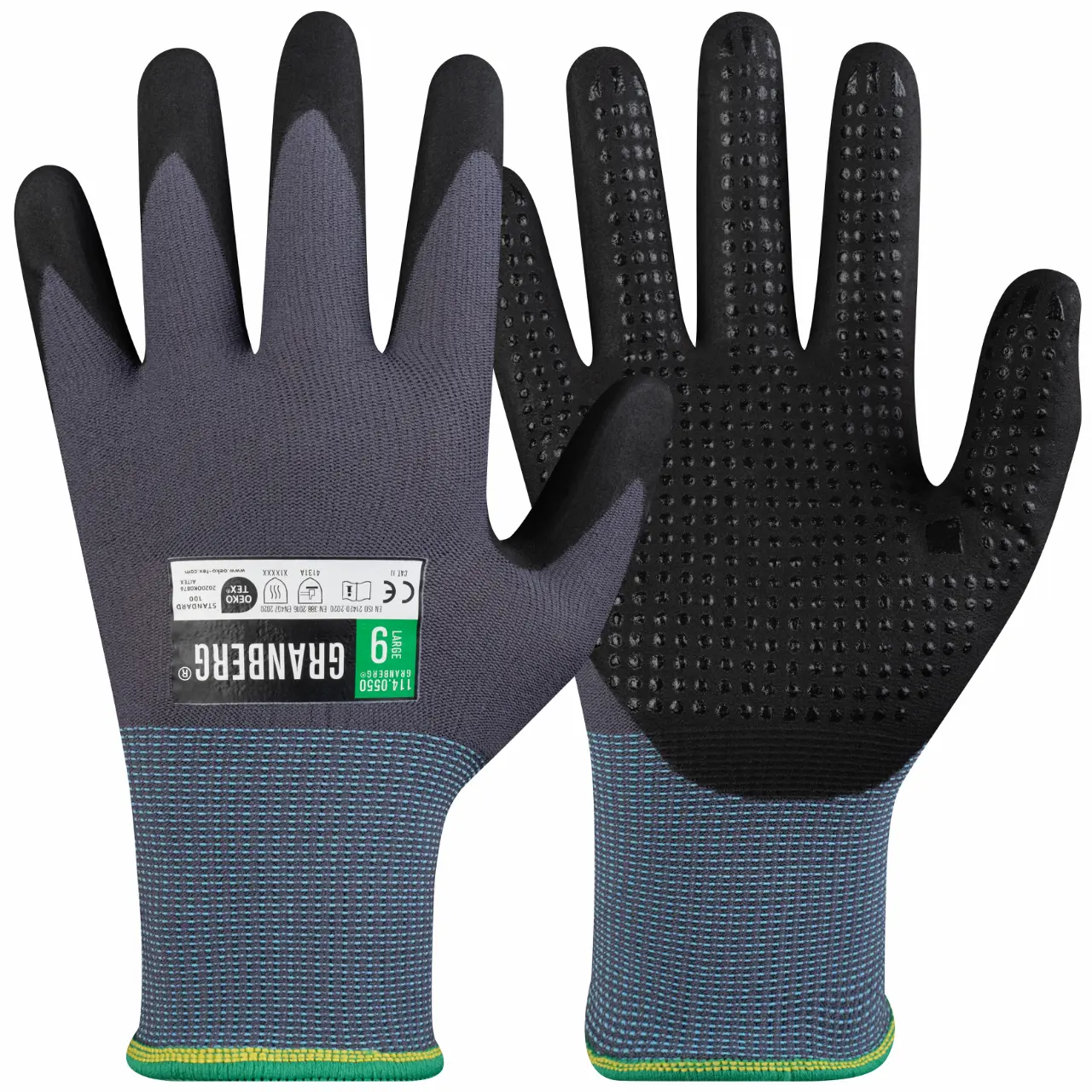
- GRANBERG 0550: Microdot Grip Assembly Gloves, Touchscreen
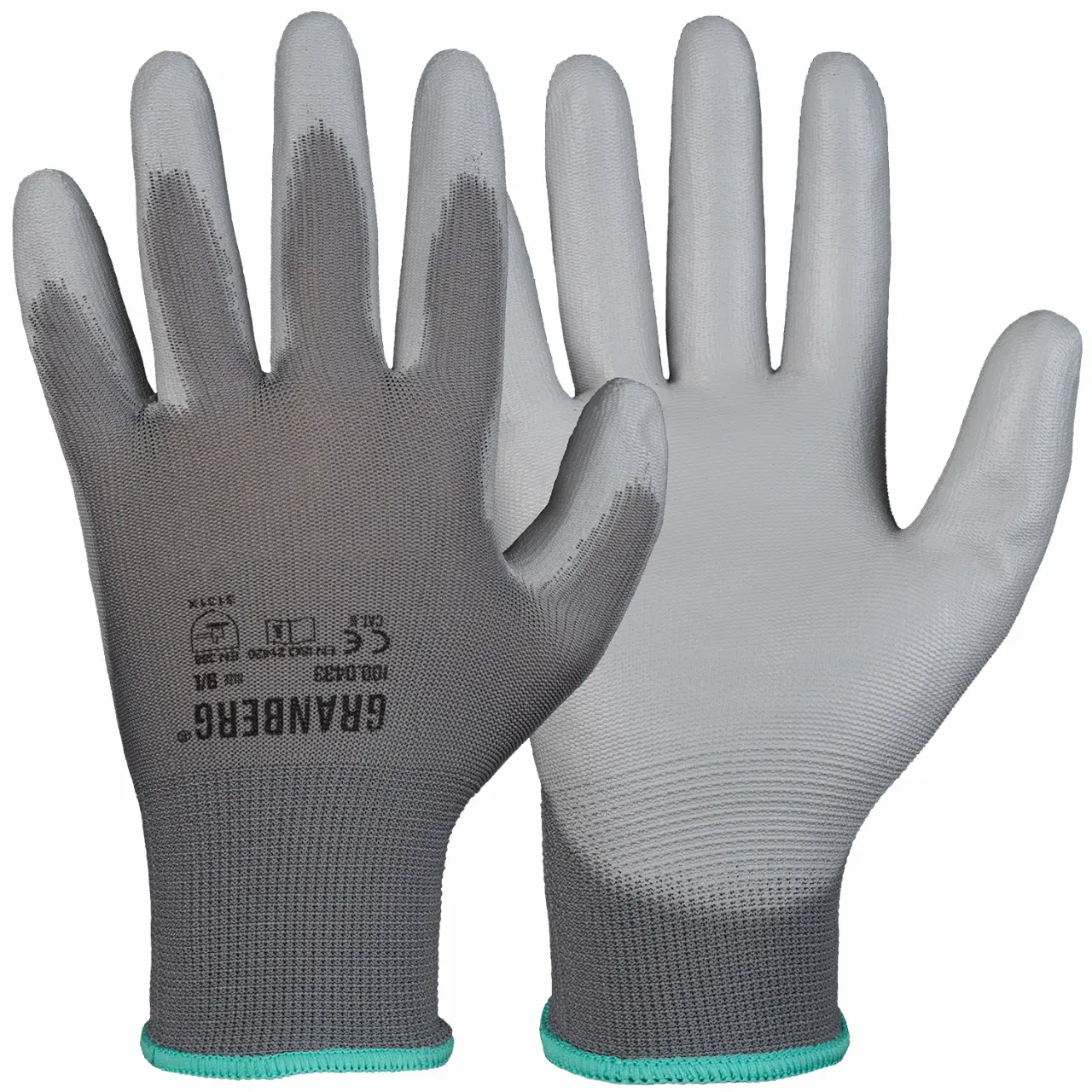
- GRANBERG 0433: Ultra-Thin PU Precision Assembly Gloves
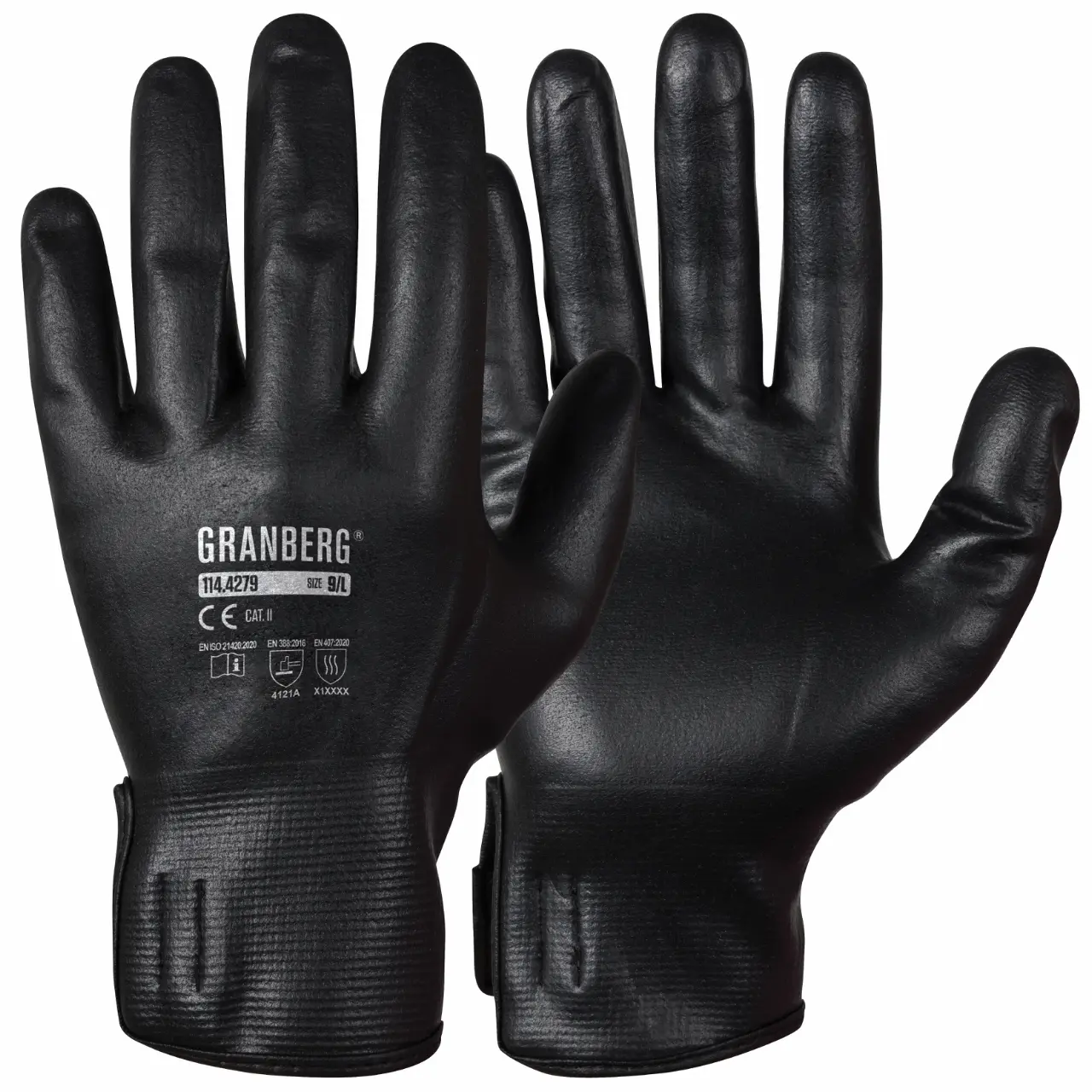
- GRANBERG 4279: Heat & Oil Resistant Assembly Gloves
Frequently asked questions
What is the best coating for mechanic gloves?
Nitrile is the usual choice for oily engine and hydraulic work because it resists oil and keeps grip. PU gives finer fingertip feel and suits cleaner, drier tasks such as electrical work.
Do mechanic gloves protect against hot engine parts?
Only to the level shown on the product page. Check for an EN 407 marking; its second digit is contact heat. Thin assembly gloves are not a substitute for letting hot parts cool.
When should a mechanic wear cut resistant gloves?
For body work, exhaust cutting, sheet metal repairs, glass replacement and handling sharp brackets. These tasks commonly call for EN 388 cut level C or D and above.
How should mechanic gloves fit?
Closely, with no loose material at the fingertips. Measure hand circumference and length and match them to the sizing guide. Between sizes, have the wearer try both before ordering in volume.
How are the gloves on this page chosen?
The list is built by rule: assembly or all round gloves that list oil grip or have a nitrile or PU coating, excluding winter lined, single use, food processing and healthcare gloves.
Related glove types
Cut Resistant gloves · Welding & Heat gloves · Assembly & ESD gloves
Send us the tasks and hazards and our team will put together a specification and carton pricing. Request a quote, check the glove sizing guide, or browse the full glove catalog.