Welding & Heat Gloves
Welding and heat resistant gloves in grain and split cowhide with Kevlar stitching, rated under EN 407 for thermal risks and classified under EN 12477 as Type A or Type B welding gloves.
How to choose a welding glove
EN 407 prints six digits under the flame pictogram and they are always in the same order. The first is burning behaviour, which describes how the material reacts after the flame is removed. The second is contact heat, the temperature the glove holds against a hot surface for a defined threshold time. The third is convective heat, resistance to hot air and rising heat. The fourth is radiant heat, the protection given against radiated energy from an arc or a furnace mouth. The fifth is resistance to small splashes of molten metal, expressed as the number of droplets needed to raise the inner temperature by a set amount. The sixth is resistance to large quantities of molten metal. Each digit runs from 1 to 4, and an X means that property was not tested rather than that the glove failed.
Read the digits against the process. Radiant heat and small splash matter most for arc welding. Contact heat matters most where hot workpieces are handled directly. A high first digit with an X in the molten metal positions describes a heat handling glove rather than a welding glove.
Type A and Type B under EN 12477
EN 12477 is the welding specific standard and it splits gloves into two classes. Type A gloves prioritize protection and carry the higher mechanical and thermal requirements, which suits stick welding, heavy MIG work, gouging and any process throwing significant spatter. Type B gloves prioritize dexterity, and the standard accepts lower mechanical performance in exchange for feel. TIG welding is the classic Type B application, because filler rod control depends on being able to feel the wire. Specifying a Type A glove for TIG usually results in a welder working bare handed, which is a worse outcome than a correctly chosen Type B.
Leather, stitching and cuff length
Grain leather is the outer surface of the hide. It is smoother, more supple and gives better feel, and it resists spatter sticking to it. Split leather comes from the layer beneath, is thicker and more heat tolerant, and is coarser under the fingers. A common and sensible combination is a grain palm for control with split leather on the back and cuff where the heat load is highest.
Stitching is where a cheap welding glove fails first. Cotton thread chars and parts under heat, opening a seam at the very moment protection is needed. Kevlar thread holds, which is why the welding gloves in this range are Kevlar stitched. Look for stitching set below the surface at the fingertips so the thread is not directly exposed to spatter.
Cuff length follows the work position. A short cuff is enough at a bench with sleeves covering the forearm. A long gauntlet is right for overhead work, out of position welding and any process where spatter runs down the arm. Fit the glove loose enough to be shed quickly if something does get inside it, since a glove that cannot be thrown off is its own hazard.
Welding & Heat Gloves range
- GRANBERG 1690K-A: Heavy-Duty Leather Welding Gloves
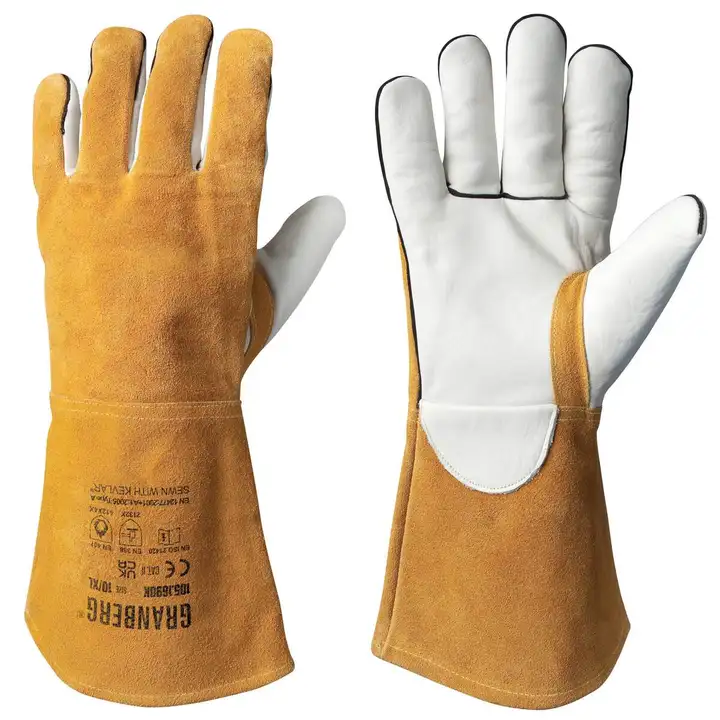
- GRANBERG 1690K: Heavy-Duty Welding Gloves Kevlar®
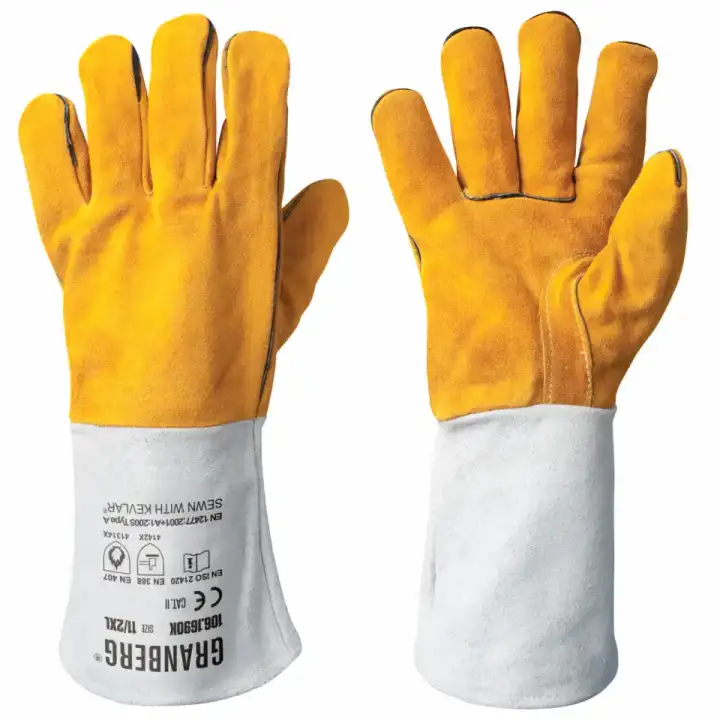
- GRANBERG 1024 Gloves: Cut & Heat Resistant Work Gloves
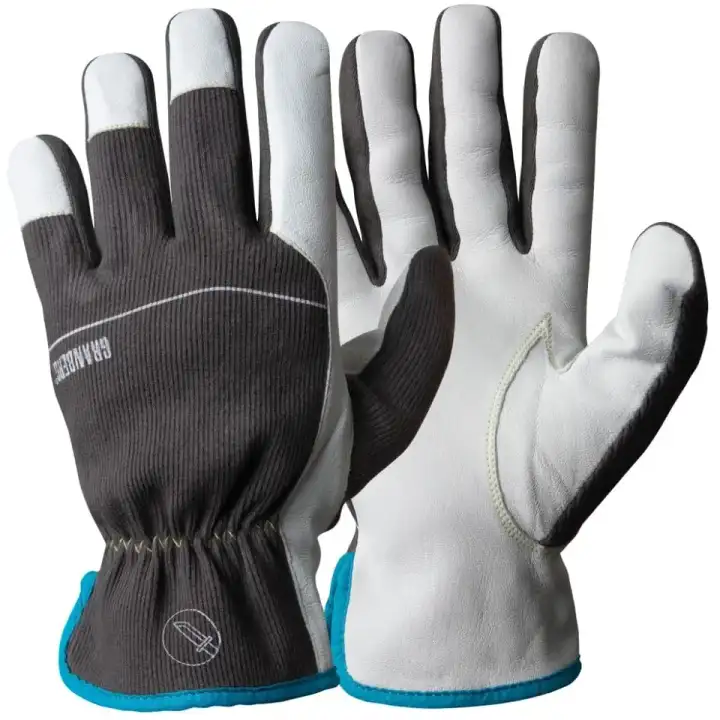
- GRANBERG 1023: Kevlar Lined Goatskin Gloves
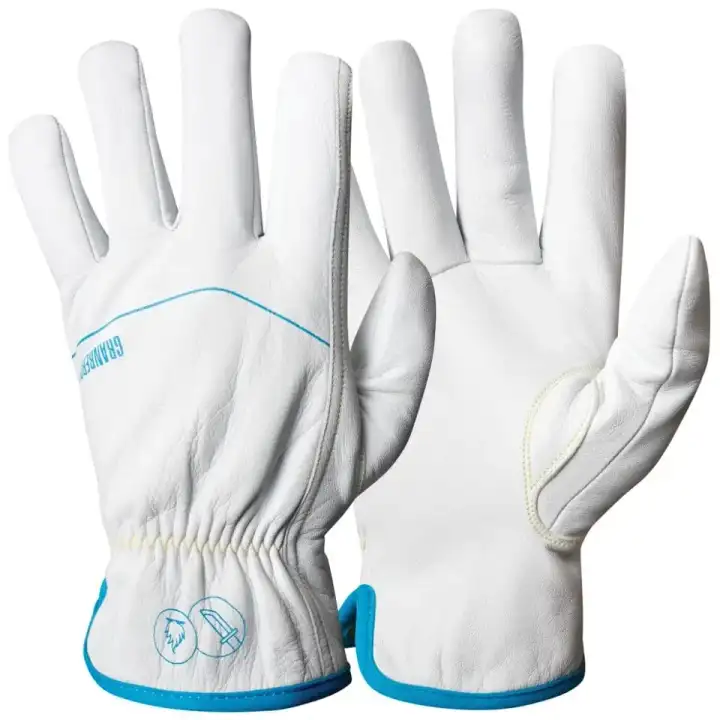
- GRANBERG 1590: 50 cm Leather Welding Gauntlets
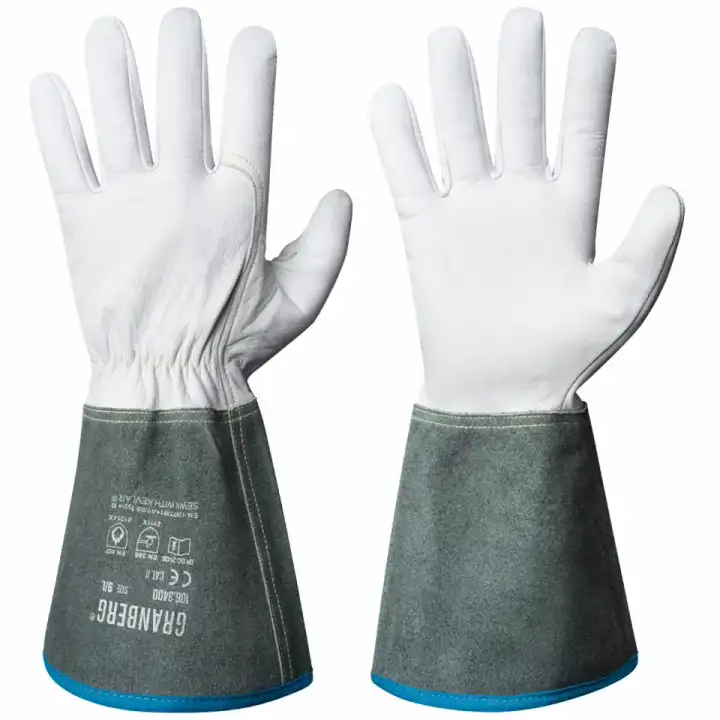
- GRANBERG 3400: Goatskin TIG Welding Gloves
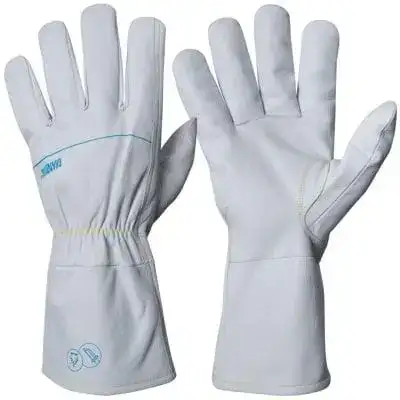
- GRANBERG 1025: Kevlar Lined Heat-Resist Gloves
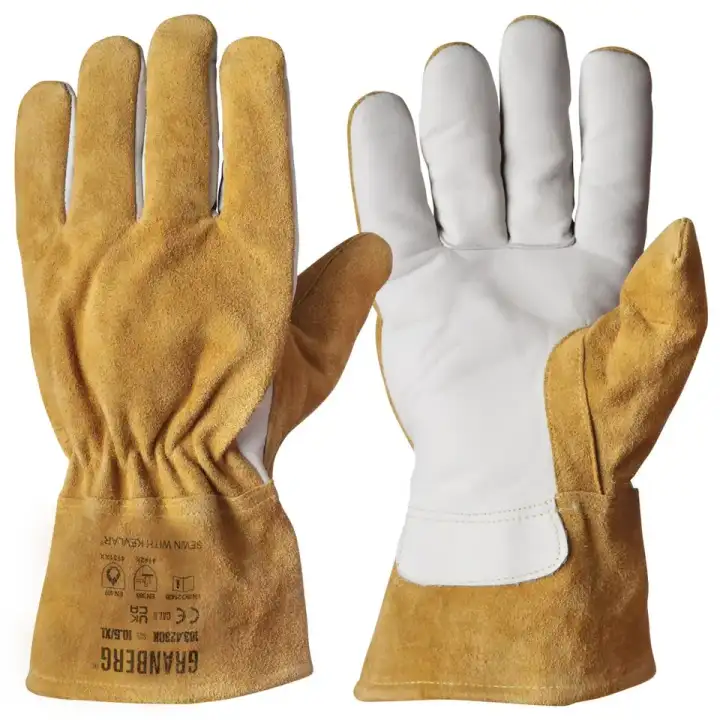
- GRANBERG 4230K: Heat-Resistant Leather Work Gloves
Frequently asked questions
What do the six digits of an EN 407 rating mean?
In order they are burning behaviour, contact heat, convective heat, radiant heat, resistance to small splashes of molten metal, and resistance to large quantities of molten metal. Each is scored from 1 to 4. An X means the property was not tested, which is common and does not by itself mean the glove is unsuitable.
Should I buy a Type A or a Type B welding glove?
Type A under EN 12477 favours protection and suits stick welding, heavy MIG and gouging where spatter is significant. Type B favours dexterity and is the usual choice for TIG, where feeling the filler rod matters. Matching the type to the process is more important than buying the heaviest glove available.
Why does the stitching thread matter?
Cotton thread chars and fails under heat, so a seam can open while the leather itself is still intact. Kevlar thread holds at welding temperatures, which is why it is used throughout this range. Recessed fingertip stitching also keeps the thread out of the direct path of spatter.
Are welding gloves cut resistant as well?
Leather welding gloves carry an EN 388 mechanical code and usually offer useful abrasion and tear performance, but their cut figures are generally lower than a dedicated cut resistant knit. If a task combines blade contact with heat, check the EN 388 code on the specific model rather than assuming leather is enough.
Buying in volume
Where a model is sold from the cart, its price is on the product page. Quote-only models do not list a price. Our team can quote mixed orders across the range for sites in Canada and the United States. Request a bulk quote or check the glove sizing guide before ordering.
Cut Resistant gloves · Impact Protection gloves · Chemical Resistant gloves · Winter & Cold gloves · Assembly & ESD gloves · Tactical & Rescue gloves · Single Use gloves