Chemical Resistant Gloves
Chemical resistant gloves tested to EN ISO 374-1:2016 Type A, B and C, with EN ISO 374-5 micro-organism performance where the glove is certified for it, for solvent, acid, oil and liquid splash handling.
How to choose a chemical resistant glove
There is no such thing as a chemical proof glove, and the standard does not claim there is. EN ISO 374-1:2016 certifies performance against a defined list of test chemicals, each identified by a letter. The list runs from A for methanol and B for acetone through the common industrial families, including K for sodium hydroxide, L for sulphuric acid, M for nitric acid, N for acetic acid, and the hydrocarbon and solvent codes in between. A glove is marked with the letters it passed, and the letters it does not carry say nothing in its favour.
The performance itself is a breakthrough time, measured by permeation testing and reported as a level from 1 to 6. Level 1 is at least 10 minutes, level 2 at least 30, level 3 at least 60, level 4 at least 120, level 5 at least 240 and level 6 at least 480 minutes. Type A means the glove achieved at least level 2 against six or more of the listed chemicals, Type B against at least three, and Type C against at least one at level 1. Type A is not automatically the right answer. A Type C glove that resists the one chemical on your site can be the better choice if it gives the dexterity the work needs.
Permeation, degradation and penetration
Three different failures are often described with one word. Permeation is molecular movement of the chemical through the intact glove material, which is what breakthrough time measures, and it is invisible. Degradation is physical damage to the material itself, seen as swelling, hardening, cracking or a change in colour, and a degraded glove can permeate far faster than its rated time. Penetration is bulk leakage through a pinhole, a seam or a tear, and it is tested with air and water leak testing rather than with chemicals.
This is why the specific chemical and the specific concentration decide the glove, not the category. Nitrile handles many oils, greases, fuels and some acids well but performs poorly against ketones such as acetone. Neoprene is broad and suits acids, alcohols and many solvents. Butyl performs well against ketones and esters. Natural rubber latex is strong for acids and alkalis but is a protein allergy risk and is poor against hydrocarbons. Check the chemical you actually use, at the concentration you use it, against the letters on the glove, and treat breakthrough time as a limit on wear time rather than as a comfort margin.
Micro-organisms and the North American position
EN ISO 374-5:2016 covers protection against micro-organisms. Every glove certified to it passes the penetration requirement for bacteria and fungi. The additional VIRUS marking under the pictogram is only permitted where the glove has also passed the ISO 16604 test for penetration by blood borne pathogens, so the word VIRUS is doing real work and its absence is meaningful.
It is worth saying plainly that there is no mandatory North American equivalent to EN ISO 374. In Canada and the United States chemical glove selection is generally driven by the manufacturer's own resistance data and by the safety data sheet for the substance, without a compulsory type approval scheme. That is precisely why the EN codes are worth reading. They are third party tested figures on the glove itself, and they let a buyer in Alberta or Texas compare two products on the same basis.
Chemical Resistant Gloves range
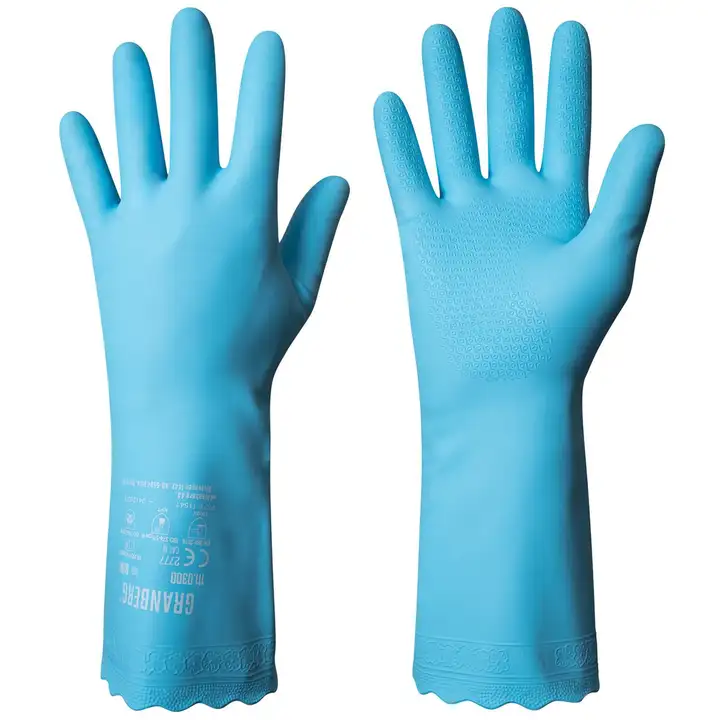
- GRANBERG 0300: Soft, Chemical-Resistant Cleaning Gloves
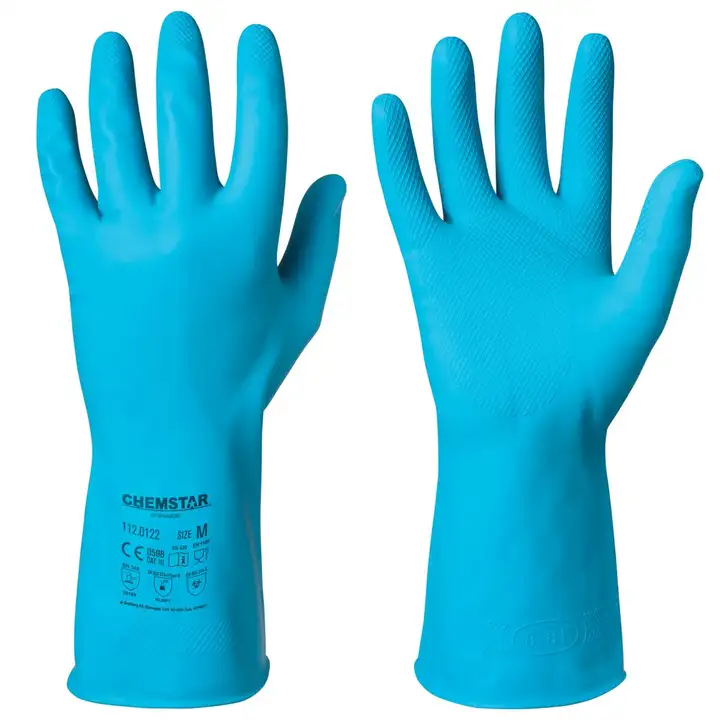
- GRANBERG 0122: Latex Grip Gloves for Food & Chemical Use
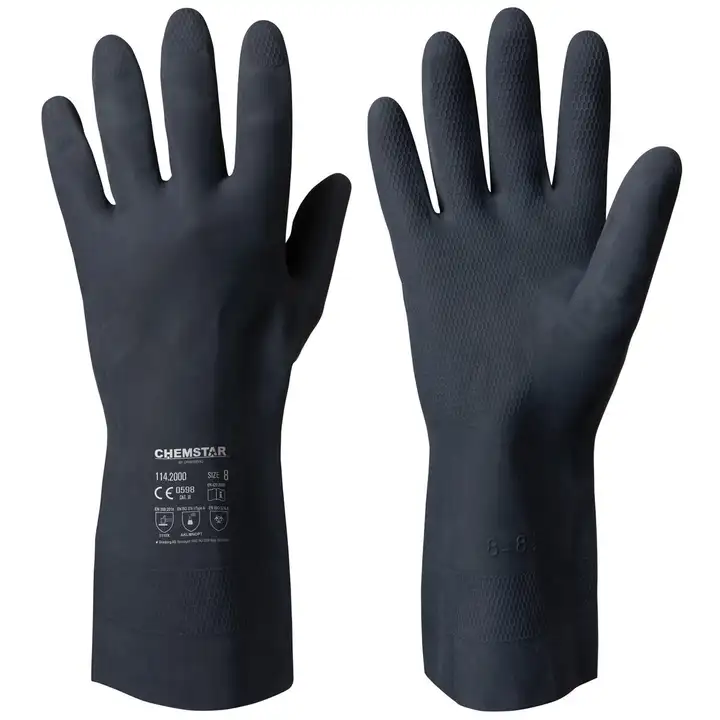
- GRANBERG 2000: Neoprene Chemical Resistant Gloves
- GRANBERG 3000: Chemical, Heat & EU food contact approved (EN 1186) Gloves
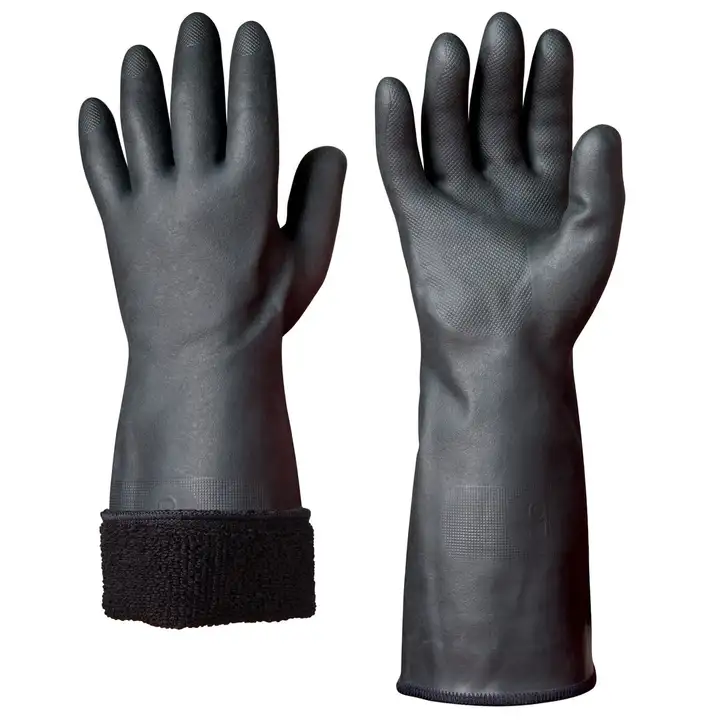
- GRANBERG 6000: Chemical & Oil-Resistant Work Gloves
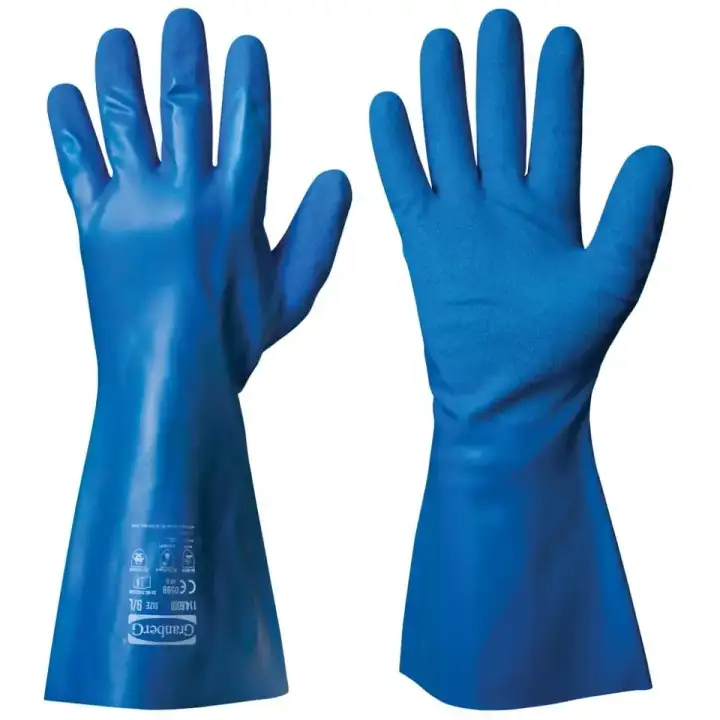
- GRANBERG 0630W: Fleece-Lined Nitrile Winter Chemical Gloves
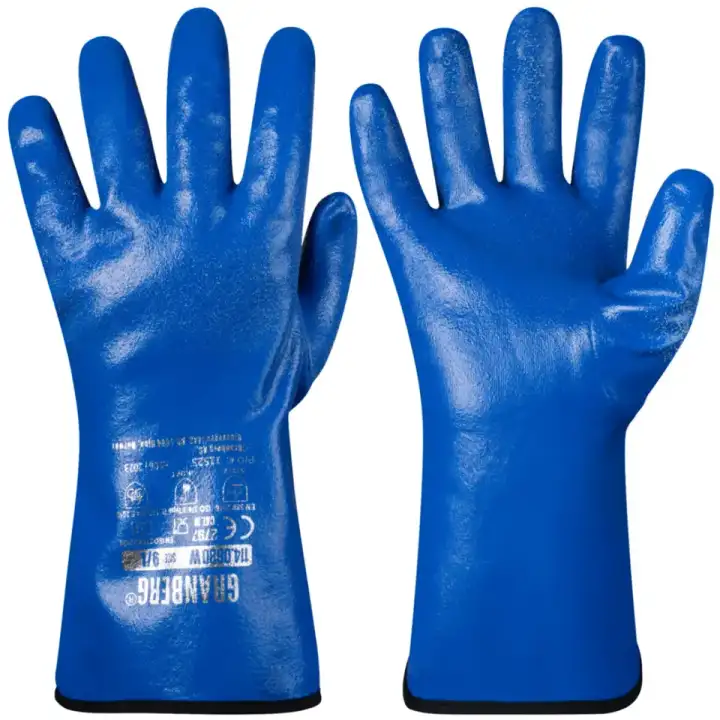
- GRANBERG 9013 Gloves: HF Chemical & Cut Protection
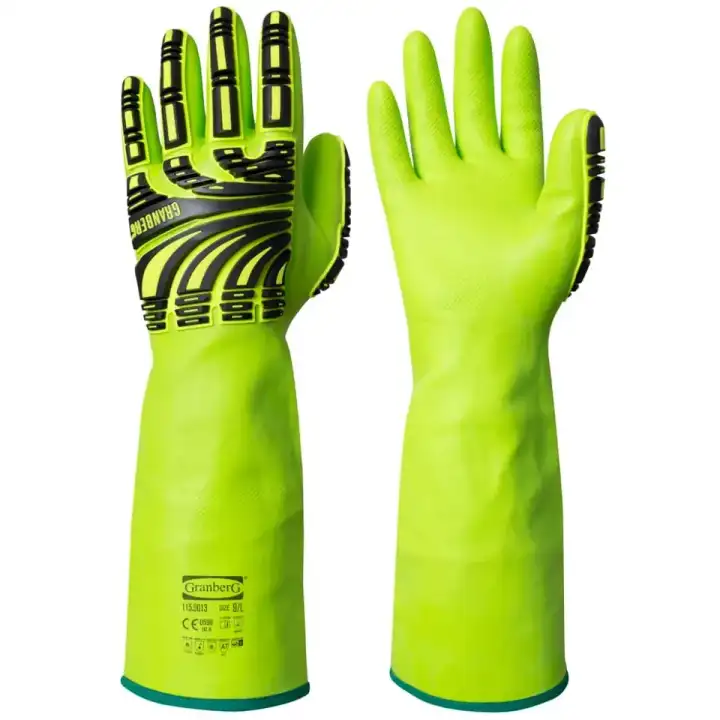
- GRANBERG 8090: Chemical, Cut & Impact Gloves, 35 cm
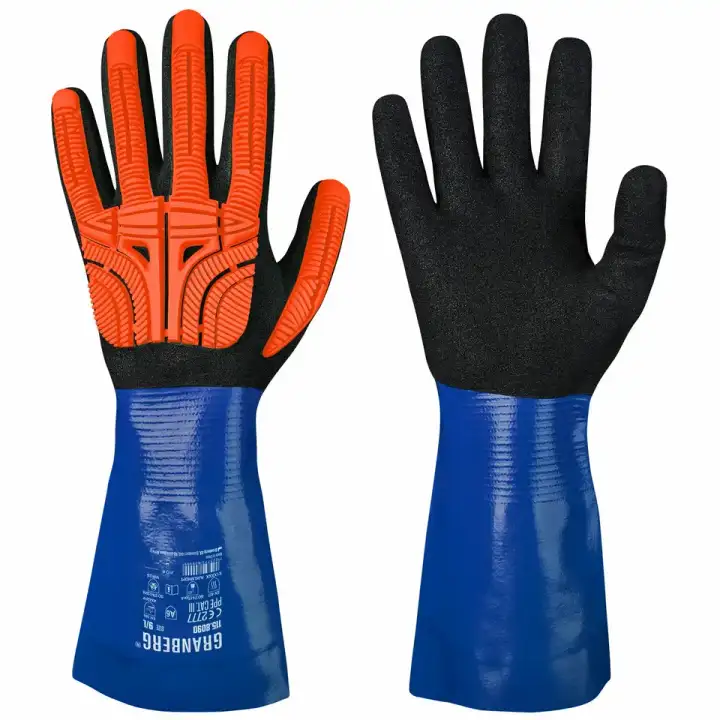
- GRANBERG 626 Nitrile Gloves

- GRANBERG 0700: Latex/Neoprene Chemical-Resistant Gloves
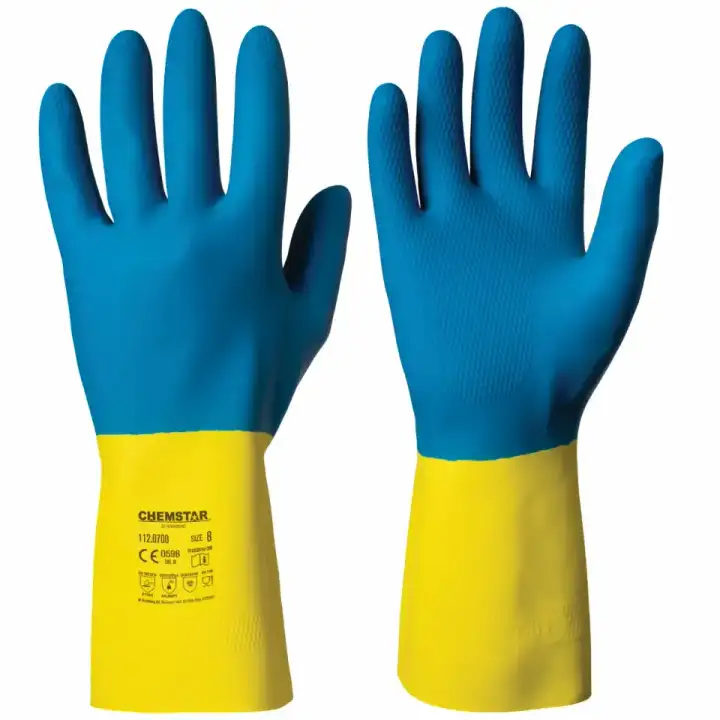
- GRANBERG 1000: Heavy-Duty Nitrile Chemical Gloves
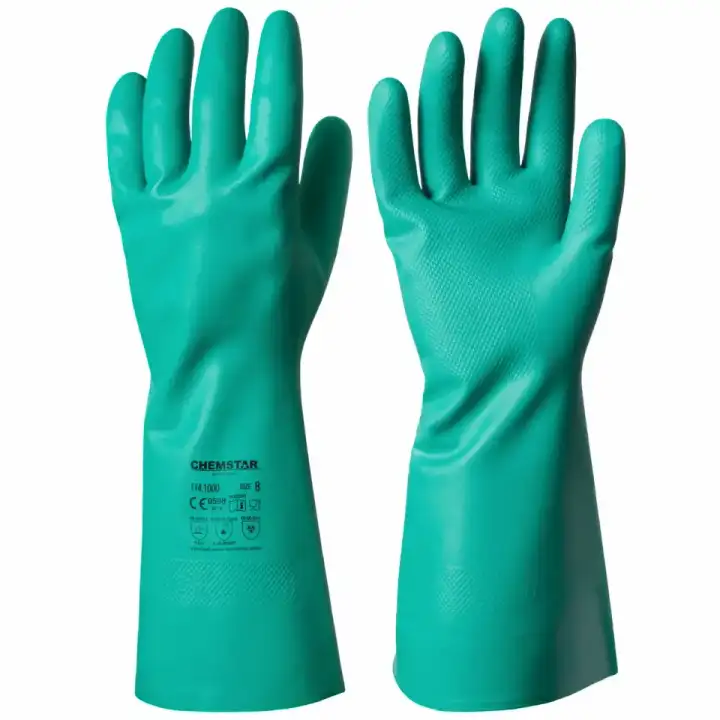
- GRANBERG 0630: Nitrile Chemical-Resistant Gloves, 30 cm
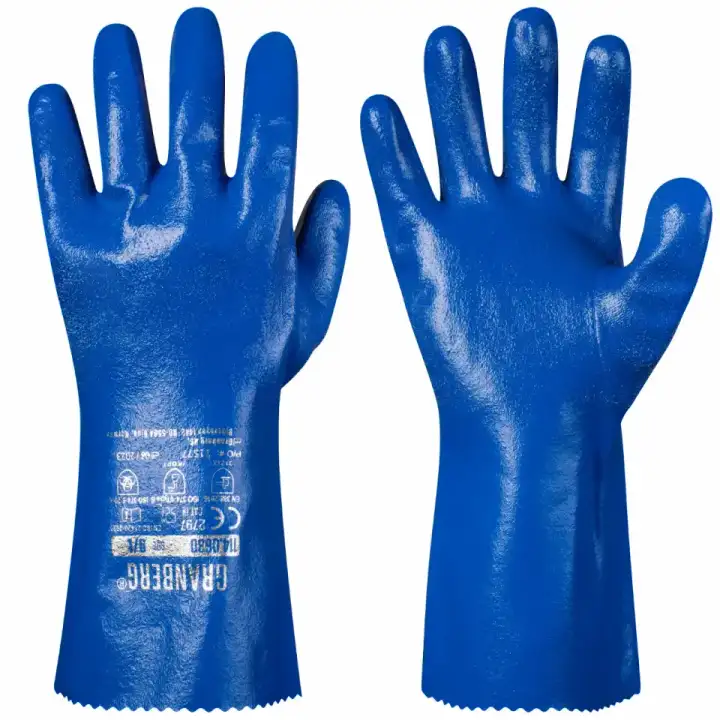
- GRANBERG 1046: 46 cm Unlined Nitrile Chemical Gloves
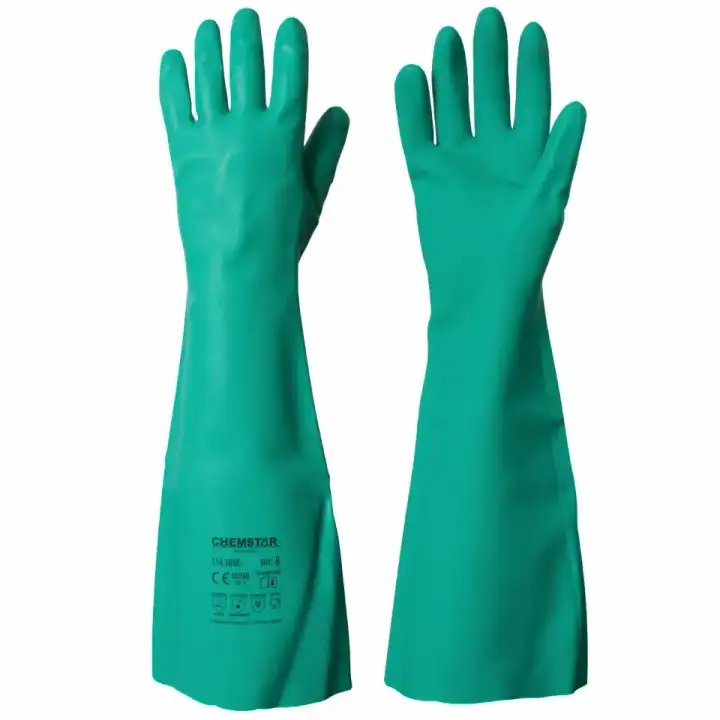
- GRANBERG 0660: 68 cm Shoulder-Length Nitrile Gloves
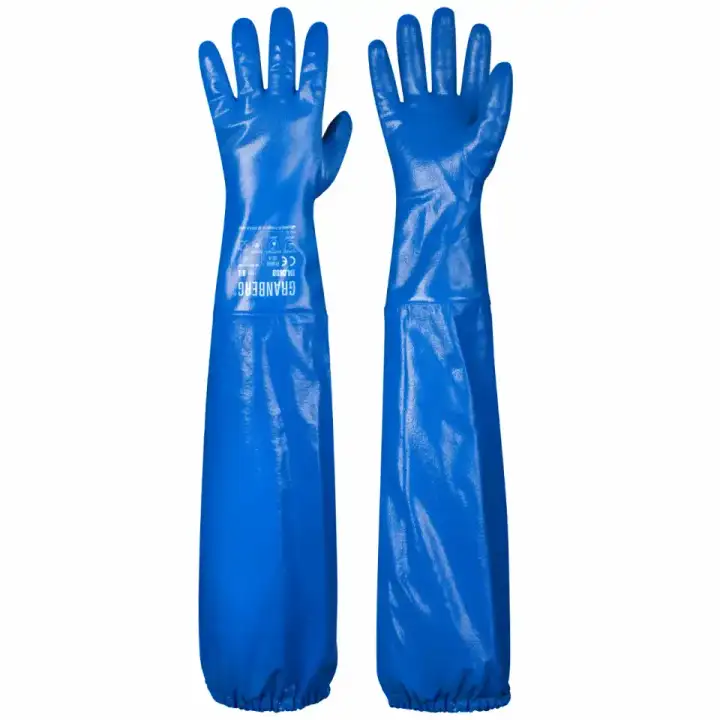
- GRANBERG 0660W: Winter-Lined 68 cm Chemical Gloves
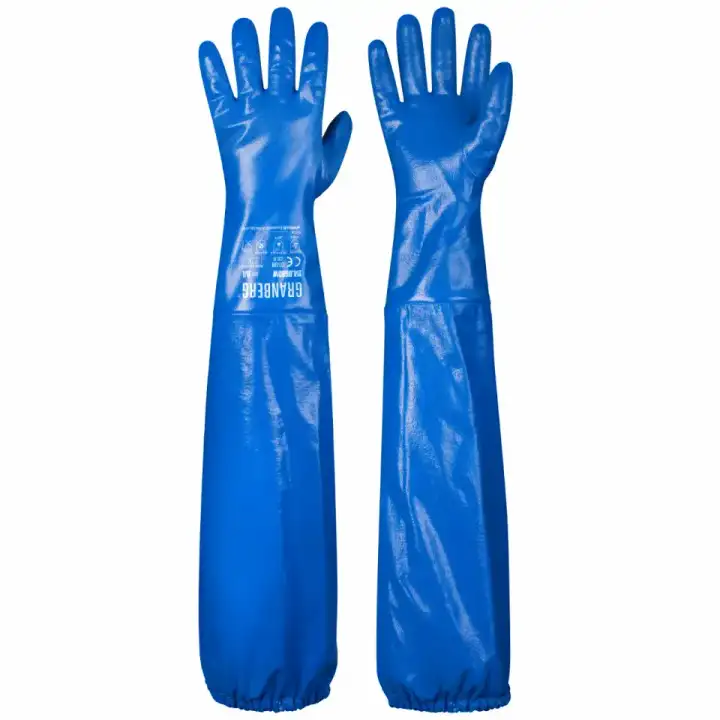
- GRANBERG 0400A: Reusable Latex Chemical-Resistant Gloves
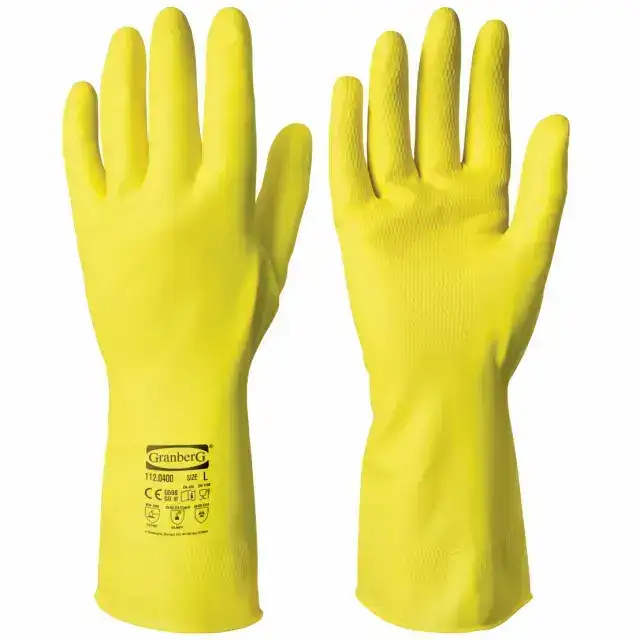
- GRANBERG 8155: 35 cm PVC Chemical-Resistant Gloves
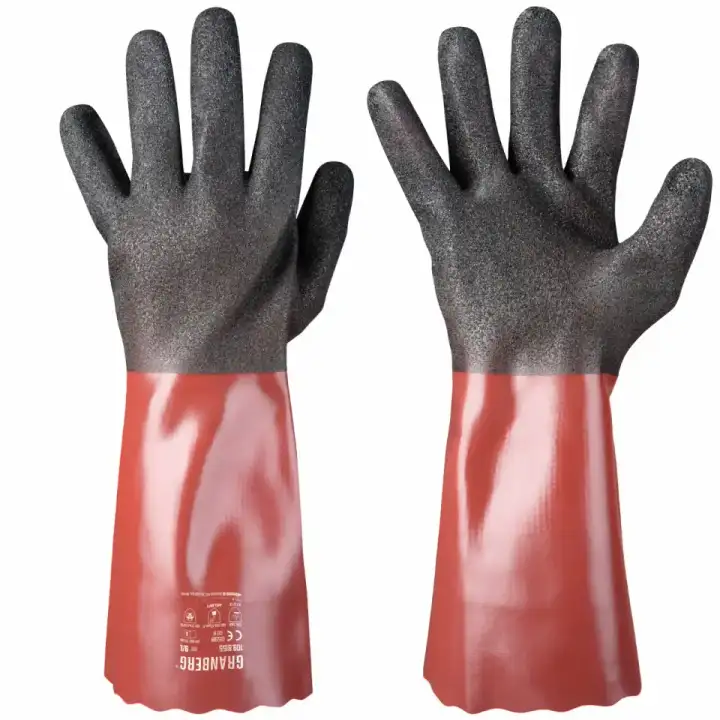
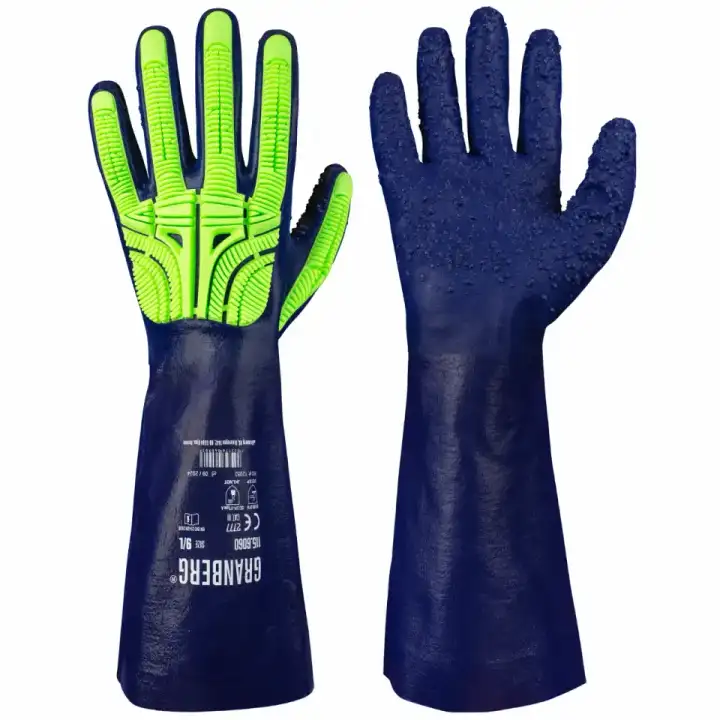
- GRANBERG 6060: Chemical & Impact Nitrile Gloves, 39 cm
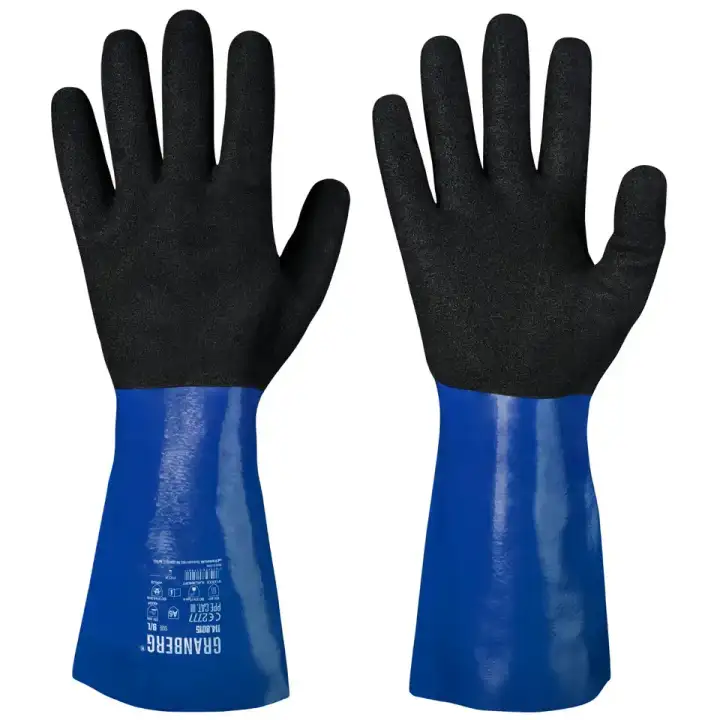
- GRANBERG 8015: Cut & Chemical-Resistant Nitrile Gloves
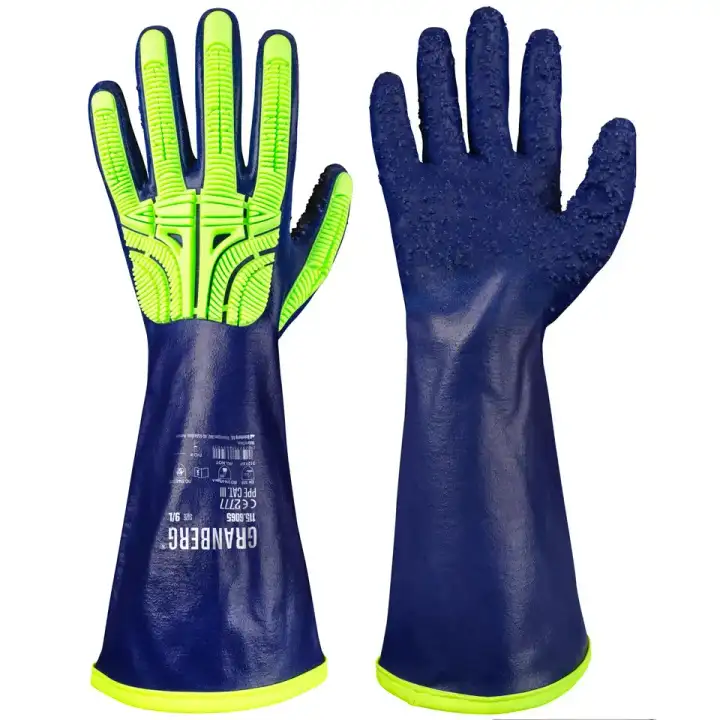
- GRANBERG 6065: Chemical & Impact Winter Gloves
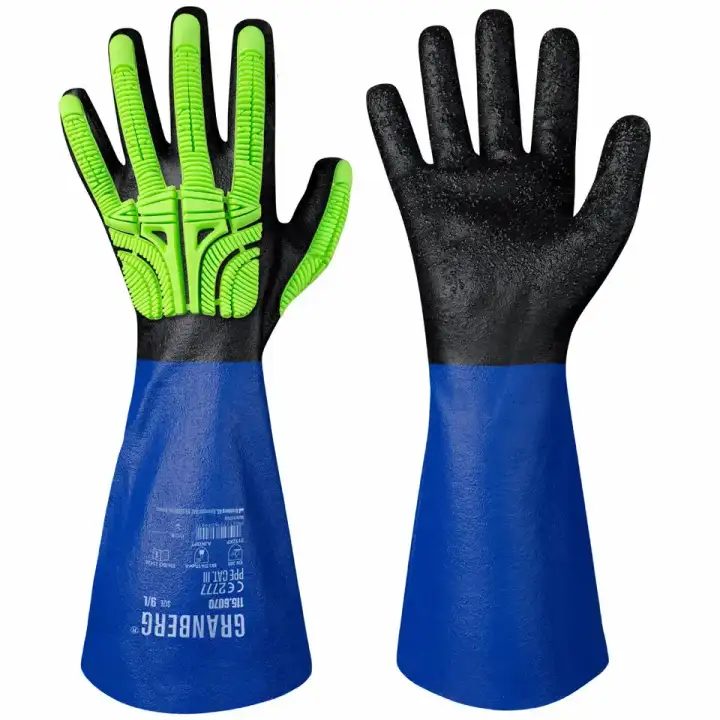
- GRANBERG 6070: Chemical & Impact Resistant Nitrile Gloves
- GRANBERG 8310 Chemical-Resistant Lined Nitrile Gloves
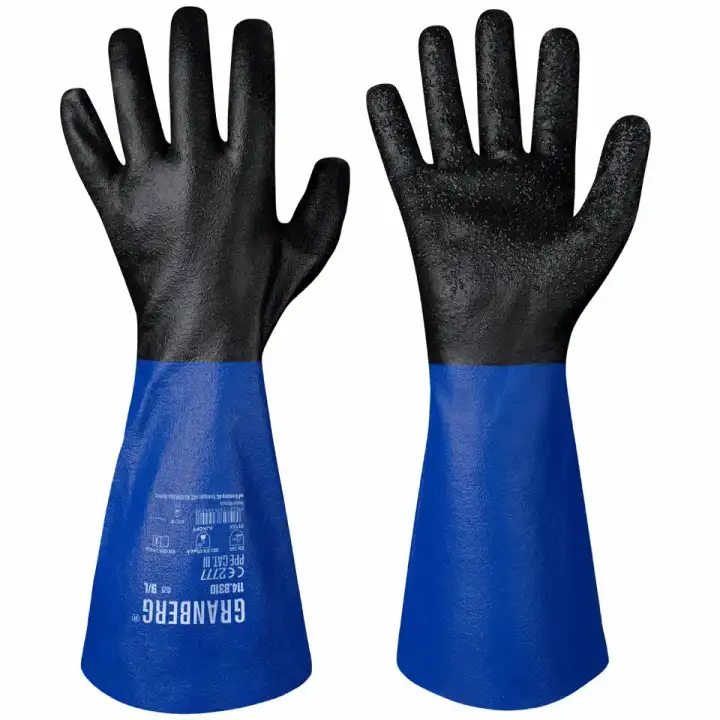
- GRANBERG 8205 Fleece Lined Chemical Glove
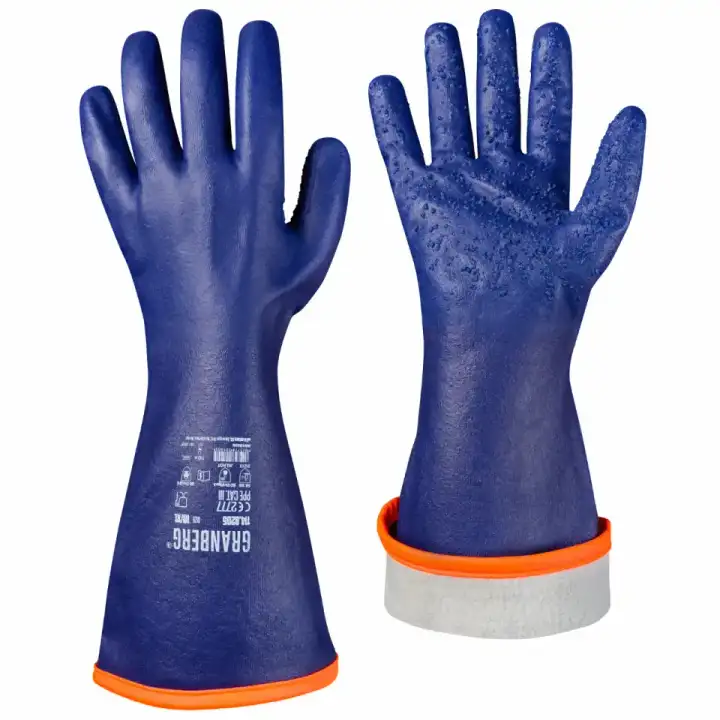
- GRANBERG 8200 Cotton Lined Chemical Glove
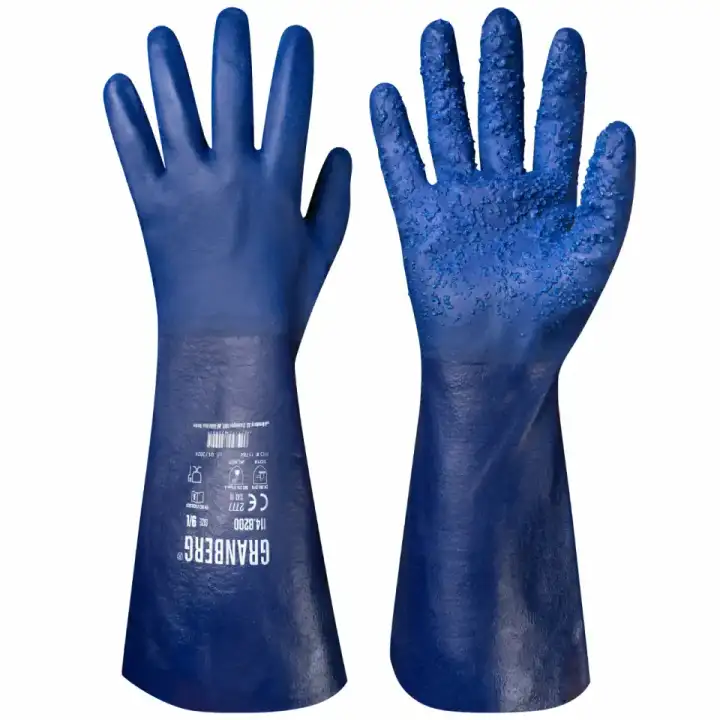
- GRANBERG 770 Blue Nitrile Single-Use Gloves

- GRANBERG 990 Nitrile Single-Use Chemical Gloves

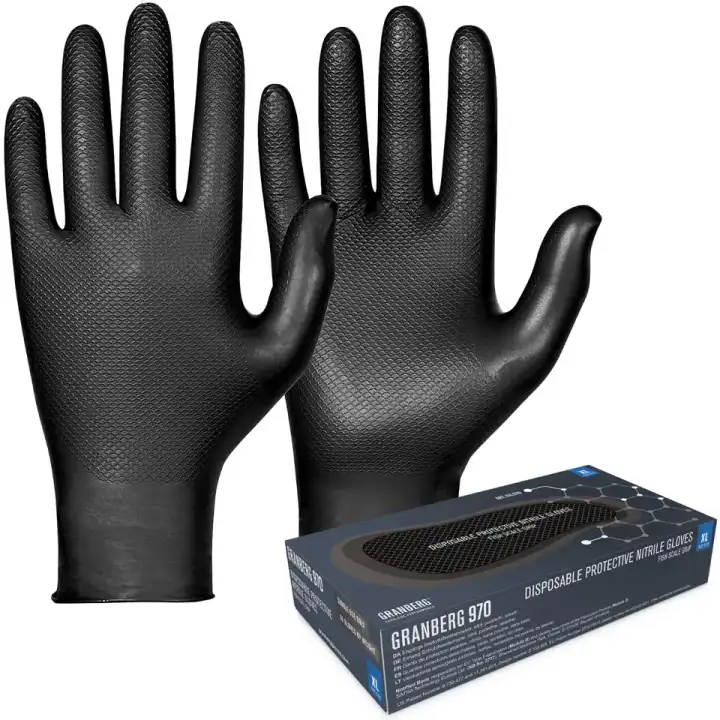
- GRANBERG 970: Fish-Scale Grip Disposable Nitrile Gloves
- GRANBERG 925: COATS® Skin-Soothing Disposable Gloves

- GRANBERG 880 Black Nitrile Single-Use Gloves, Box of 100

- GRANBERG 626: Clearance Nitrile Gloves, Past Shelf Life

Frequently asked questions
What do Type A, Type B and Type C mean on a chemical glove?
They describe how many of the standard test chemicals the glove resisted. Type A means at least level 2 breakthrough, which is 30 minutes or more, against six or more listed chemicals. Type B means the same level against at least three. Type C means at least level 1, which is 10 minutes, against at least one. The letters printed with the pictogram tell you which chemicals were tested.
How long can I wear a chemical glove once it is exposed?
Treat the certified breakthrough time as a maximum, not a target. Breakthrough is measured in a laboratory on a flat sample at a set temperature, while real use adds flexing, heat from the hand, and mixed substances, all of which shorten the time. Change gloves well before the rated level, and change them immediately if the material swells, stiffens or discolours.
Is there an ANSI or CSA equivalent to EN ISO 374?
There is no mandatory North American type approval scheme for chemical gloves in the way EN ISO 374 works in Europe. Selection here normally rests on the manufacturer's chemical resistance data and the safety data sheet for the substance. Reading the EN letter codes gives you independently tested figures to compare products against.
What does the VIRUS marking mean?
A glove marked EN ISO 374-5 has passed penetration testing for bacteria and fungi. The word VIRUS may only be added when the glove has also passed ISO 16604 testing for penetration by blood borne pathogens, so a glove without that word has not demonstrated a viral barrier.
Buying in volume
Where a model is sold from the cart, its price is on the product page. Quote-only models do not list a price. Our team can quote mixed orders across the range for sites in Canada and the United States. Request a bulk quote or check the glove sizing guide before ordering.
Safety gloves for Industrial · Safety gloves for Food & Fisheries · Safety gloves for Healthcare
Cut Resistant gloves · Impact Protection gloves · Winter & Cold gloves · Welding & Heat gloves · Assembly & ESD gloves · Tactical & Rescue gloves · Single Use gloves