Safety Gloves for Food & Fisheries
EU food contact approved (EN 1186), waterproof and insulated gloves for meat and poultry processing, seafood handling, commercial kitchens, cold chain logistics and marine work in Canada and the United States.
Hazards in this environment
Wet grip loss
Almost everything on a food line is wet, and much of it is also fatty. Chilled carcasses, fish, washed produce, brine, ice and stainless steel surfaces all reduce friction at the same time. A glove that grips well dry can slide on a boning line, and a slipping hand is what puts a knife where it should not be. The property that addresses this is a textured or embossed grip pattern that channels liquid away from the contact surface.
Cold
The cold in this sector is mostly contact cold and it is constant rather than seasonal. Staff hold chilled product, work in rooms held near freezing, and move in and out of freezers through a shift. Hands are also usually wet, which strips heat far faster than cold air alone. The properties that address this are the EN 511 contact cold digit and a waterproof outer that keeps the liner dry.
Cuts
This is not the same cut hazard as a fabrication shop. On a processing line the blade is in the worker's own hand, and the injury usually happens on the non knife hand during boning, trimming or filleting, when the blade passes through product faster than expected. The exposure is repeated hundreds of times a shift at close range. The property that addresses this is a high cut level liner on the supporting hand, backed by grip that stops product moving.
Contamination
The glove is part of the food safety system, not just personal protection. It has to be EU food contact approved (EN 1186), has to be changed at defined points, and must not shed fibres or powder onto product. Colour is a control in itself, since a blue glove fragment is detectable against food where a white one is not. The properties that address this are EU food contact approved (EN 1186) material, powder free construction and a single use option at every change point.
What to specify
Start by splitting the work into wet, cold and blade tasks, because a single glove rarely covers all three well. Wash down and chemical sanitation calls for a chemical resistant glove chosen against the EN ISO 374-1 letters for the cleaning agent actually in use, since caustic and chlorinated products are more aggressive than staff often assume. Chilled and freezer work calls for the EN 511 contact cold digit and a waterproof outer. Cutting and boning calls for a high cut level liner on the supporting hand.
For anything touching product, confirm the glove is EU food contact approved (EN 1186) and specify powder free single use gloves at change points. Nitrile is the usual choice for food processing because it resists fats and oils, tears visibly rather than developing quiet pinholes, and contains no natural rubber protein. A textured or fish scale grip pattern is worth specifying wherever product is wet or oily.
Cold chain logistics deserves separate treatment from processing. Pickers in a distribution freezer are handling cases and steel racking rather than product, the exposure is continuous, and dexterity still has to be good enough to scan and confirm on a handheld. That combination usually points to an insulated glove with a moderate rather than maximum liner thickness, sized up slightly so the insulation is not compressed against the hand.
Cut Resistant gloves · Chemical Resistant gloves · Winter & Cold gloves · Single Use gloves
Recommended for Food & Fisheries
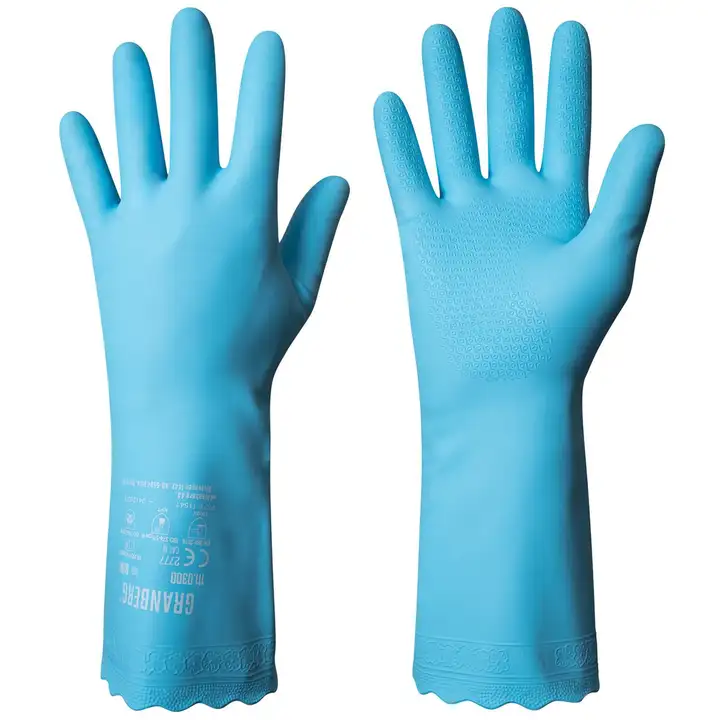
- GRANBERG 0300: Soft, Chemical-Resistant Cleaning Gloves
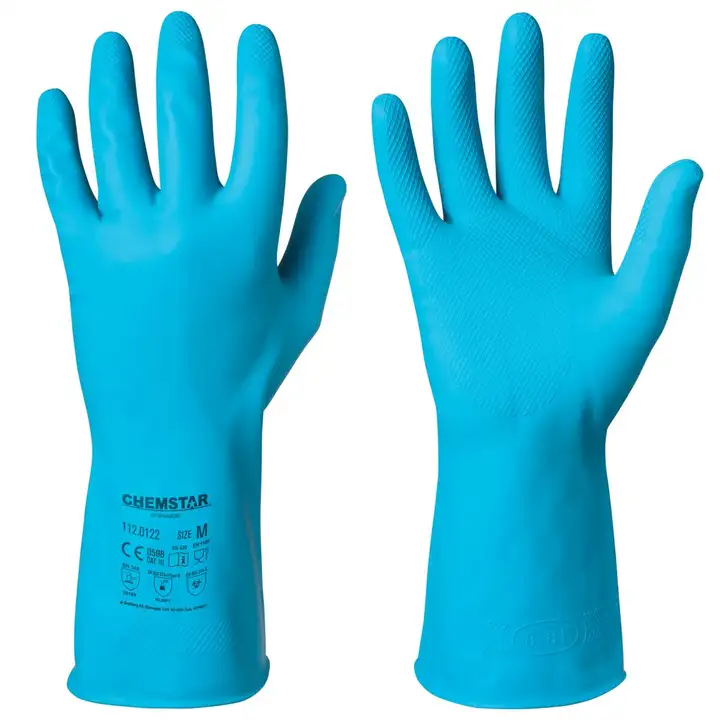
- GRANBERG 0122: Latex Grip Gloves for Food & Chemical Use
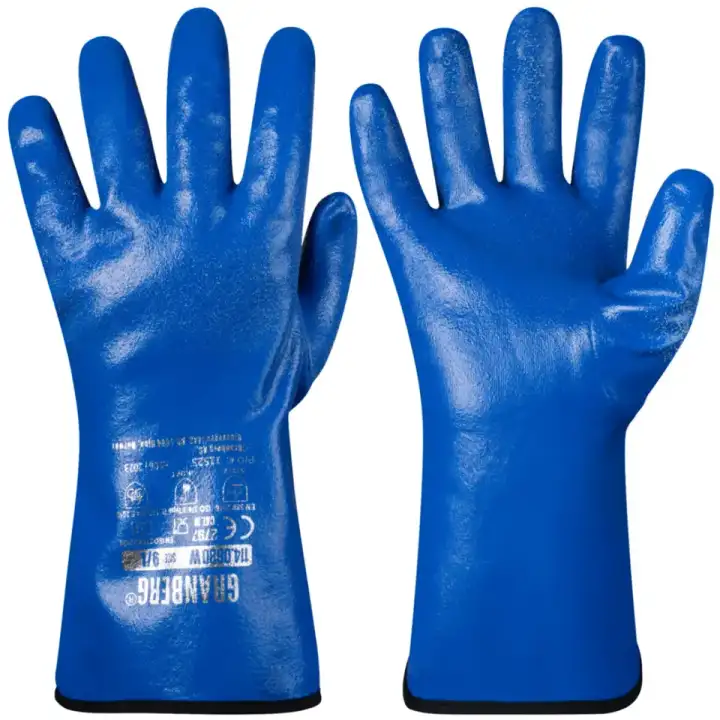
- GRANBERG 0630W: Fleece-Lined Nitrile Winter Chemical Gloves
Frequently asked questions
Which gloves are EU food contact approved (EN 1186)?
Look for EU food contact approved (EN 1186), shown by the glass and fork pictogram. Nitrile is generally preferred for food processing because it resists fats and oils and contains no natural rubber protein. Always confirm the declaration on the specific product rather than assuming it applies across a material type.
What cut protection does a boning or filleting line need?
Focus the protection on the hand that holds the product rather than the hand that holds the knife, since that is where blade contact usually occurs. A high cut level liner with a grip surface that stops product sliding is the combination that works, and grip matters almost as much as the cut rating because a moving workpiece is what causes the slip.
Can the same glove work in the freezer and on the wash down?
Rarely, because the requirements pull in opposite directions. Wash down needs chemical resistance against the sanitation agent in use, while freezer work needs insulation and contact cold performance. Most operations run two specifications and accept the extra line rather than compromise on either.
Specifying for a site
Send us the tasks and hazards and our team will put together a specification and carton pricing for delivery in Canada and the United States. Request a bulk quote, check the glove sizing guide, or browse the full glove catalogue.
Safety gloves for Industrial · Safety gloves for Healthcare · Safety gloves for Tactical & Security · Safety gloves for Sport & Leisure