Single Use Gloves
Disposable nitrile and latex gloves in powder free construction, with AQL 1.5 quality levels and textured grip options for wet and oily handling in food, clinical, laboratory and light industrial work.
How to choose a single use glove
Material first. Nitrile is the general purpose choice for industry, food handling and clinical work, because it resists oils, fats, fuels and many chemicals, tears in a visible way rather than developing quiet pinholes, and carries no natural rubber latex protein. Latex has the best elasticity and tactile feedback of the three and remains popular for fine work, but natural rubber protein allergy is a genuine occupational risk and many sites have removed it entirely. Vinyl is the least expensive and suits short, low risk, non hazardous tasks such as front of house food service, but it fits loosely, resists chemicals poorly and loses barrier integrity quickly under stress.
AQL, thickness and grip
AQL is an acceptable quality level applied to pinhole testing during batch sampling. A glove sold at AQL 1.5 has been sampled and accepted at a level where no more than 1.5 percent of the batch is expected to contain pinholes. It is a batch statistic and not a guarantee about any individual glove, which is a distinction worth making internally, and it is why double gloving is still standard practice where a breach would be serious. A lower AQL number means a tighter standard.
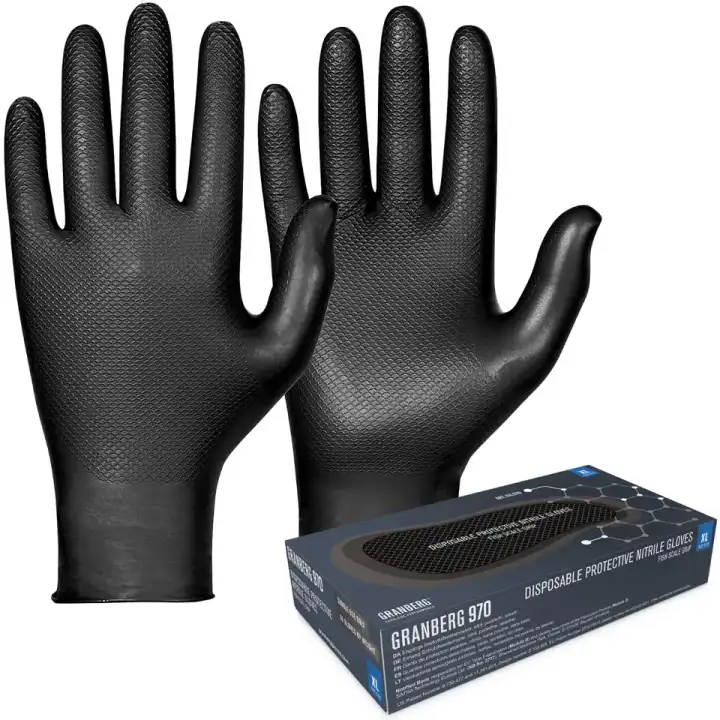
Film thickness is normally quoted in mils or in gauge at the fingertip, and it trades barrier and durability against feel. A thinner glove gives more sensitivity for detailed work, while a thicker glove survives longer on parts with edges and gives a longer permeation path. Grip texture is a separate choice. Smooth is fine for dry handling, micro textured fingertips add security for general work, and a fish scale or diamond embossed pattern channels liquid away from the contact surface, which is the pattern to specify for oily automotive work or wet food handling.
Powder free is now the default and should be treated as a requirement rather than a preference. Cornstarch powder carries latex proteins into the air, contaminates product and surfaces, and interferes with clean processes. Chlorinated or polymer coated interiors give easy donning without it.
Food contact and barrier claims
Where gloves touch food, the material has to be EU food contact approved (EN 1186), and the glass and fork pictogram on the box is the mark to look for. Nitrile is generally the preferred material for food processing because it resists fats and oils and because it is free of natural rubber protein.
For biological hazards, a single use glove may carry EN ISO 374-5 for micro-organisms, and the added VIRUS marking only where the glove has also passed ISO 16604 testing against blood borne pathogens. Chemical performance follows the same EN ISO 374-1 letter codes used on reusable gloves, but breakthrough times on a thin disposable film are short by nature. A disposable nitrile glove is a splash and incidental contact barrier. For immersion, decanting or extended chemical handling, move to the chemical resistant range.
Single Use Gloves range
- GRANBERG 626 Nitrile Gloves
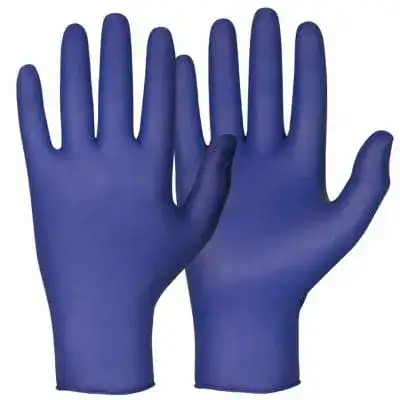
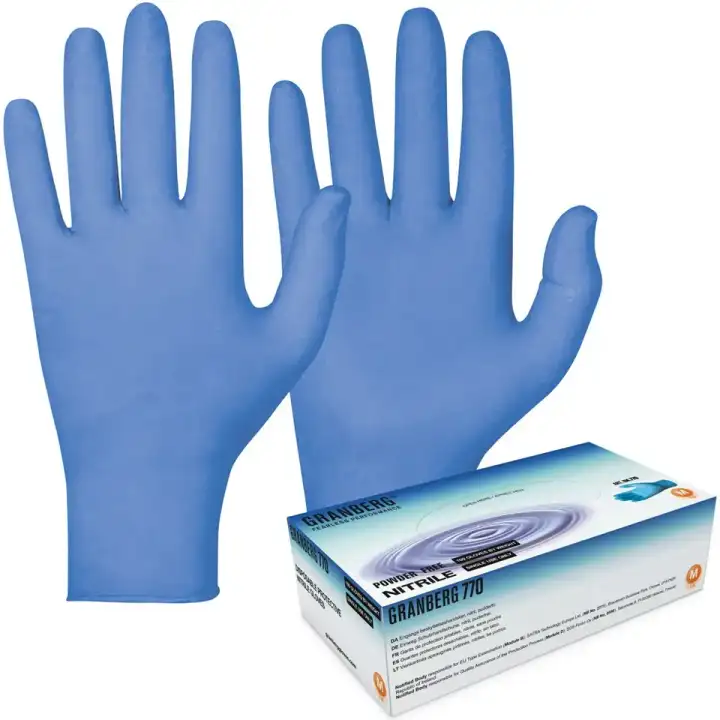
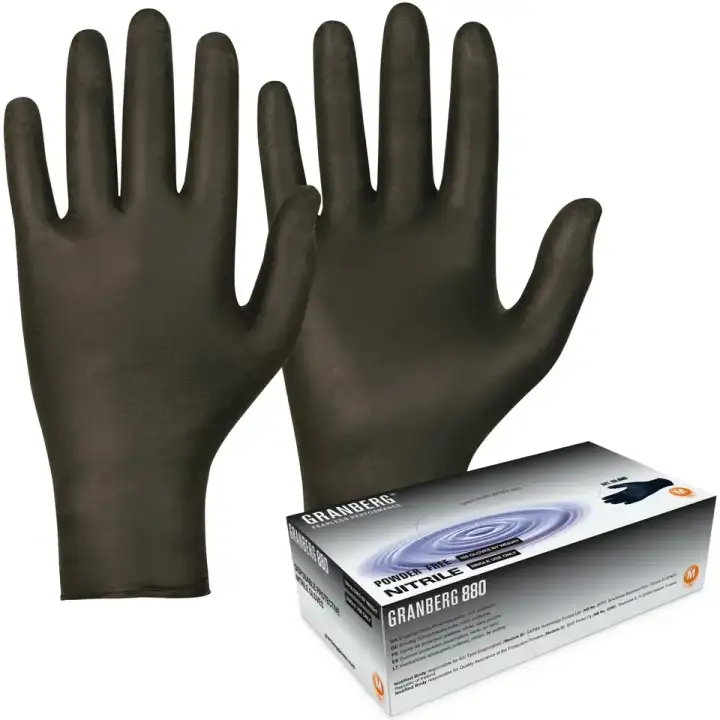
- GRANBERG 770 Blue Nitrile Single-Use Gloves
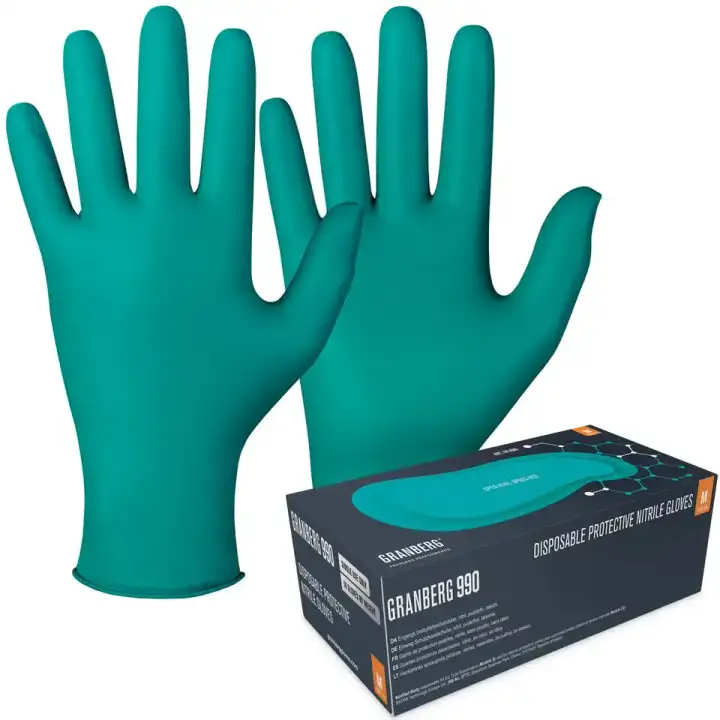
- GRANBERG 990 Nitrile Single-Use Chemical Gloves
- GRANBERG 970: Fish-Scale Grip Disposable Nitrile Gloves
- GRANBERG 925: COATS® Skin-Soothing Disposable Gloves
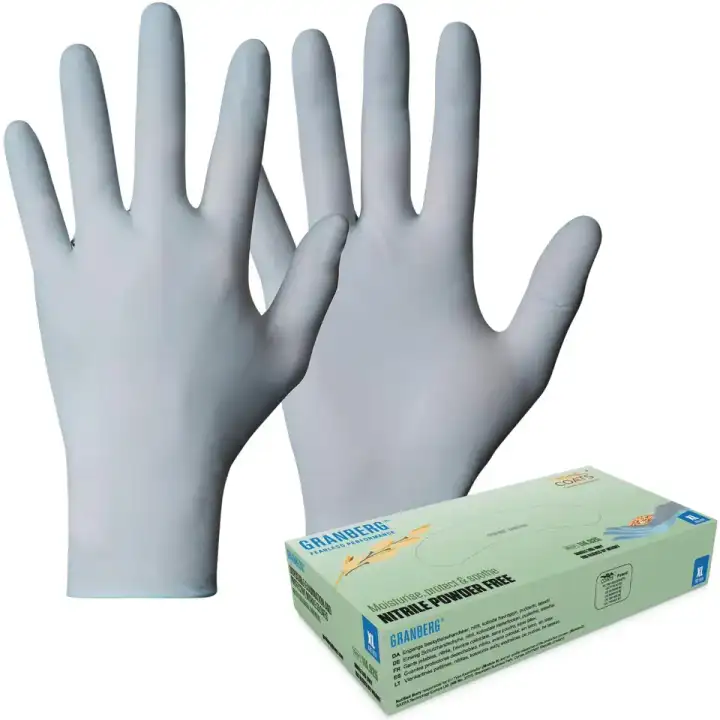
- GRANBERG 880 Black Nitrile Single-Use Gloves, Box of 100
- GRANBERG 626: Clearance Nitrile Gloves, Past Shelf Life
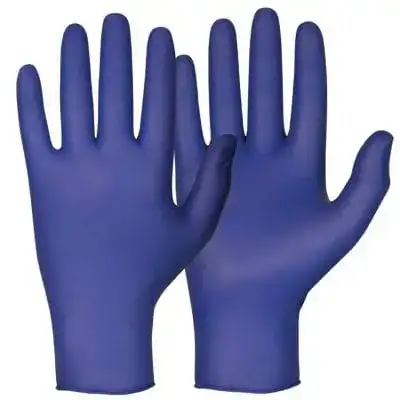
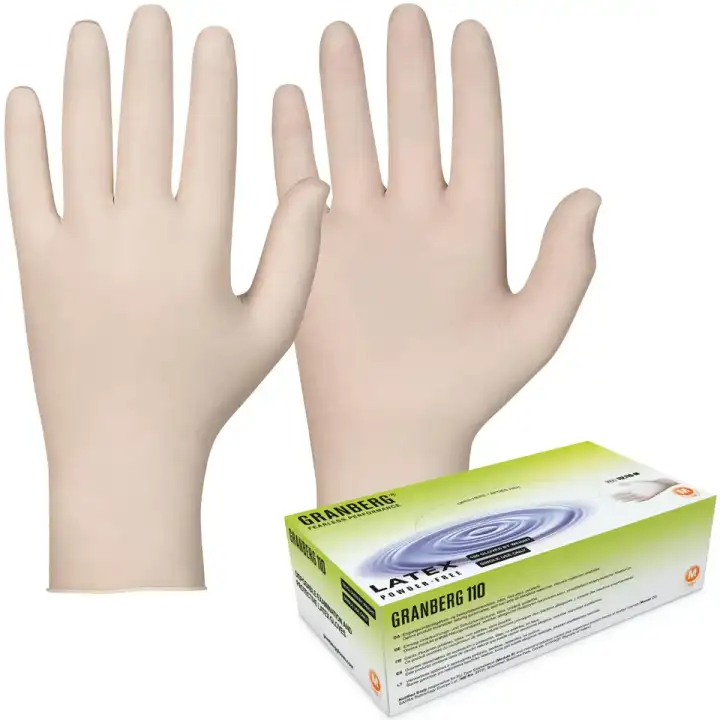
- GRANBERG 110: Clearance Latex Gloves, Past Shelf Life
Frequently asked questions
What does AQL 1.5 actually guarantee?
It is a batch sampling standard for pinholes. AQL 1.5 means the batch was sampled and accepted at a level where no more than 1.5 percent of gloves are expected to contain a pinhole. It is a statistical property of the batch rather than a promise about any single glove, which is why double gloving remains standard where a breach would be serious.
Nitrile, latex or vinyl, which should I buy?
Nitrile suits most industrial, food and clinical use because it resists oils and fats, tears visibly and contains no natural rubber protein. Latex offers the best fit and feel but carries a protein allergy risk. Vinyl is the cheapest and is appropriate only for short, low risk, non hazardous tasks.
Why specify powder free gloves?
Cornstarch powder can carry latex proteins into the air, settle on product and surfaces, and interfere with clean processes. Modern gloves use chlorination or an internal polymer coating so they don donned easily without powder, so there is little reason to accept powdered stock.
Can single use gloves be used for chemical handling?
For splash and incidental contact, yes, within the EN ISO 374-1 letters the glove carries. Breakthrough times on a thin disposable film are short by design, so they are not suitable for immersion, decanting or extended handling. Use a reusable chemical resistant glove for that work.
Buying in volume
Where a model is sold from the cart, its price is on the product page. Quote-only models do not list a price. Our team can quote mixed orders across the range for sites in Canada and the United States. Request a bulk quote or check the glove sizing guide before ordering.
Safety gloves for Industrial · Safety gloves for Food & Fisheries · Safety gloves for Healthcare
Cut Resistant gloves · Impact Protection gloves · Chemical Resistant gloves · Winter & Cold gloves · Welding & Heat gloves · Assembly & ESD gloves · Tactical & Rescue gloves