Safety Gloves for Industrial
Hand protection for manufacturing, fabrication, construction, mining, and oil and gas operations across Canada and the United States, selected by the hazard rather than by the catalogue page.
Hazards in this environment
Cuts
Industrial cut injuries come mostly from material edges rather than from tools. Sheet metal after shearing, strapping and banding under tension, extrusion offcuts, glass and trimmed castings all present edges that are sharp in one plane and often unseen. The property that addresses this is liner cut resistance, read as an ANSI/ISEA 105 level from A1 to A9 and as the TDM letter in the EN 388 code.
Impact
Fabrication shops, drilling floors and mine sites share the same back of hand exposure. Hands are fed between a load and a fixed structure, wrenches slip on seized fittings, and pipe and steel swing while being landed. The property that addresses this is a tested thermoplastic rubber guard, shown by the P in the sixth EN 388 position.
Abrasion
Continuous handling of concrete, castings, rough timber, drill pipe and rope wears through a glove palm long before anything cuts it, and a worn palm loses grip before it loses coverage. The properties that address this are the EN 388 abrasion score and a coating chosen for the surface being handled.
Chemicals
Maintenance work, parts washing, surface preparation and process handling bring hands into contact with solvents, degreasers, acids, alkalis and hydrocarbons. The property that addresses this is a certified breakthrough time against the specific chemical in use, read from the EN ISO 374-1 letter codes and the Type A, B or C classification.
Heat
Welding and grinding produce sparks and spatter, while hot workpieces, dies, moulds and steam lines produce contact heat. These are separate exposures with separate ratings. The property that addresses them is EN 407 performance in the relevant digit, backed by leather construction and Kevlar stitching for welding.
Cold
Outdoor industrial work in Alberta, the Prairies, the northern states and the offshore Gulf in winter combines wind driven convective loss with cold steel contact, and often with rain or snow. The properties that address this are the EN 511 convective and contact cold digits along with a waterproof membrane where hands get wet.
What to specify
Write the specification around the task rather than around the site. A single plant can need an 18 gauge coated assembly glove on the sub assembly line, an A5 or A6 cut glove at the press brake, an impact glove on the yard, a Type A welding gauntlet in the weld bay, and a nitrile chemical glove in the wash area. Standardizing on one general purpose glove across all of them means paying for protection where it is not needed and going short where it is.
For cut hazards, specify the ANSI level first because that is how North American procurement is written, then read the EN 388 TDM letter as the cross check. For impact, require the EN 388 P designation rather than accepting visible padding. For chemicals, match the safety data sheet to the EN ISO 374-1 letters and treat the breakthrough level as a wear time limit. For hot work, choose EN 12477 Type A or Type B to match the process. For cold, read all three EN 511 digits including the water figure.
Oil and gas operations in Alberta, Texas and the Gulf typically need impact and grip performance together, because drilling and completions work is heavy, oily and hard on the back of the hand. Mining adds abrasion and dust. Automotive and general manufacturing sit at the dexterity end, where thin coated liners and touchscreen fingertips keep line speed up. Construction spans all of it and usually needs at least two glove types on site at once.
Cut Resistant gloves · Impact Protection gloves · Chemical Resistant gloves · Winter & Cold gloves · Welding & Heat gloves · Assembly & ESD gloves
Recommended for Industrial
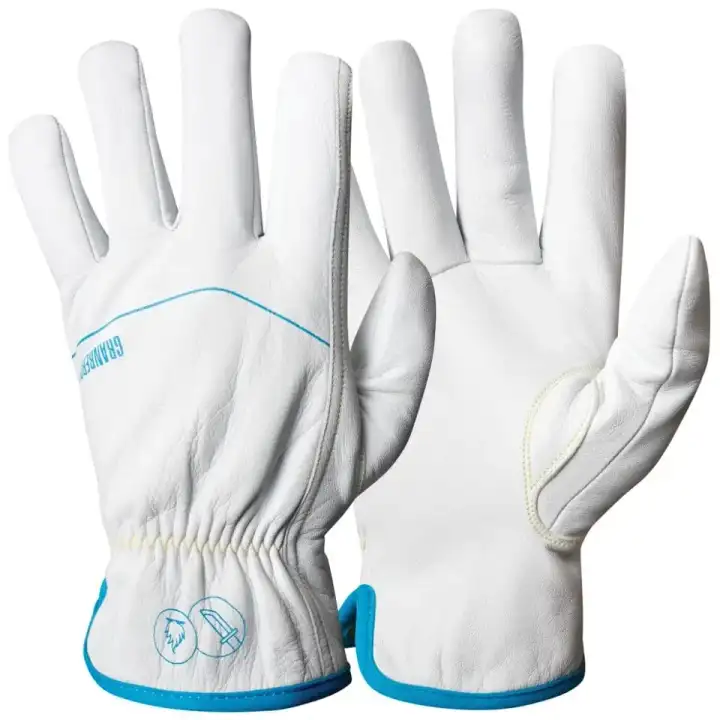
- GRANBERG 1023: Kevlar Lined Goatskin Gloves
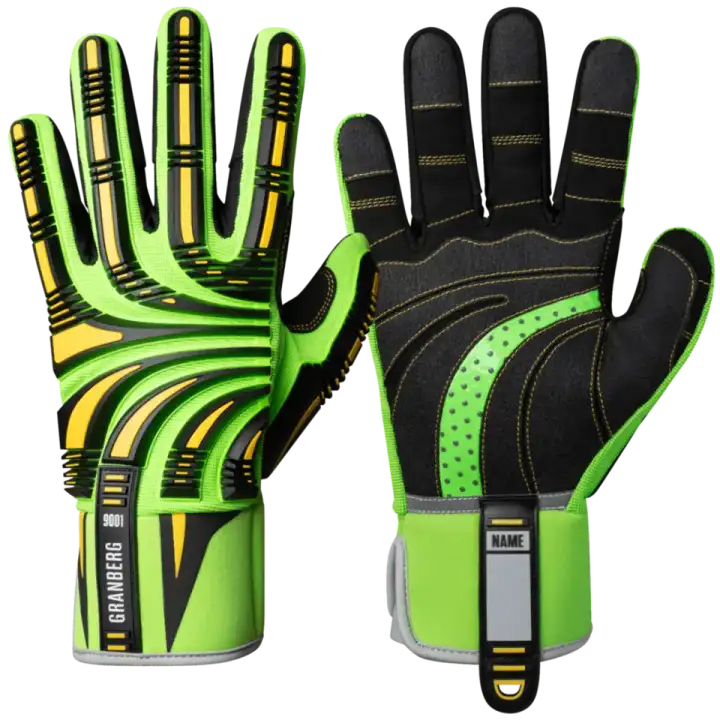
- GRANBERG 9001: Cut & Impact Gloves, Previous Spec Clearance
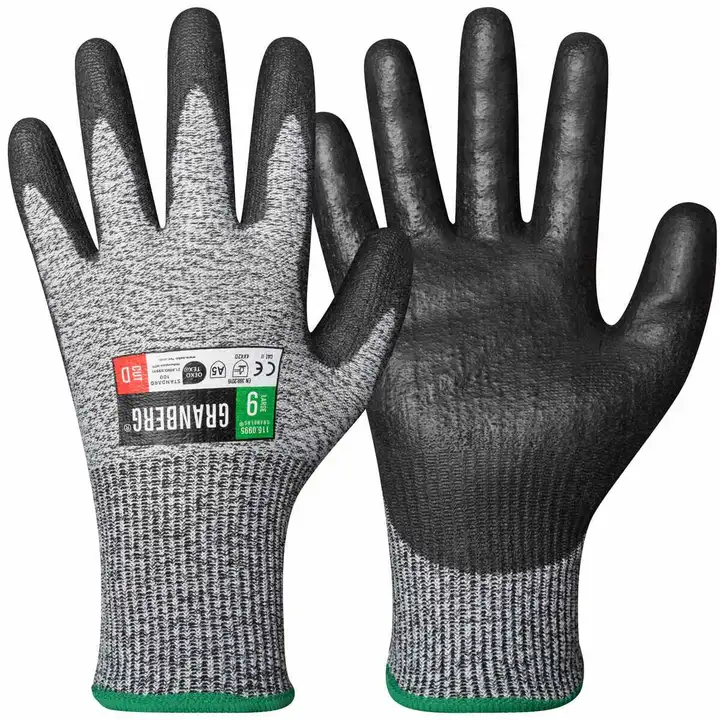
- GRANBERG 0995 Gloves: Cut Resistant Assembly Gloves
Frequently asked questions
What cut level should an industrial site standardize on?
There is rarely one answer for a whole site. Match the level to the sharpest edge in each task, since light assembly is usually served by A2 or A3 while sheet metal, glass and plate work commonly need A4 to A6. Over specifying reduces dexterity and often reduces the number of workers who keep the glove on.
Can one glove cover cut, impact and oil grip?
Yes, several models combine a cut rated liner, thermoplastic rubber back of hand guards and a foam or sandy nitrile palm. It is the right choice when all three hazards genuinely occur together. Where the load is heavy but blunt, an impact glove without a high cut liner usually costs less and lasts longer.
How do we buy gloves for a large site without carrying too many lines?
Most operations settle on three or four glove types, one per hazard group, rather than one universal glove or a dozen niche items. Ordering by the carton on the lines that move fastest keeps the unit cost down, and our team can quote a mixed bulk order across the range.
Specifying for a site
Send us the tasks and hazards and our team will put together a specification and carton pricing for delivery in Canada and the United States. Request a bulk quote, check the glove sizing guide, or browse the full glove catalogue.
Safety gloves for Food & Fisheries · Safety gloves for Healthcare · Safety gloves for Tactical & Security · Safety gloves for Sport & Leisure