Safety Gloves for Tactical & Security
Duty gloves for police, security, military and rescue personnel, built around cut, stab and puncture protection with the fit and feel to operate equipment under pressure.
Hazards in this environment
Cuts
The cut exposure in duty work is not a production line hazard. It comes from broken glazing during vehicle extrication, edged weapons during a search or a struggle, and sharp debris at an incident scene, all encountered without warning and often in poor light. The property that addresses this is a cut rated liner that still allows the hand to close on a tool, read as the ANSI level and the EN 388 TDM letter.
Needle stick
Searching pockets, bags, vehicle seams and waste is where concealed hypodermic needles are found, and the consequence of a stick is a blood borne pathogen exposure rather than a wound. It is worth being precise here: the EN 388 puncture test uses a stylus much blunter than a needle, so a good puncture score does not by itself prove needle resistance. The property that addresses this is a glove built specifically for needle and stab protection.
Puncture
Debris, fencing, wire, glass shards and improvised weapons all present point loads rather than edges, and they defeat gloves in a different way from a blade. The property that addresses this is the EN 388 puncture score in the fourth position, along with palm reinforcement in the areas that make first contact.
Impact
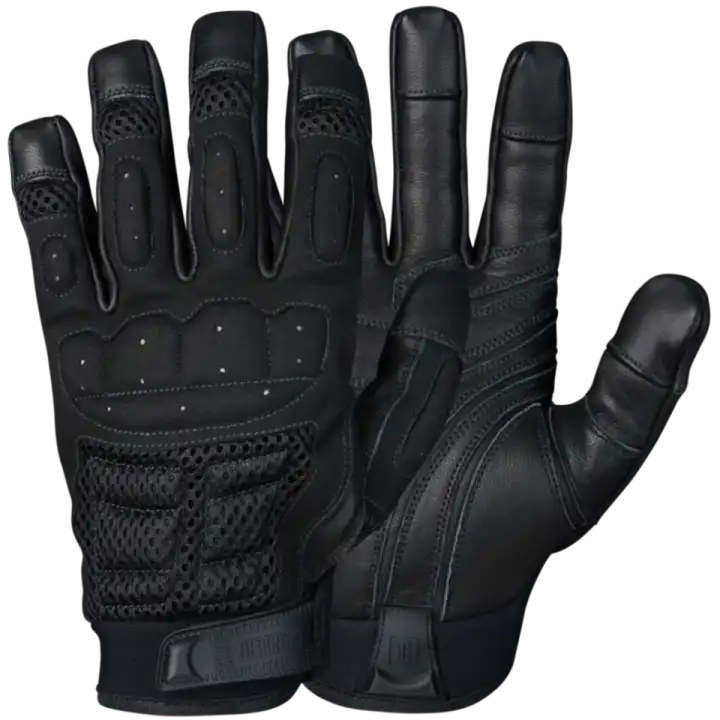
Forced entry, vehicle extrication and physical restraint put the back of the hand into hard surfaces, and hands are also crushed against door frames and structures while working in confined spaces. The property that addresses this is a tested thermoplastic rubber guard over the knuckles and finger joints, indicated by the P in the sixth EN 388 position.
What to specify
Specify for the whole call, not for one task. A duty glove has to survive a search, a restraint, an extrication and a set of paperwork without being changed, so the practical target is a moderate cut level combined with genuine puncture performance and a segmented knuckle guard, rather than the highest rating in any single category. A glove that is too heavy to operate a radio or a torch ends up in a pocket, and a glove in a pocket protects nobody.
Where search is a routine part of the role, treat needle resistance as its own requirement and choose a model built for it. Where flash or flame exposure is credible, check the EN 407 burning behaviour digit on the specific model and prefer leather and aramid, since untreated synthetics can melt onto the skin. Where vehicle work is frequent, palm reinforcement and abrasion performance matter more than an extra cut level.
Fit is a performance requirement in this sector rather than a comfort one. A glove that rotates on the hand under load costs grip at the moment it is needed, and one that restricts circulation becomes a problem across a long shift. Precurved construction, an adjustable wrist closure and touchscreen fingertips all contribute more to real capability than a marginal rating increase. Size against the sizing guide before issuing across a unit.
Cut Resistant gloves · Impact Protection gloves · Tactical & Rescue gloves
Recommended for Tactical & Security
Frequently asked questions
Do tactical gloves protect against hypodermic needles?
Not unless the model is specifically built for needle and stab resistance. The EN 388 puncture test uses a blunt stylus rather than a needle, so a high puncture score is not evidence of needle protection. Where searching is routine, specify a needle resistant model rather than relying on the general puncture figure.
What is the right balance between protection and dexterity for duty use?
Aim for a moderate cut level with strong puncture performance, a segmented knuckle guard and a close precurved fit. Personnel need to operate radios, restraints, torches and touchscreens without removing the glove, and a glove removed for a task offers no protection at all.
Are these gloves suitable for rescue and extrication work?
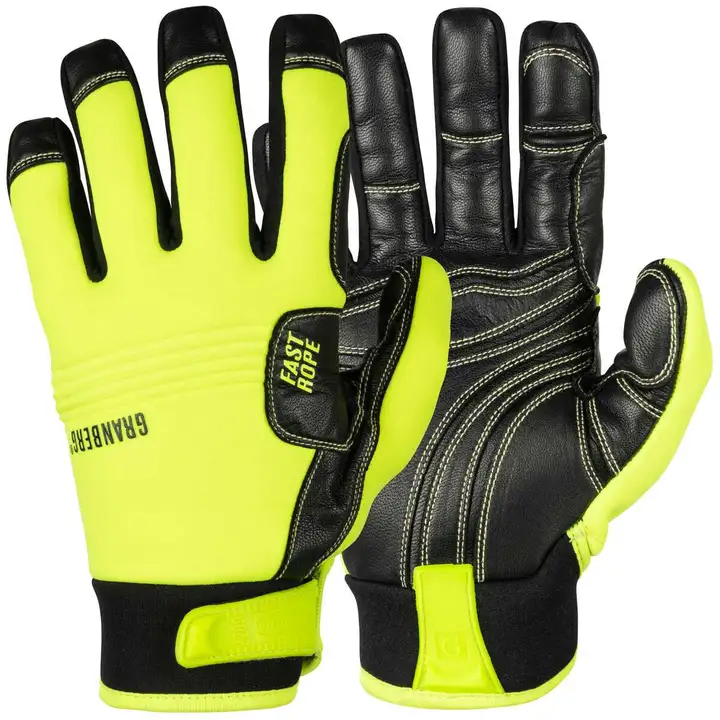
Yes, that is one of the main uses. Broken glazing, sharp metal edges and back of hand impact all occur together during extrication, which is why the combination of a cut rated liner, puncture resistance and thermoplastic rubber knuckle guards is the standard specification for this work.
Specifying for a site
Send us the tasks and hazards and our team will put together a specification and carton pricing for delivery in Canada and the United States. Request a bulk quote, check the glove sizing guide, or browse the full glove catalogue.
Safety gloves for Industrial · Safety gloves for Food & Fisheries · Safety gloves for Healthcare · Safety gloves for Sport & Leisure