Nitrile Coated Work Gloves
Nitrile is the most widely used coating on reusable work gloves because it grips well, resists oil and wears slowly. Not every nitrile glove behaves the same, though. The finish, how much of the hand is coated and the liner underneath all change how the glove performs. This guide explains the differences, then lists every reusable glove in the range with a nitrile coating.
Foam, sandy and smooth nitrile
Foam nitrile has a fine, open cell surface. Oil and light liquids are drawn into the surface, so the glove still grips in light oil and stays breathable. It suits assembly, maintenance and general handling.
Sandy nitrile has a rough, textured finish. It gives the strongest grip on oily and wet parts and stands up well to abrasion, which makes it a common choice for heavy handling, metal work and oily environments.
Smooth nitrile forms a continuous, closed surface. It resists liquid penetration best and wipes clean easily, but it grips less well in heavy oil unless the surface is textured. Fully dipped smooth nitrile is often used for chemical and liquid work. The finish on each glove is described on its product page.
Palm coated or fully coated
Palm coated gloves have the coating on the palm and fingertips with an uncoated back. The open back lets heat and moisture escape, so they are cooler and more comfortable over a long shift. They suit dry and lightly oily work.
Fully coated or dipped gloves cover the whole hand. They keep oil and liquid off the skin from every direction and protect the back of the hand from abrasion, at the cost of breathability. Three quarter coated gloves sit between the two, covering the knuckles while leaving most of the back open.
How nitrile compares with PU and latex
PU (polyurethane) coatings are very thin and give excellent fingertip feel for precision work, but they offer less grip in oil and wear faster under heavy abrasion. They are a common choice for clean, dry assembly. The assembly range includes PU options.
Latex coatings are elastic and give strong grip in wet conditions, particularly on glass and masonry. They do not resist oil and solvents as well as nitrile, and some workers have latex sensitivities. Nitrile resists oil and fuels and wears well, which is why it is the default choice where oil is present.
Abrasion ratings and cut resistance
The first digit of the EN 388 marking is the abrasion rating, from 1 to 4. Many nitrile coated gloves reach the higher abrasion levels because the coating protects the liner from wear. Cut resistance comes mainly from the liner, not the coating. A nitrile coating on a cut resistant liner can carry a high EN 388 cut letter, and some lines also carry an ANSI cut rating where their product record lists one. For cut ratings, read how to read EN 388 and ANSI cut levels and see the cut resistant range.
Touchscreen options
Some nitrile coated gloves are made with touchscreen compatible fingertips, so workers can use phones, tablets and scanners without taking gloves off. Glove removal is a common reason people get hurt, so this matters in warehousing and maintenance. Touchscreen compatibility is listed in the product details where it applies.
Nitrile coated gloves
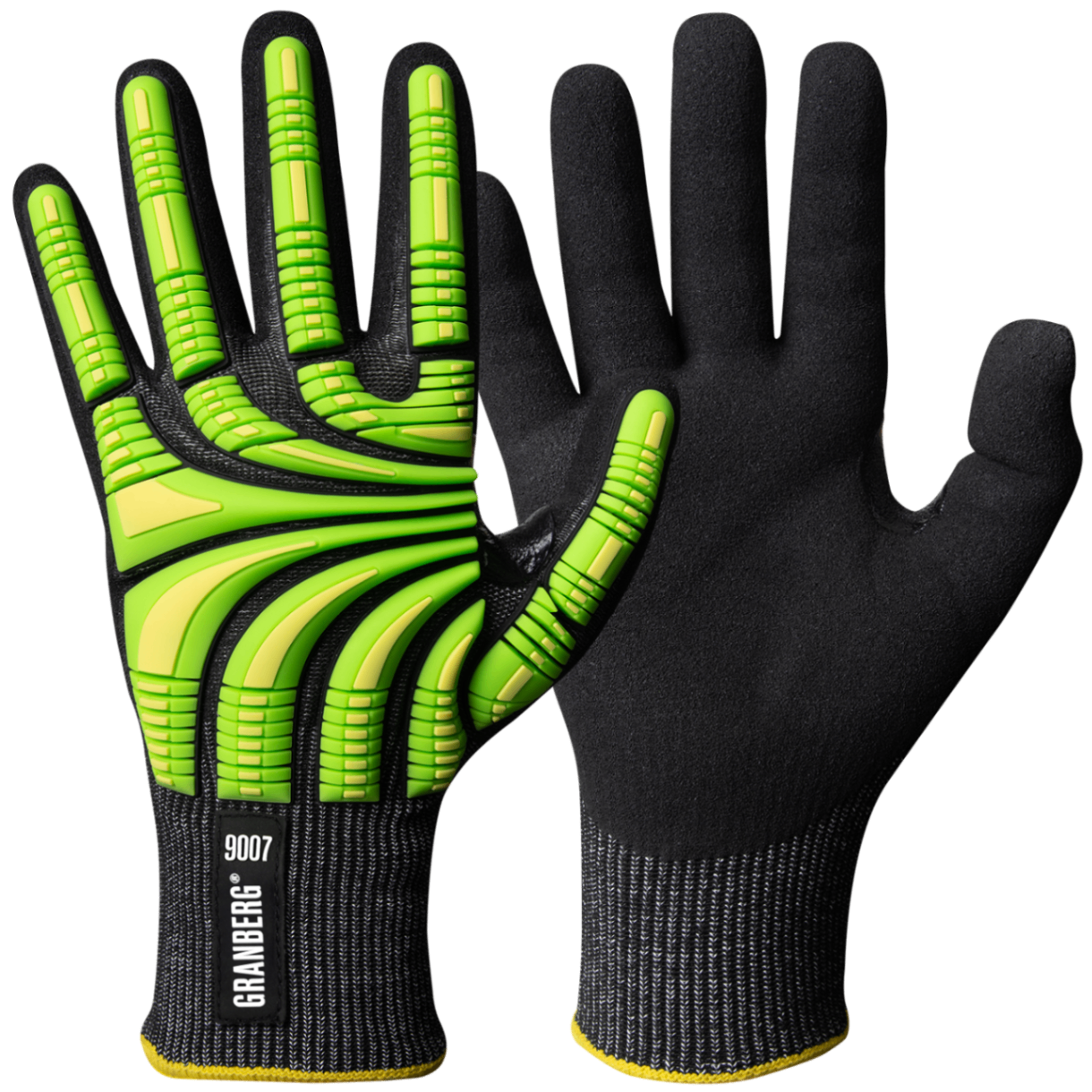
- GRANBERG 9007 Gloves: Cut & Impact Protection Gear
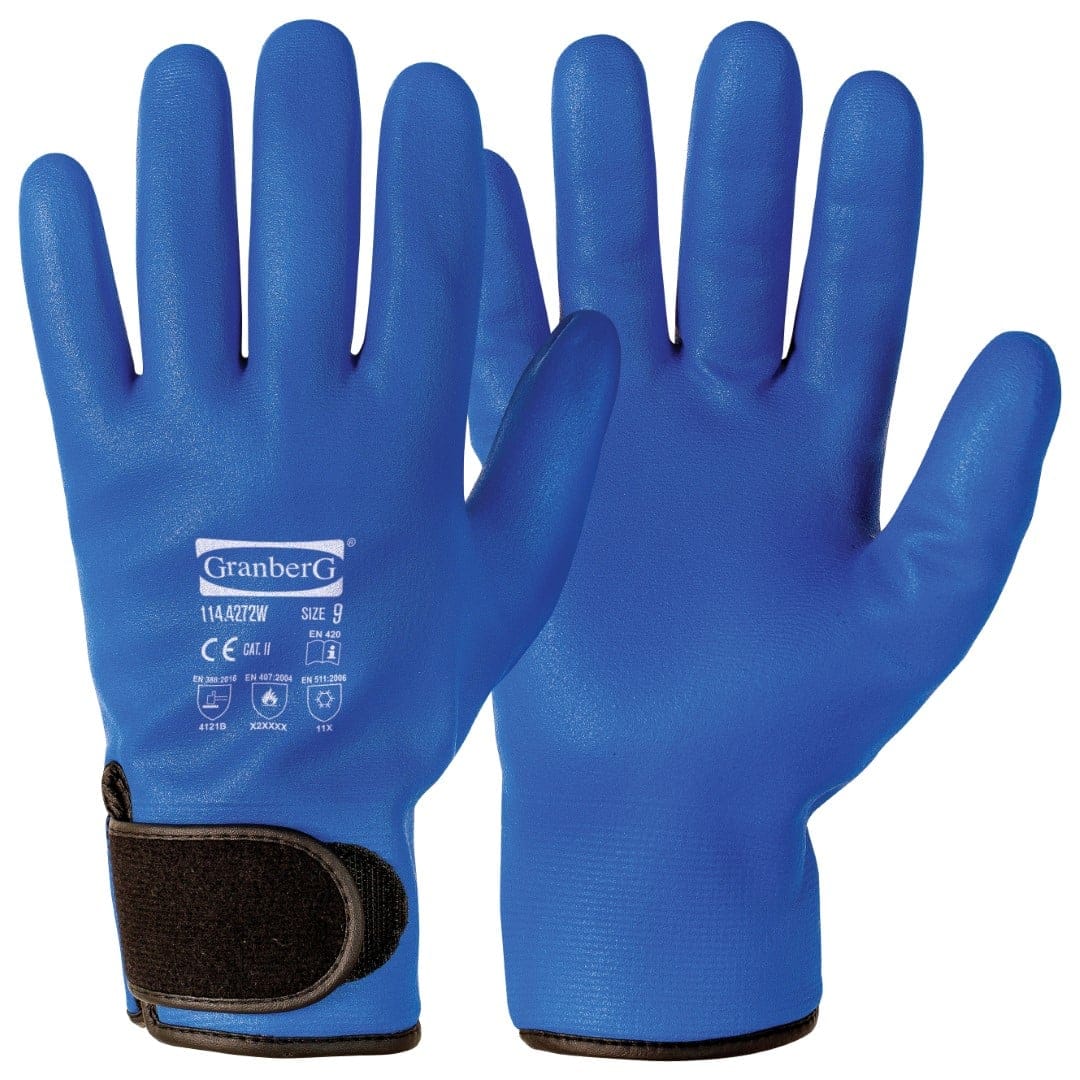
- GRANBERG 4272W: Heat & Cold Resistant Gloves
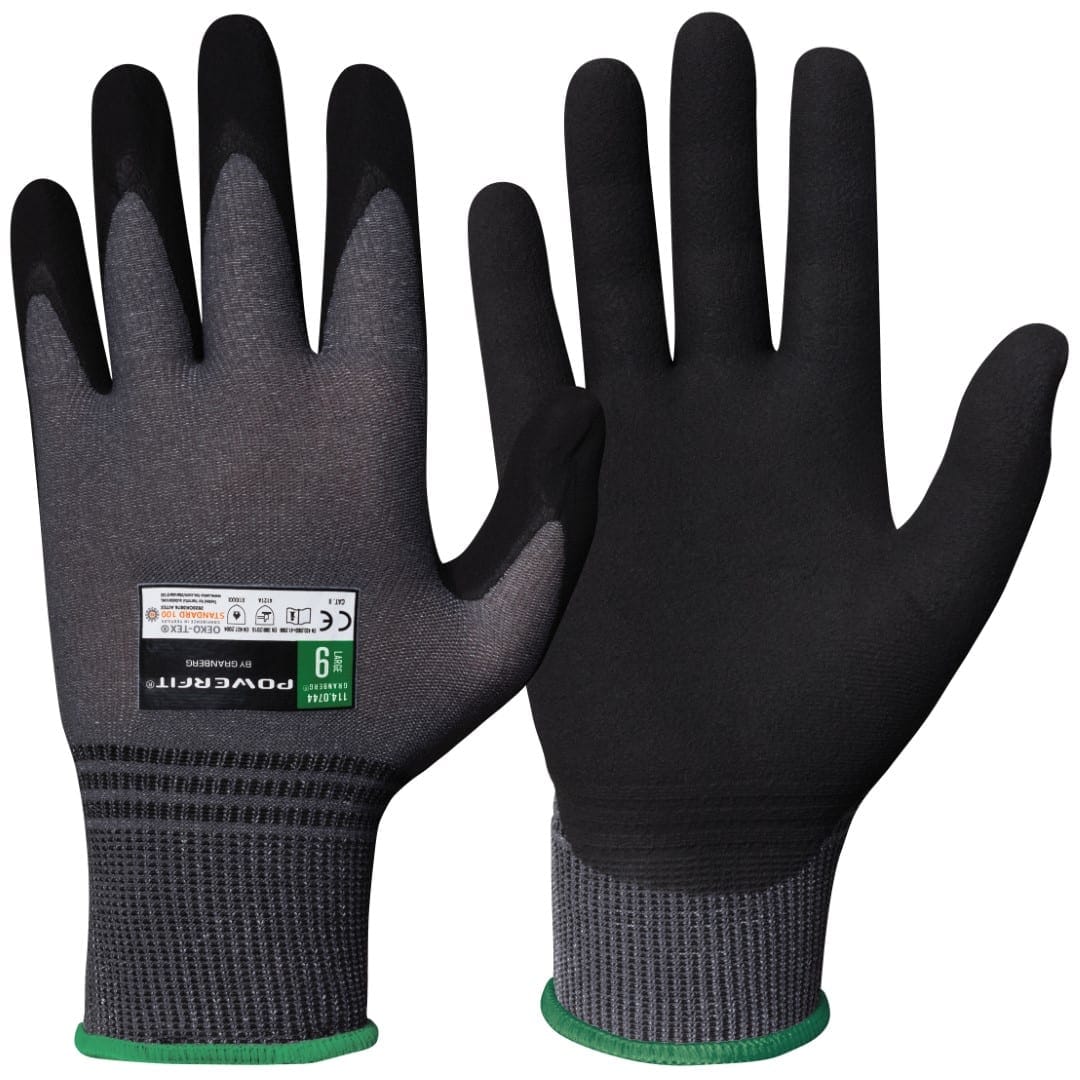
- GRANBERG 0744: Touchscreen Nitrile Foam Assembly Gloves
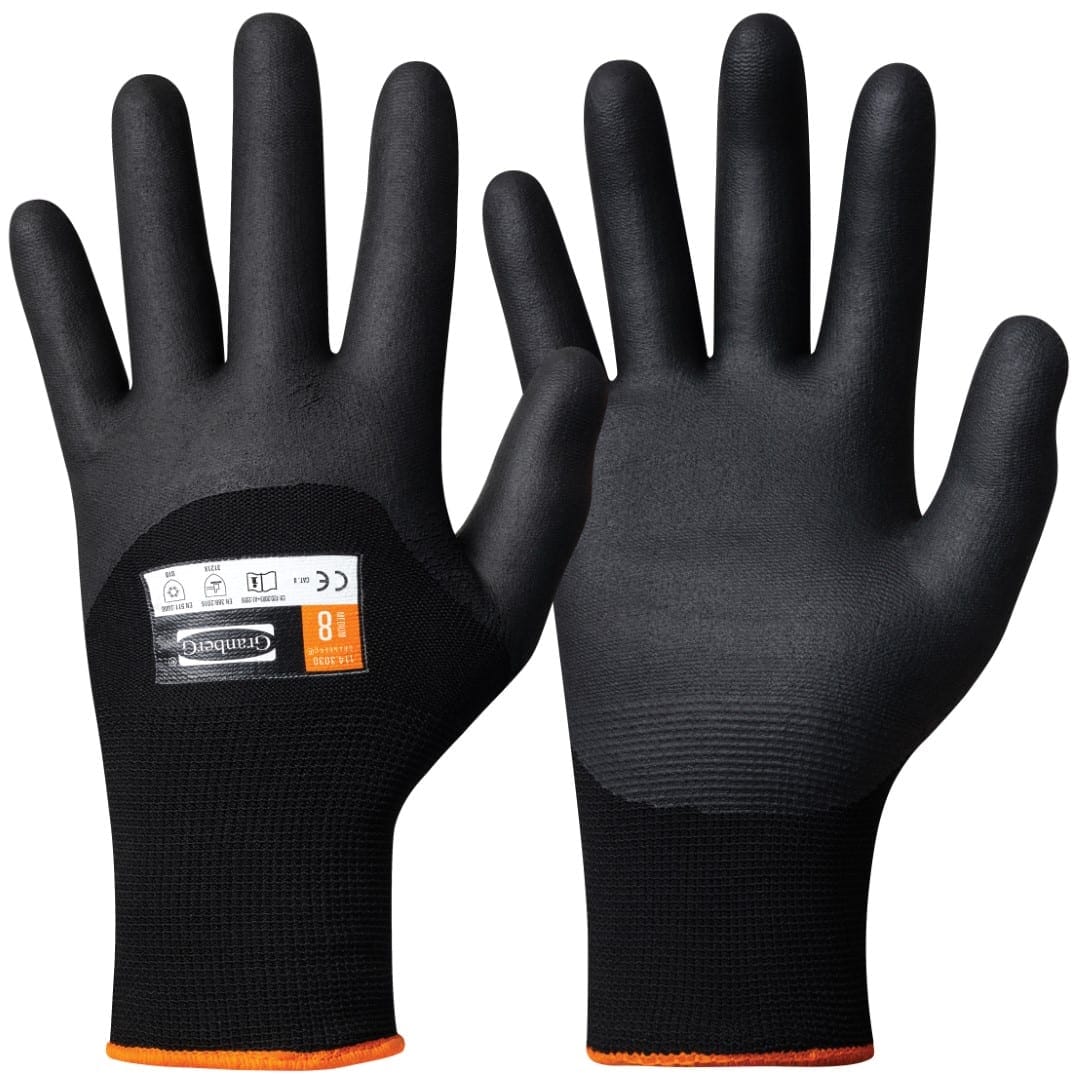
- GRANBERG 3030: Thermal Nitrile Grip Work Gloves
- GRANBERG 580: Thermal Cut-Resistant Work Gloves
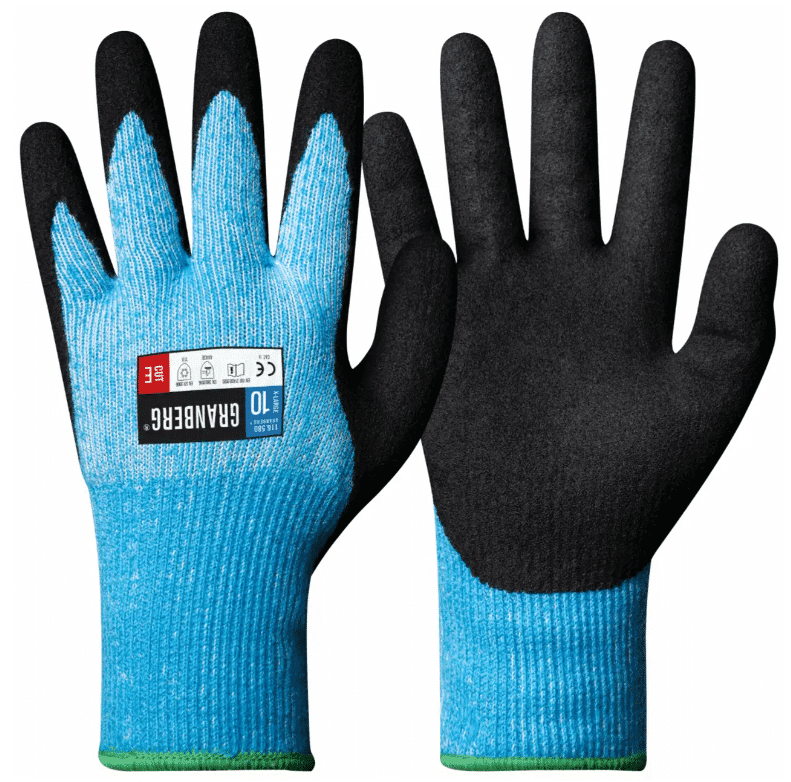
- GRANBERG 0488W: Thermal Gloves for Cold Work
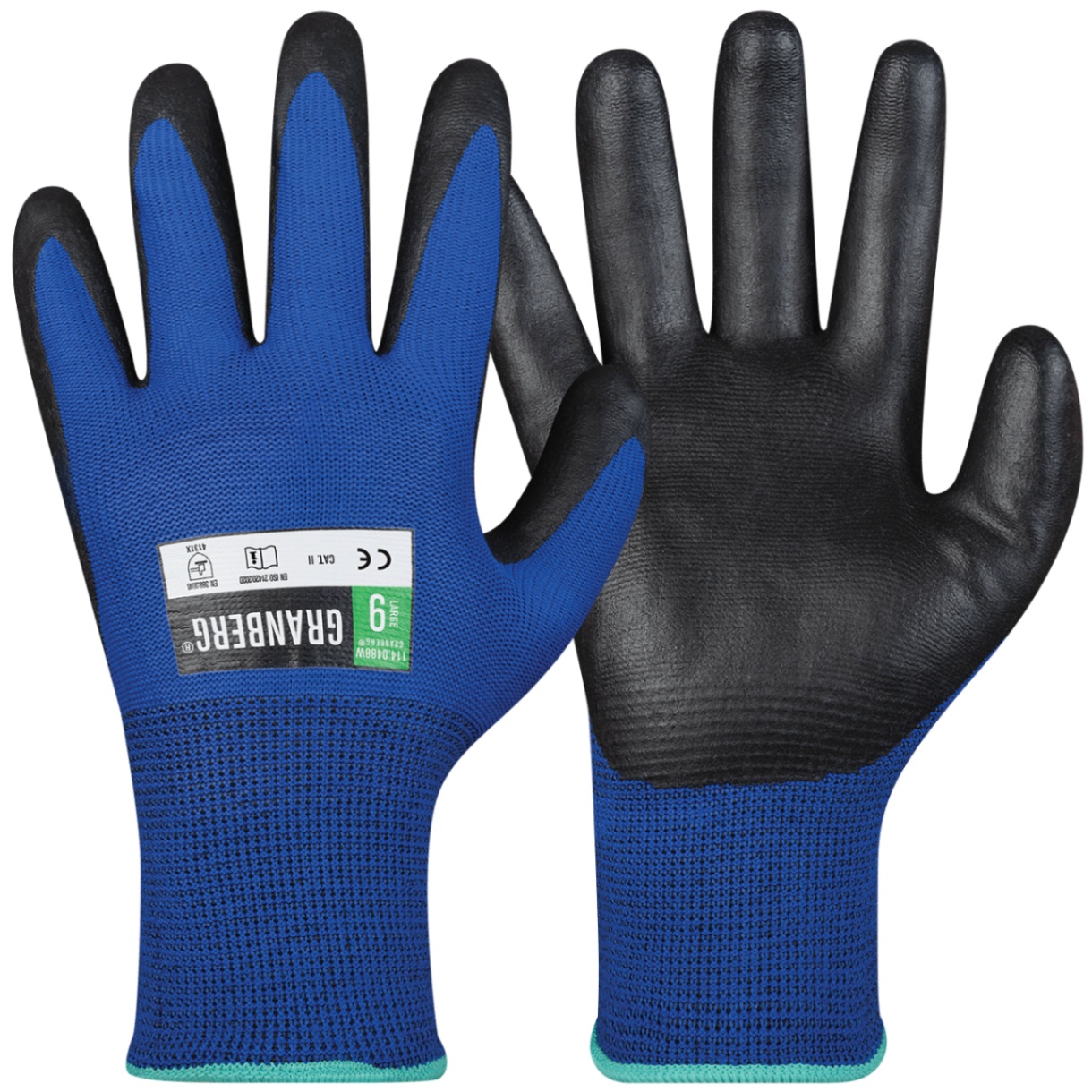
- GRANBERG 0490: Waterproof Nitrile Grip Gloves
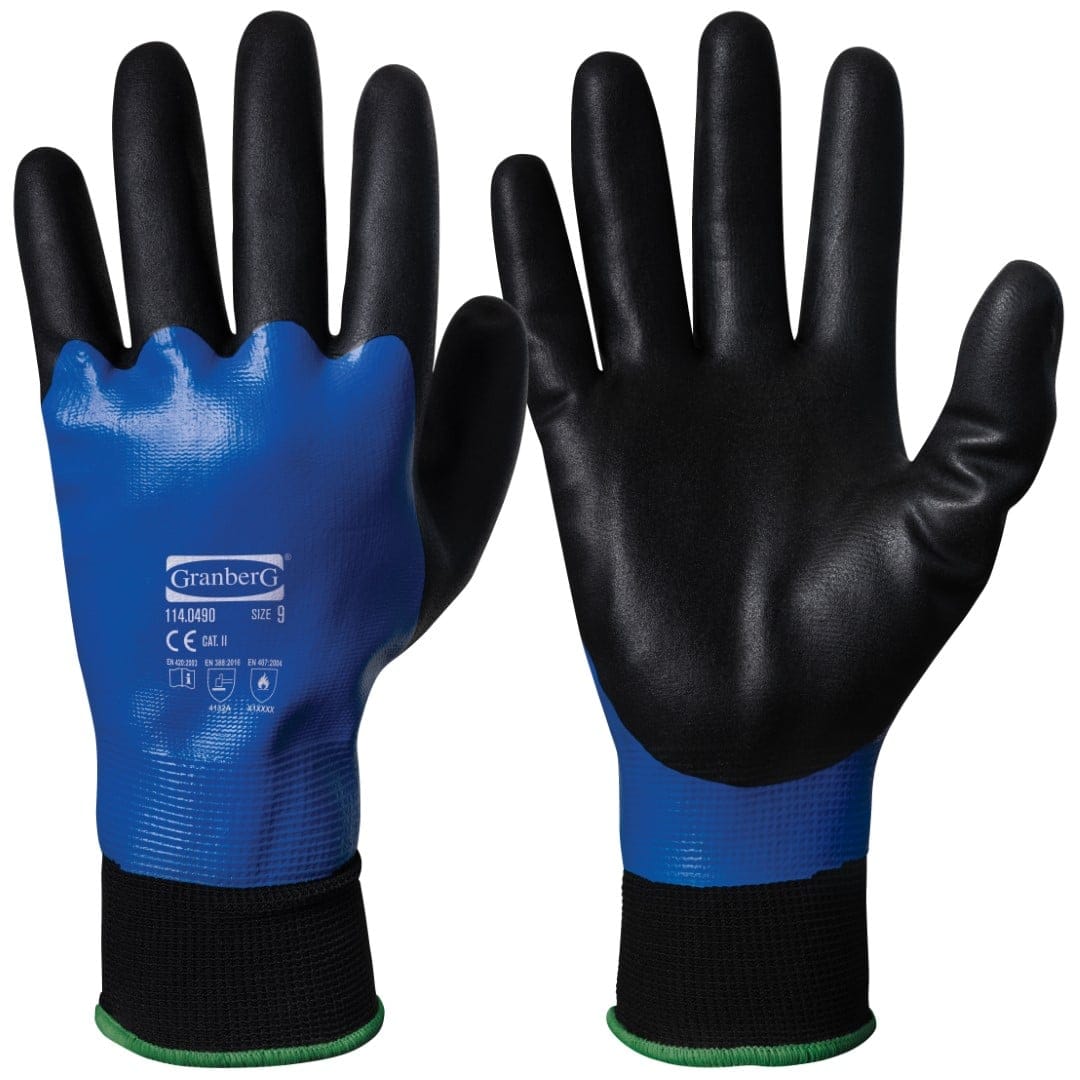
- GRANBERG 0811: Nitrile-Coated Assembly Gloves, Heat Rated
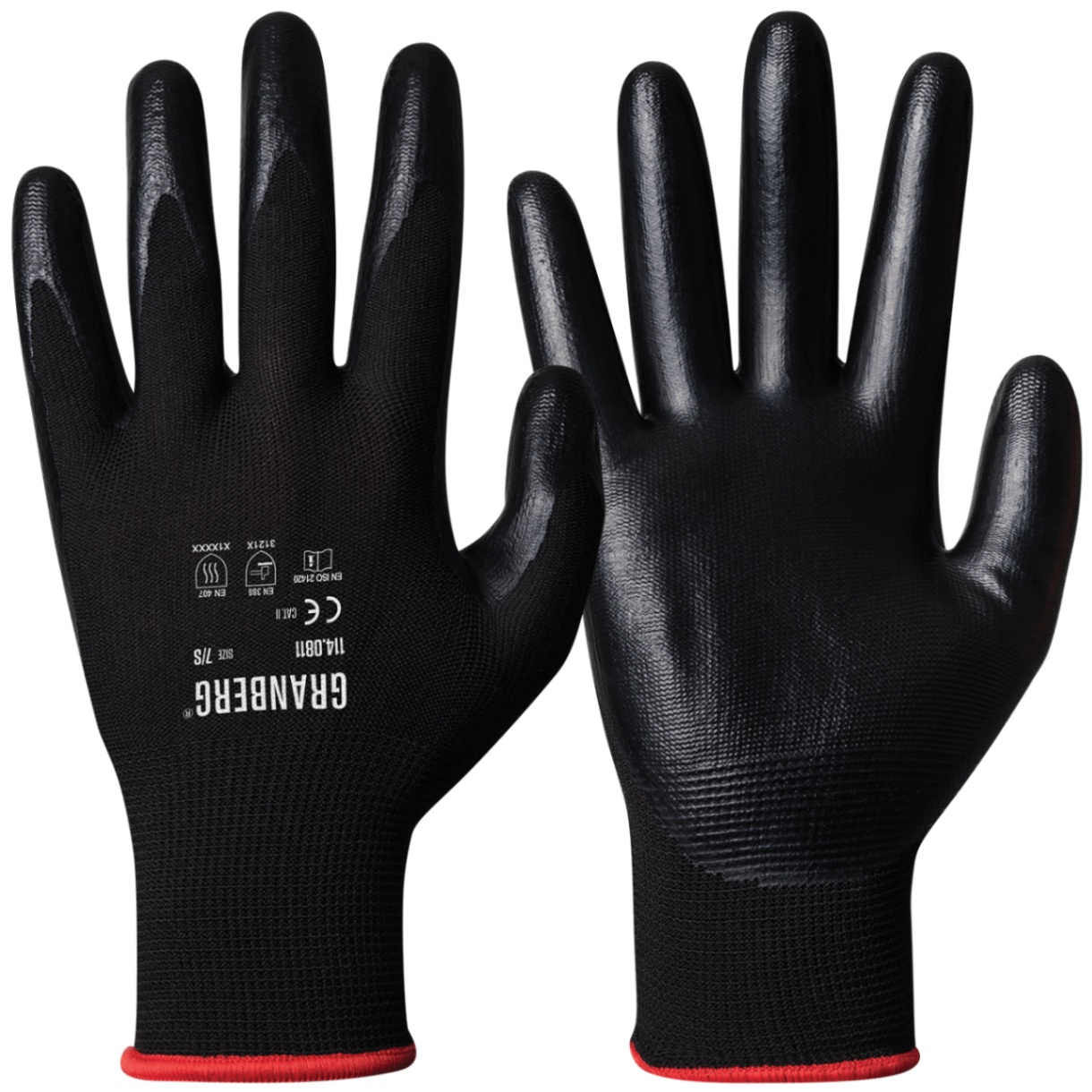
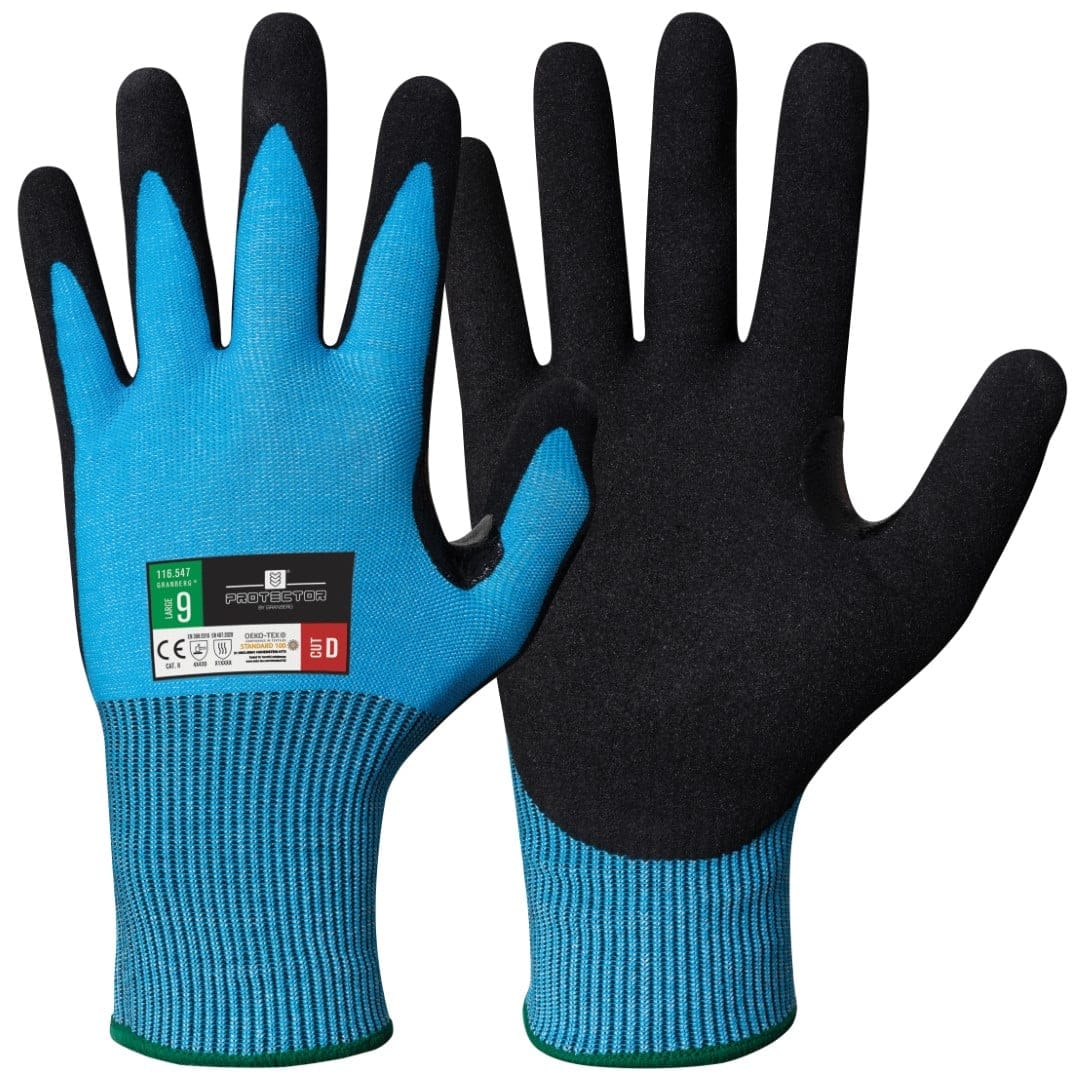
- GRANBERG 547: Cut Level D Sandy Nitrile Grip Gloves
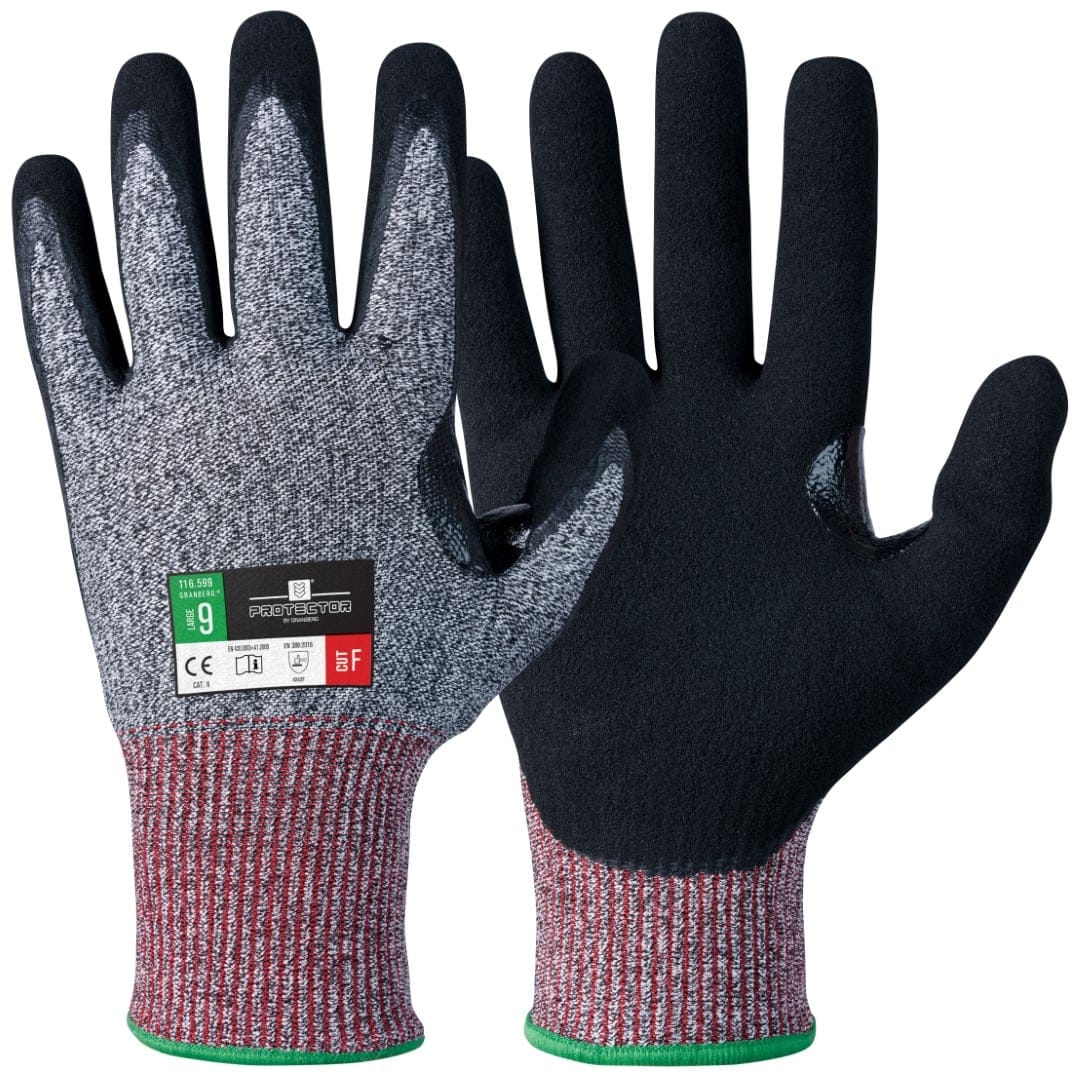
- GRANBERG 599: Level F Cut-Resistant Gloves for Oily Work
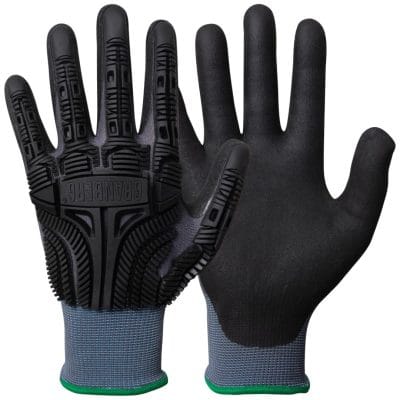
- GRANBERG 5502: Impact Gloves with Oil Grip
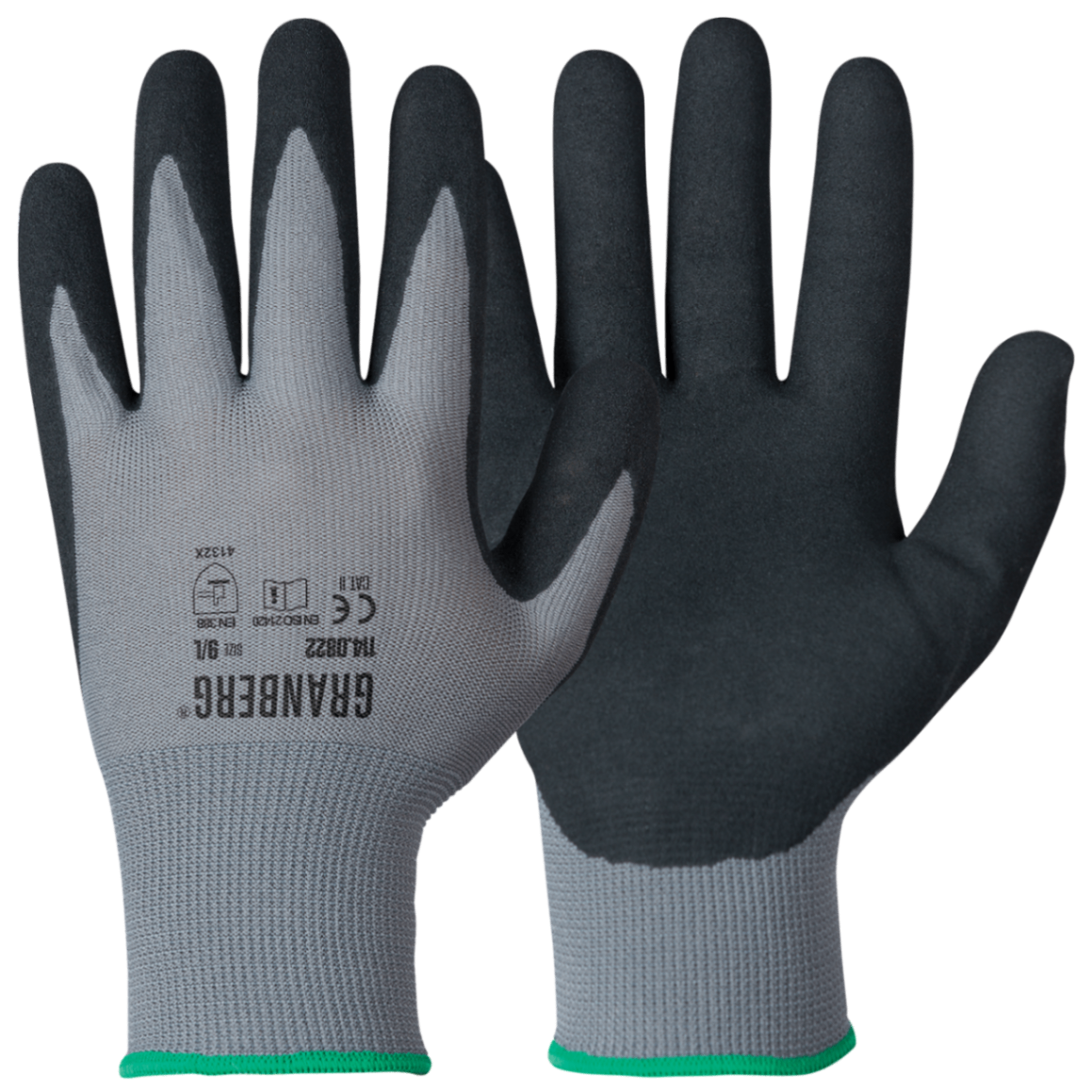
- GRANBERG 0822: Durable, Dexterous Gloves for Assembly
- GRANBERG 5503: Cut & Impact Gloves for Oily Conditions
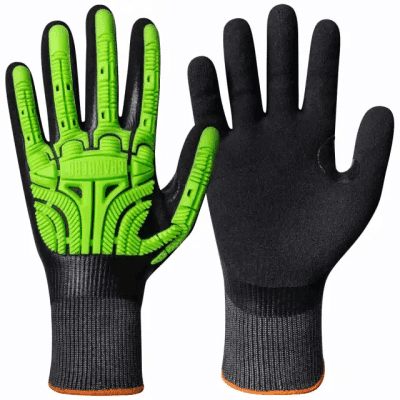
- GRANBERG 5501: Heavy-Duty Cut & Impact Gloves
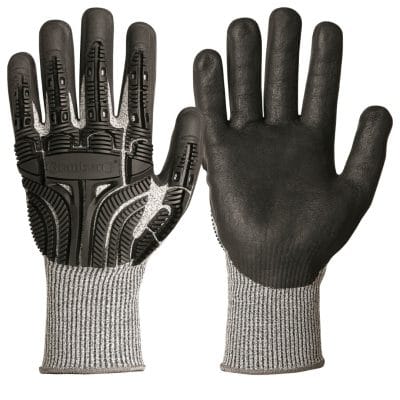
- GRANBERG 0766: Touchscreen Nitrile Work Gloves
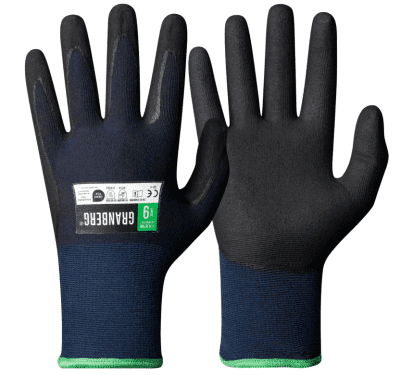
- GRANBERG 8015: Cut & Chemical-Resistant Nitrile Gloves
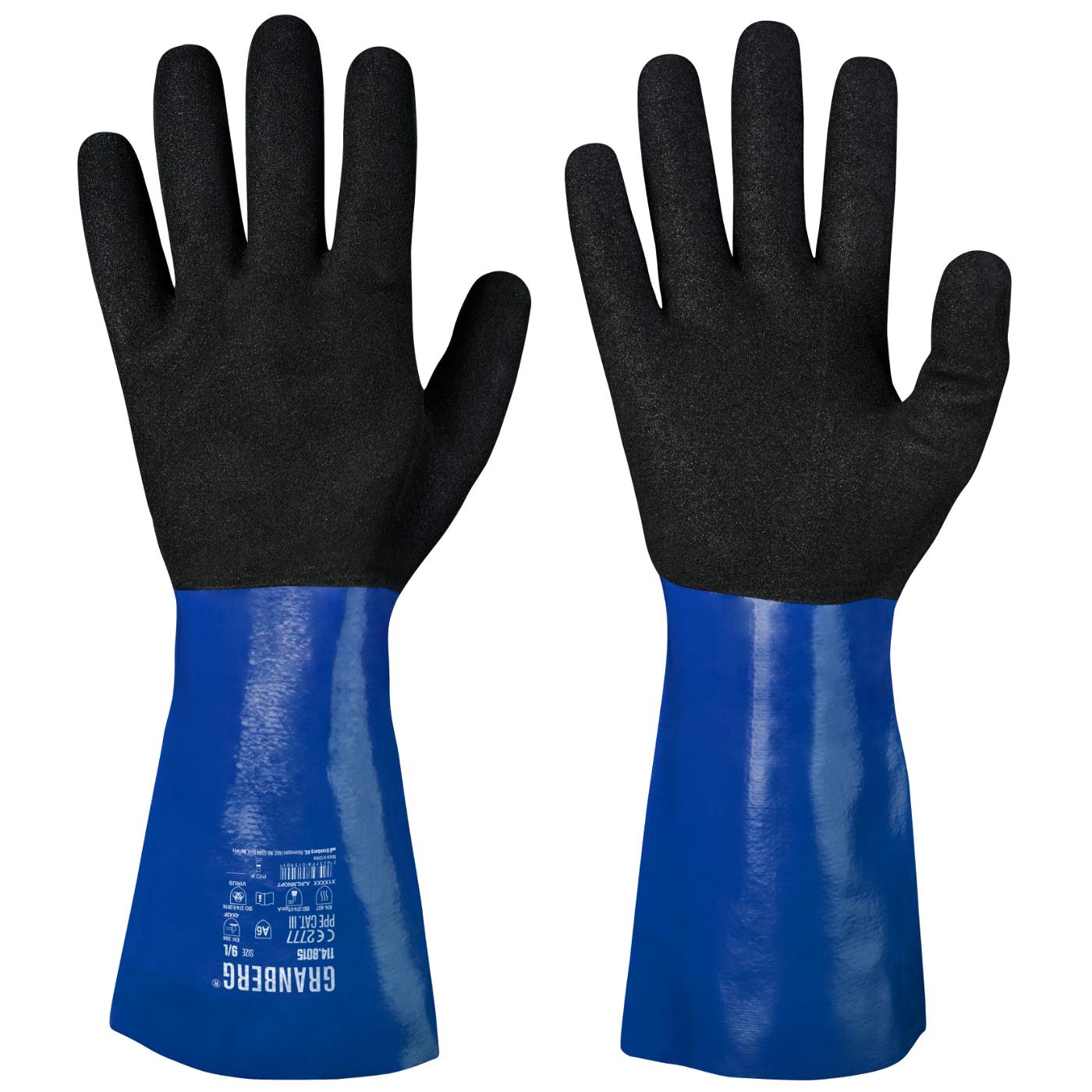
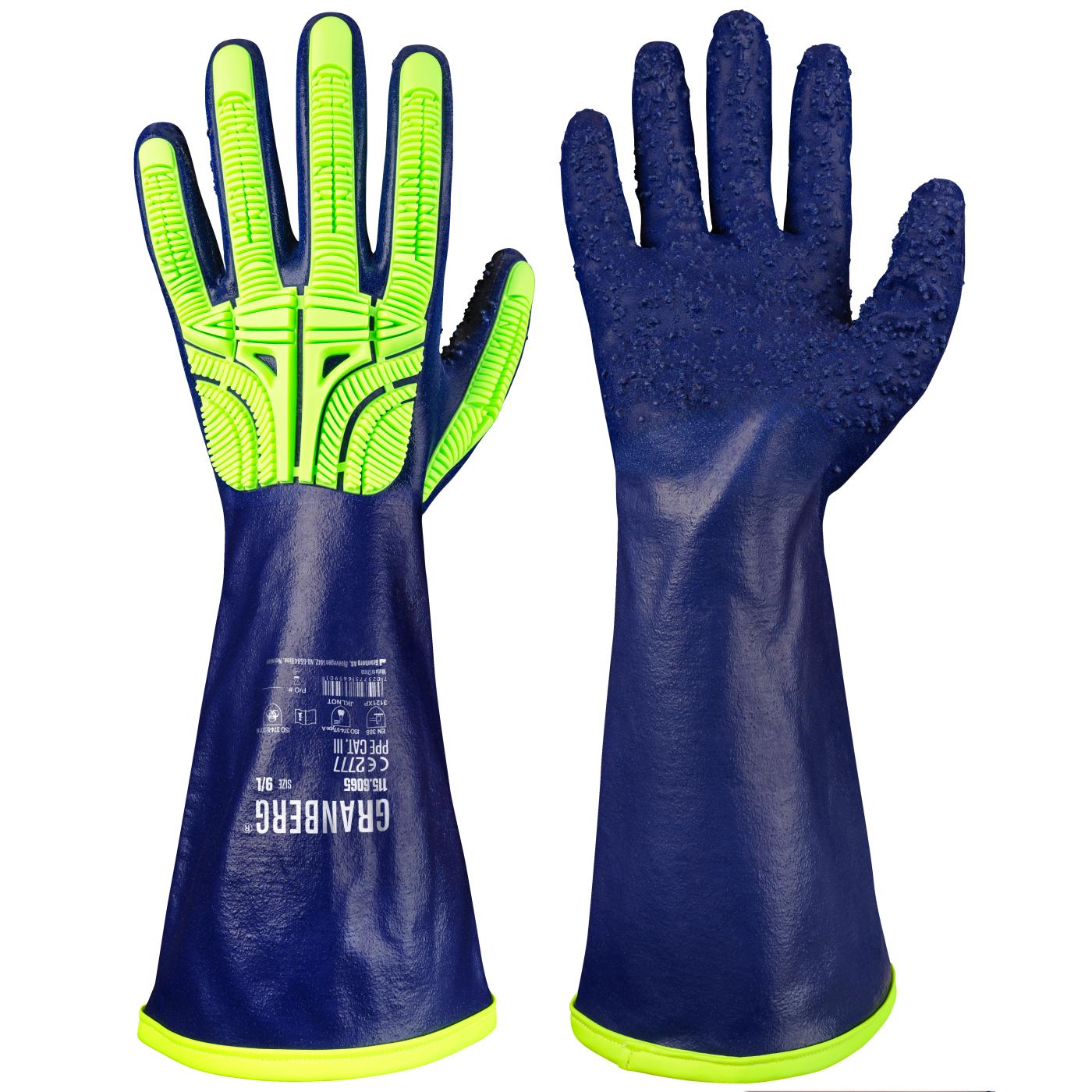
- GRANBERG 6065: Chemical & Impact Winter Gloves
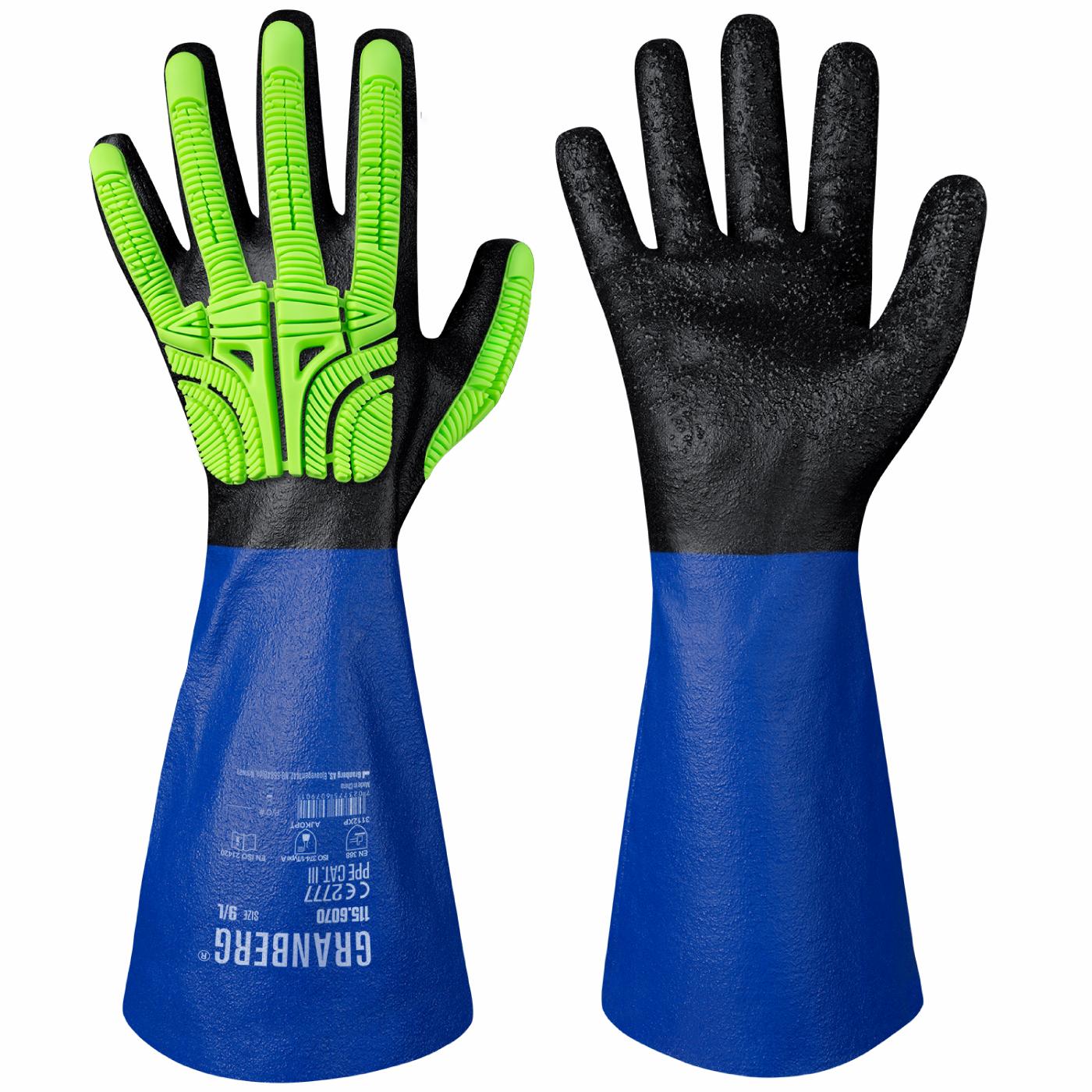
- GRANBERG 6070: Chemical & Impact Gloves, Methanol Resistant
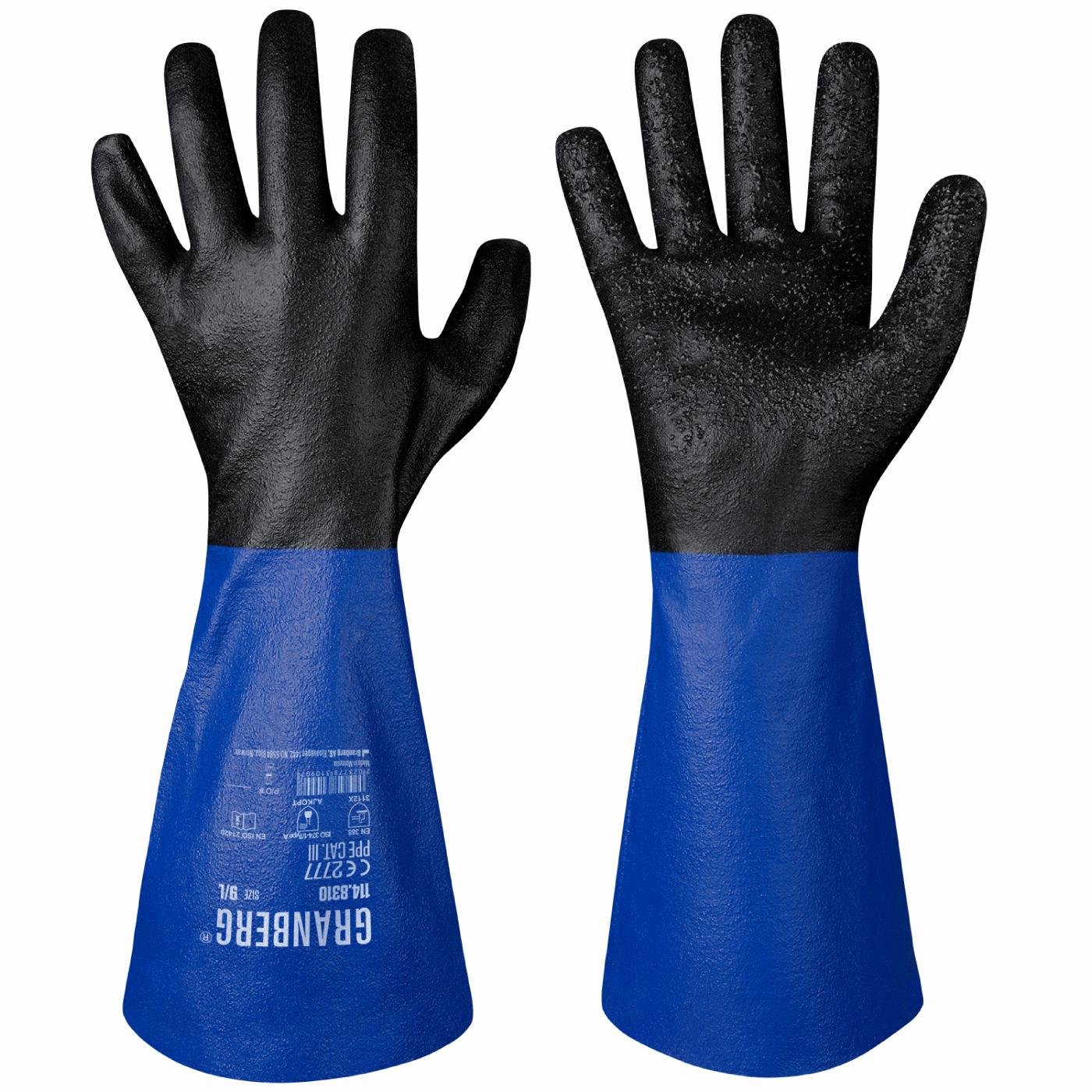
- GRANBERG 8310: Chemical-Resistant Methanol Gloves
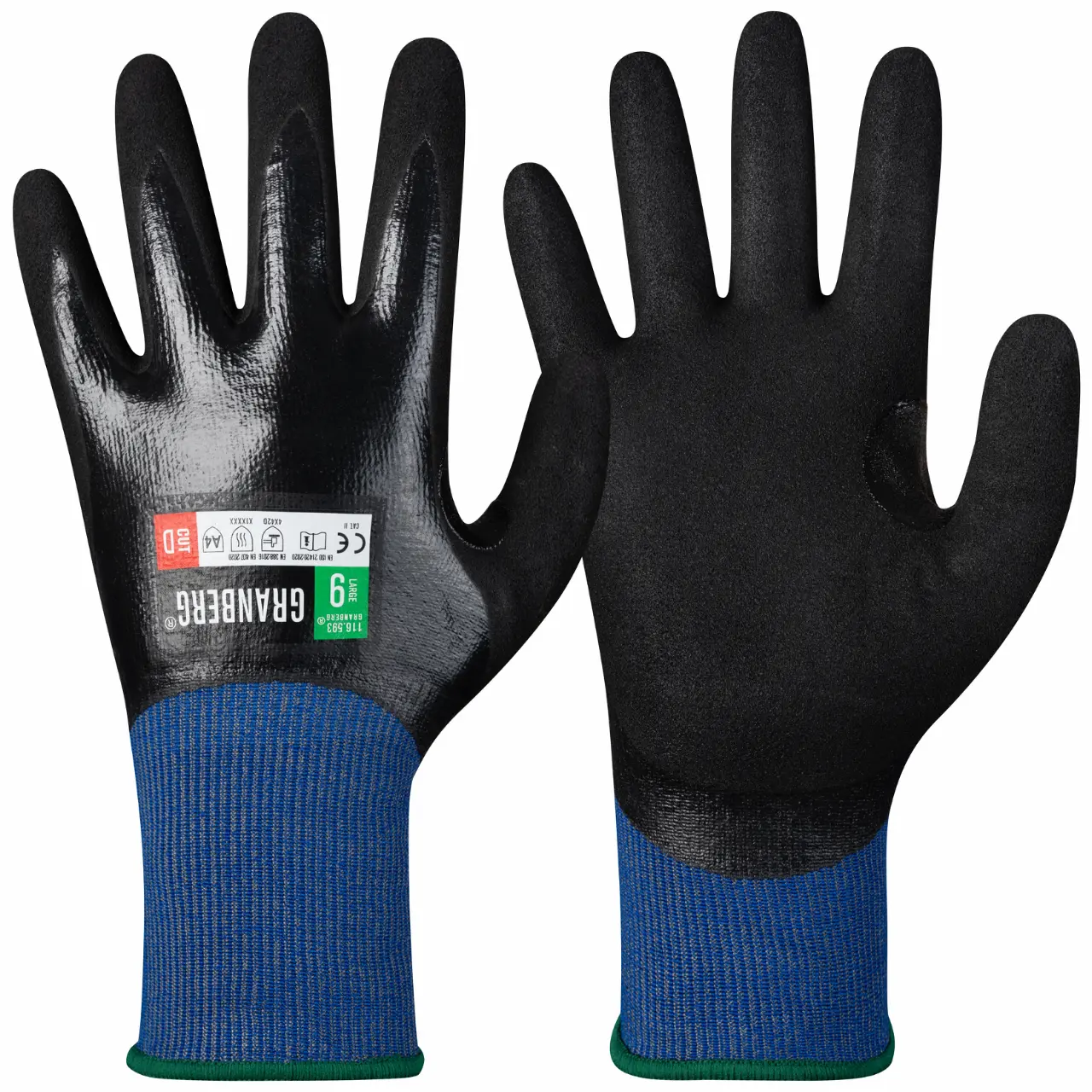
- GRANBERG 593: Cut D Sandy Nitrile Waterproof Gloves
- GRANBERG 597: Cut Level F Nitrile-Grip Gloves
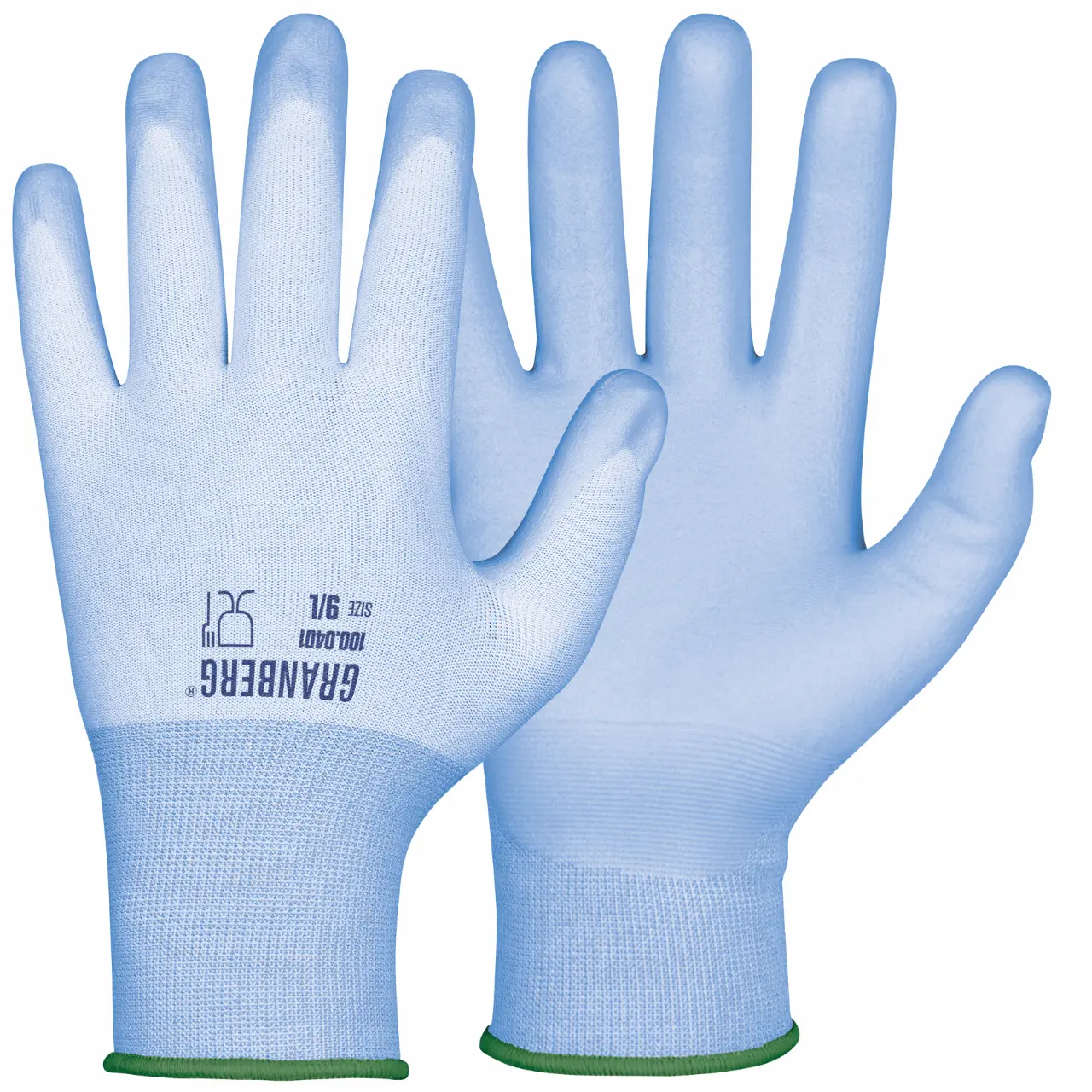
- GRANBERG 0401: Food-Safe PU/Nitrile Assembly Gloves
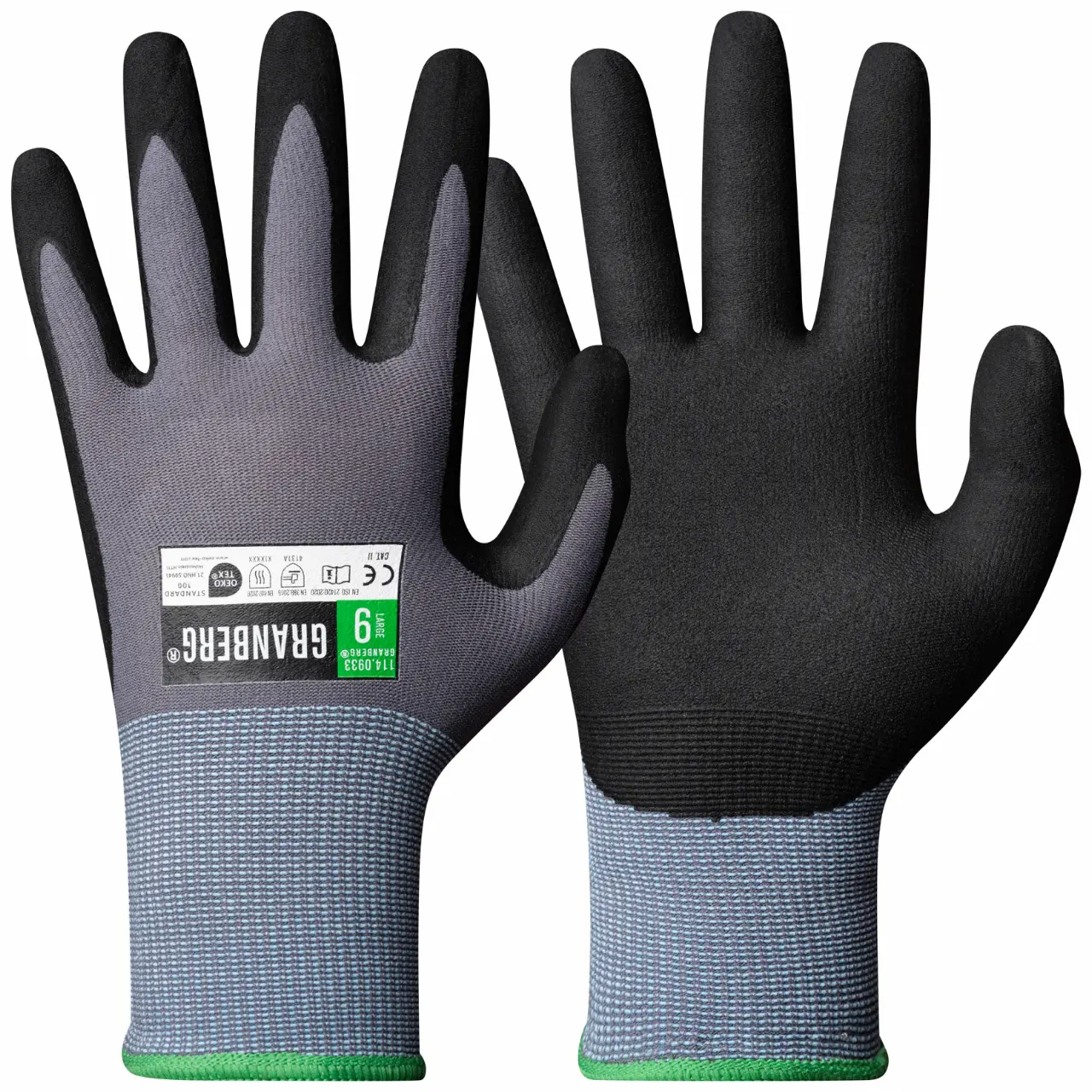
- GRANBERG 0933: High-Abrasion Nitrile Assembly Gloves
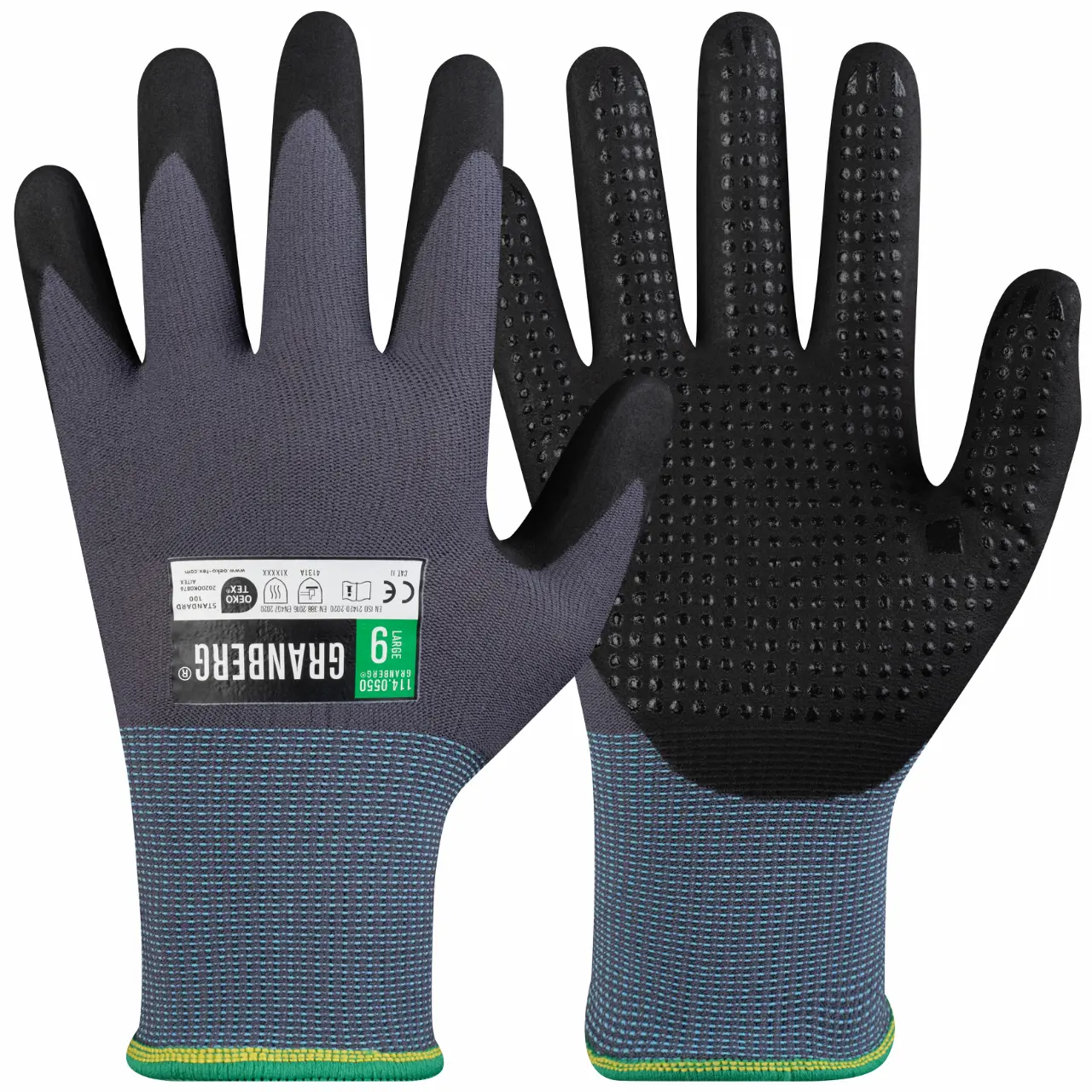
- GRANBERG 0550: Microdot Grip Assembly Gloves, Touchscreen
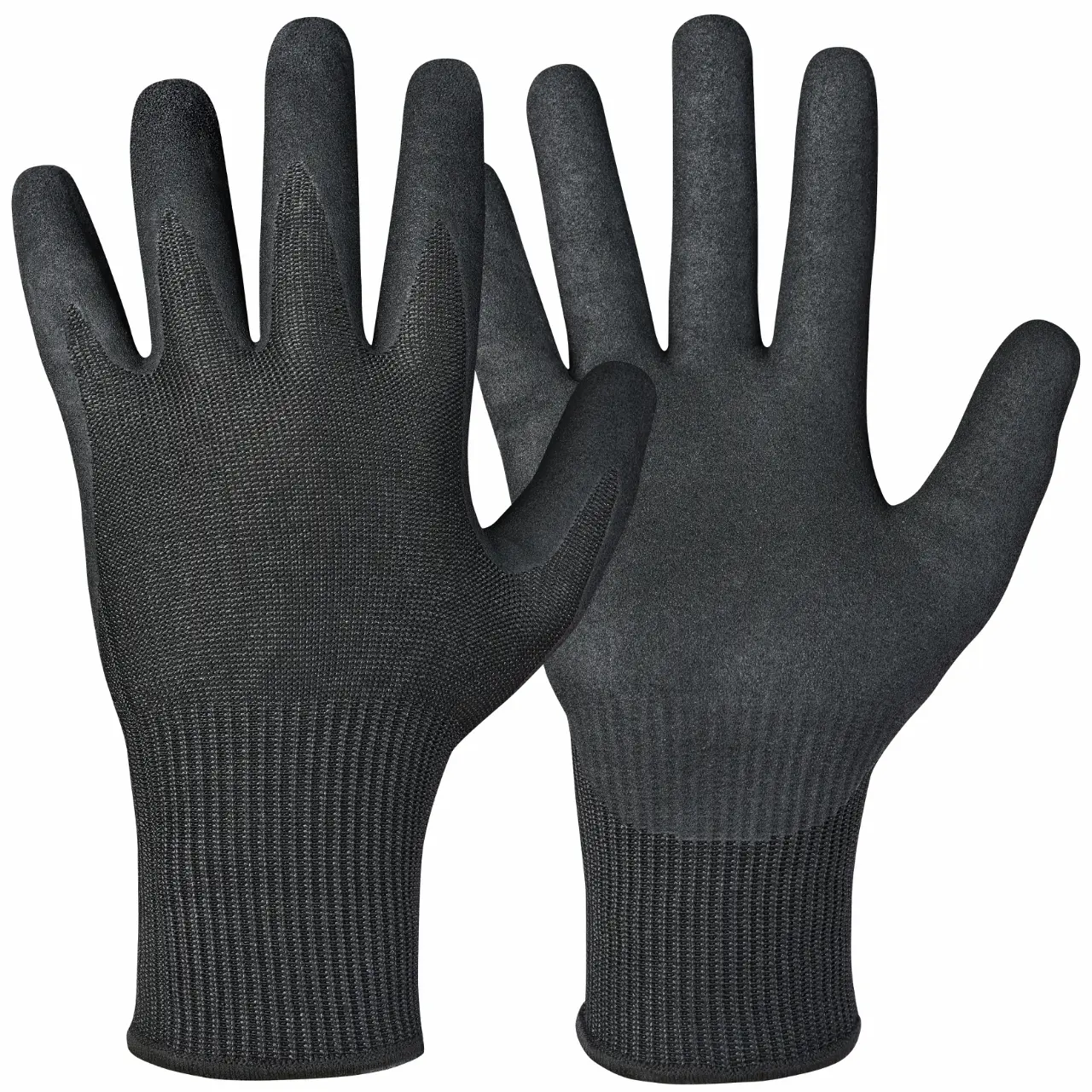
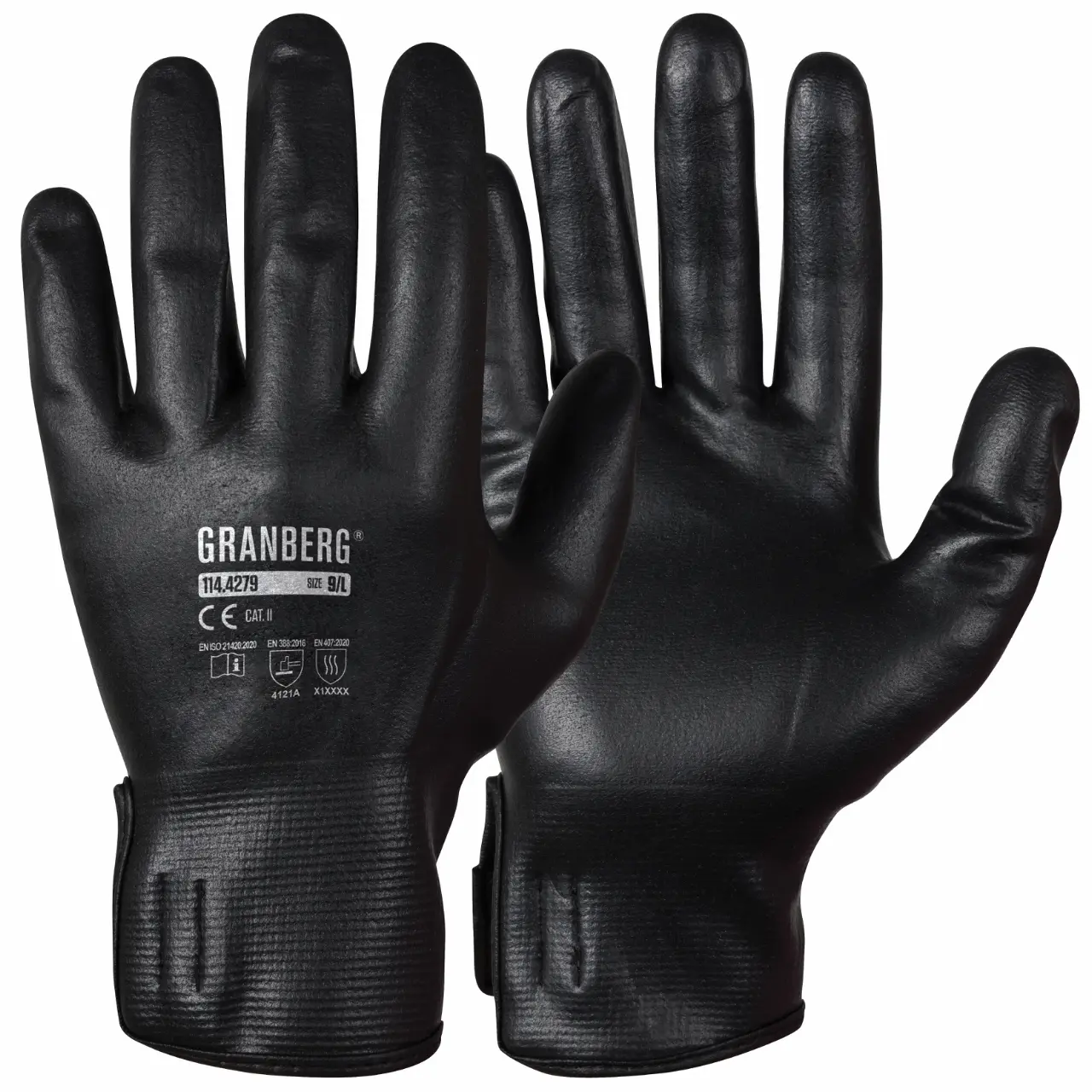
- GRANBERG 4279: Heat & Oil Resistant Assembly Gloves
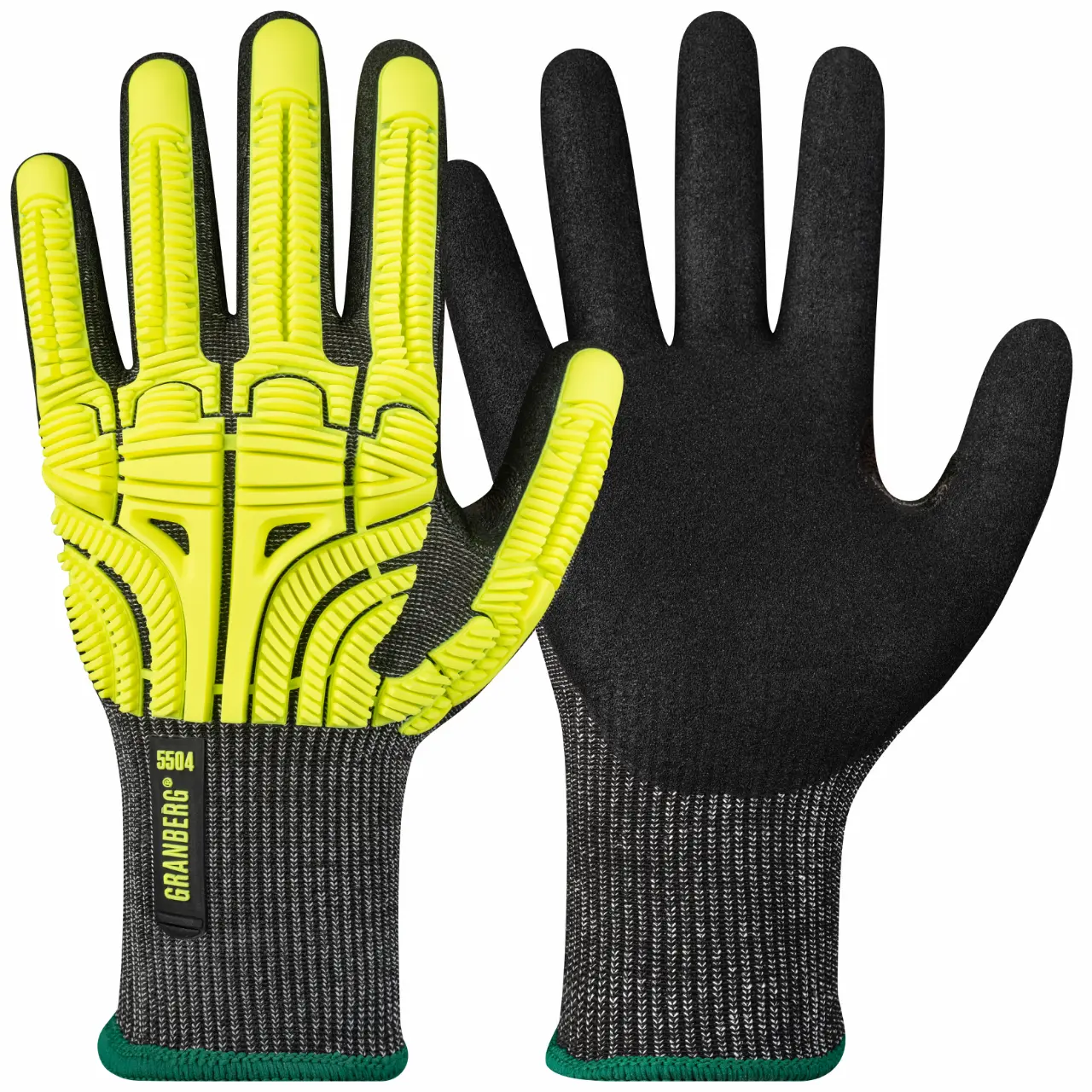
- GRANBERG 5504: Cut D Impact Gloves, Full Nitrile Coat
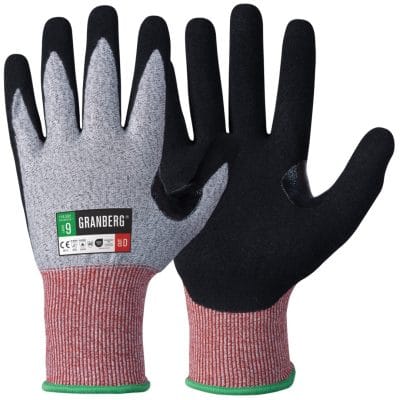
- GRANBERG 592: Touchscreen Cut-Resistant Gloves
Frequently asked questions
Which nitrile finish grips best in oil?
Sandy nitrile usually gives the strongest grip on oily parts because of its rough texture. Foam nitrile also grips in light oil because the open surface draws oil away from the contact area.
Is nitrile better than PU for oily work?
For oily work, yes. Nitrile resists oil and keeps grip better than PU. PU gives finer fingertip feel and suits clean, dry precision assembly.
Should I choose palm coated or fully coated?
Choose palm coated for comfort and breathability in dry or lightly oily work. Choose fully coated when oil or liquid would otherwise soak through the back of the glove.
Does a nitrile coating make a glove cut resistant?
Not on its own. Cut resistance comes mainly from the liner. Check the EN 388 cut letter, and any ANSI cut level listed on the product page.
Are disposable nitrile gloves included on this page?
No. This page lists reusable gloves with a nitrile coating. Disposable nitrile gloves are on the single use gloves page.
Related glove types
Cut Resistant gloves · Chemical Resistant gloves · Assembly & ESD gloves · Single Use gloves
Send us the tasks and hazards and our team will put together a specification and carton pricing. Request a quote, check the glove sizing guide, or browse the full glove catalog.